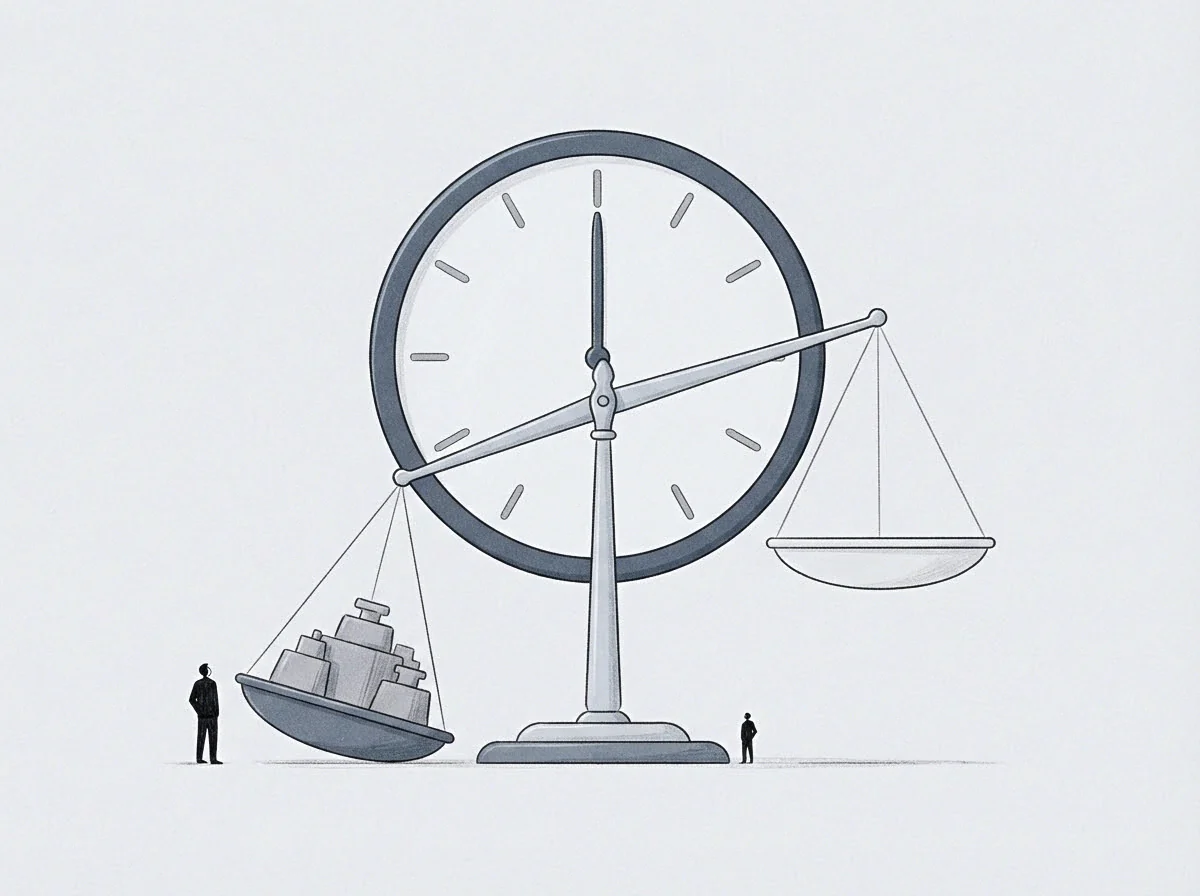
A stated limit is a wall, not a person: a load-transferring system pushes until it meets something that is not the regulator. Availability lives in the silence of a position and a cost. The channel that does not ping was not a priority for either side.
Continuous real-time operational demands alter HPA axis setpoints, flattening cortisol slopes and suppressing immune and thyroid function through continuous sympathetic overdrive.
Asynchronous intake queues and explicit latency windows protect technical staff capacity by converting real-time micro-interruptions into scheduled batch sweeps.
Asynchronous repositories lower remote engineering stress by replacing real-time social vigilance with durable, deterministic file diffs and isolated branches.
Intake barriers reduce architectural debt by replacing continuous human load absorption with explicit structural entry terms and batch processing queues.
Optimal temporal buffer windows match the high-variance quantile of upstream completion distributions, isolating cross functional handoffs behind immutable validation gates.
Bounded queues cap memory overhead by rejecting excess requests, while unbounded queues delay failure until total heap saturation triggers system crash.
Operational availability is derived from response intervals and channel silence, revealing processing limits and priorities without formal declarations.
System backpressure protocols reject incoming execution requests at structural boundaries to protect processing capacity when parallel load exceeds throughput.
Upward escalation friction protocols mandate structured trade-off submissions and async delay buffers, preventing local teams from transferring cognitive load upward.
Direct communication routing through formal executive seats preserves management authority and prevents operational bypass across expanding company tiers.
Asymmetrical intake calibration across leadership nodes creates signal latency and covert routing, which resolves when executive intake setpoints are explicitly stated.
Continuous unthrottled operations force internal execution queues past capacity limits, shifting failure points from edge ingress to downstream thread pool exhaustion.
Structural concurrency limits convert incoming intake spikes into deterministic queue delays by establishing explicit limits on simultaneously active work items.
Intake setpoints mechanically restrict incoming operational payload rates to match downstream processing velocity, shedding overflow to protect system stability.
Delegation gates protect executive capacity during headcount growth by enforcing explicit operational criteria before escalating decisions to headquarters.
Continuous concurrency push past allostatic capacity forces structural load transfer from personal nervous system regulation to explicit architectural terms.
A stated contract term transforms personal boundary defense into an objective barrier, while silence forces counterparties to derive availability from cost.
Operational scaling succeeds when enterprise decision thresholds shift from personal executive approval to hard structural setpoints anchored in stated operational cost.
Six fields, each writing its own terms
The terms are written where they belong. Each field holds three desks, and every entry a desk writes raises the terms it uses, each term given a meaning, a mechanism and the places it appears. The record on these pages stays first person and hand made; the fields grow the nomenclature.