
Determining Optimal Temporal Buffer Windows In Asynchronous Cross Functional Engineering Workflows
Optimal temporal buffer windows match the high-variance quantile of upstream completion distributions, isolating cross functional handoffs behind immutable validation gates.

Wedge
Asynchronous cross functional engineering handoffs fracture when schedules assume instantaneous downstream uptake. An upstream systems group cuts a database schema update on Thursday afternoon. The downstream client application group works in an opposing timezone, logging hours eight hours later.
Without a deliberate structural separation between these cycles, the receiver discovers missing migrations, unindexed columns, or undocumented contract changes during active feature construction. The pipeline absorbs the shock. Context switches compound across both groups, dragging focus away from deep implementation into hurried defect triage.
Temporal buffers act as deliberate boundaries placed between asynchronous dependent cycles. Inserting an intentional gap shields upstream authoring from downstream verification demands. The boundary functions as an inert structural partition.
During this temporal clearance, the artifact sits in an isolated staging layer. Automated validation sweeps run independently, integration tests execute against ephemeral clusters, and documentation linters verify contractual schema conformance without human intervention.
A temporal buffer reliably absorbs handoff volatility only when the upstream deliverable enters an immutable state prior to clearance verification.
Static calendar milestones fail because individual engineering velocities fluctuate under variable production loads. When a team sizes handoff gaps purely on intuition, the gap collapses under the first delayed pull request. Unchecked dependencies trigger cascades where a forty-eight-hour slip in platform infrastructure delays API consumers by two weeks.
The schedule breaks early.
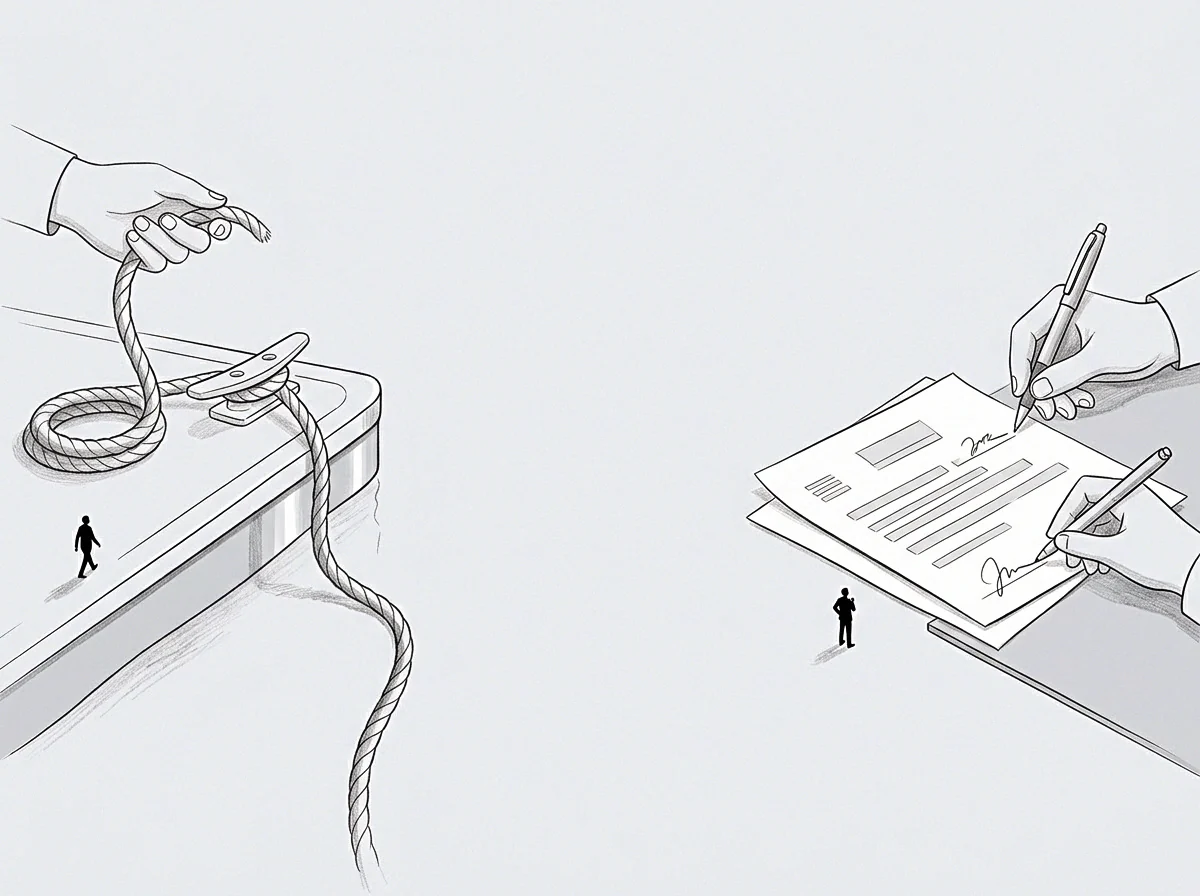
Structural Boundary Insertion
Determining the duration of the operational buffer requires measuring the distribution of handoff decay. Handoff decay represents the duration between an upstream commit and the downstream engineer beginning active consumption. When groups operate asynchronously without synchronous status meetings, the primary hazard stems from latent defects discovered after the upstream author logs off for the weekend.
The inserted window provides operational room to surface edge failures through scheduled asynchronous verification suites.
Teams run into severe friction when these intervals remain informal. An informal buffer invites encroachment: upstream teams treat the gap as extra authoring time, pushing unstable commits into the clearance window. Downstream teams grow accustomed to broken artifacts and stop inspecting staging releases promptly.
The entire cross functional workflow degrades into hidden queues, broken staging environments, and emergency communications that derail sprint focus across multiple divisions.

Drift
Asynchronous cross functional systems accumulate friction through temporal dispersion. When five squads coordinate across three continents, their operational cadences diverge naturally. An infrastructure squad operates on two-week continuous cycles, releasing micro-patches daily.
A regulatory compliance group reviews interfaces once every alternate Tuesday. If the handoff between them lacks a formal buffer window, the faster squad either halts work or deploys changes that break compliance standards.
Variance multiplies down the chain. An initial delay of three hours in an asynchronous code review produces a sixteen-hour stall when the author enters their sleep window before reading the feedback. This phenomenon, known as downstream latency amplification, converts trivial corrections into multiday operational stalls.
Latent work accumulates silently inside distributed task trackers.
Uncertainty compounds across departments whenever dependency transfers rely on unstated clearance expectations.
Idle cycles conceal friction. Engineers blocked on external dependencies pick up secondary tasks from the backlog, inflating work in progress. When the upstream artifact clears days later, the engineer faces an expensive context reload.
The cognitive cost of switching between incomplete architectures reduces throughput far more than the raw wait time recorded in issue trackers.
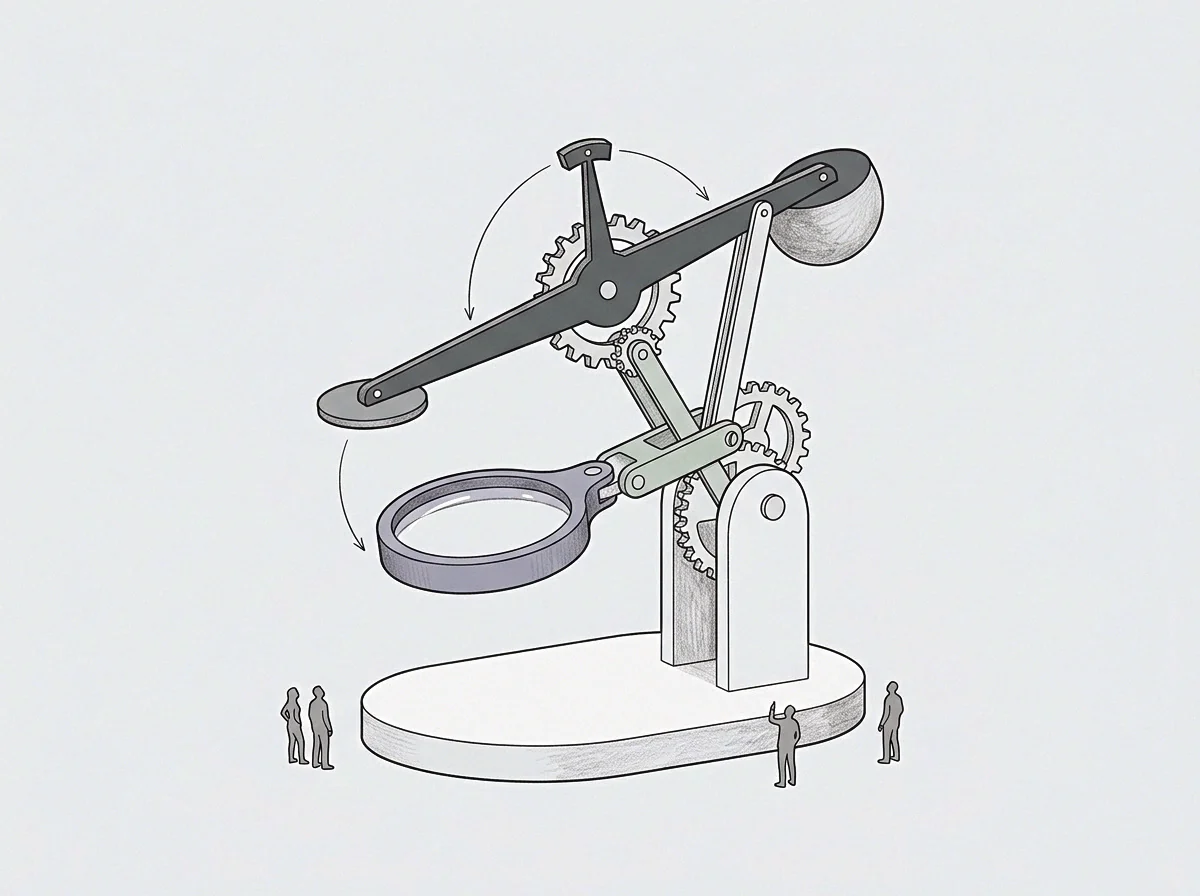
Sources Of Latency Amplification
Latency amplification in asynchronous systems traces back to three discrete failure states:
- Asynchronous Review Asymmetry occurs when the author and the designated reviewer operate in disjoint working windows, causing every clarifying comment to introduce an unavoidable twenty-four-hour round-trip penalty.
- Environmental Configuration Skew emerges when downstream testing occurs against infrastructure dependencies that shifted while the feature pull request sat in the merge queue.
- Secondary Task Interleaving develops as engineers start auxiliary user stories while waiting on upstream handoffs, creating deep attentional debt when the primary task unblocks.
The upstream team insists the implementation was completed and delivered precisely when the ticket moved columns on Friday.
Slack
Mathematical modeling of handoff windows requires treating engineering dependencies as stochastic queues. Deterministic project planning models assume steady-state execution, yet real engineering output follows long-tailed distributions. Code review response times, schema approvals, and integration test runs exhibit positive skew, matching log-normal or Weibull probability density curves.
Sizing a buffer window based on median task durations guarantees handoff failure in half of all cross functional transactions.
Queues hold latent work. The optimal buffer duration balances two opposing liabilities: the cost of downstream pipeline stalls against the carrying cost of delayed feature integration. Little’s Law dictates that the amount of work in progress equals arrival rate multiplied by lead time.
Inflating the temporal buffer window excessively increases lead time, causing work in progress to bloat across the organization. Conversely, compressing the window below the eightieth percentile of handoff latency triggers frequent downstream stalls.
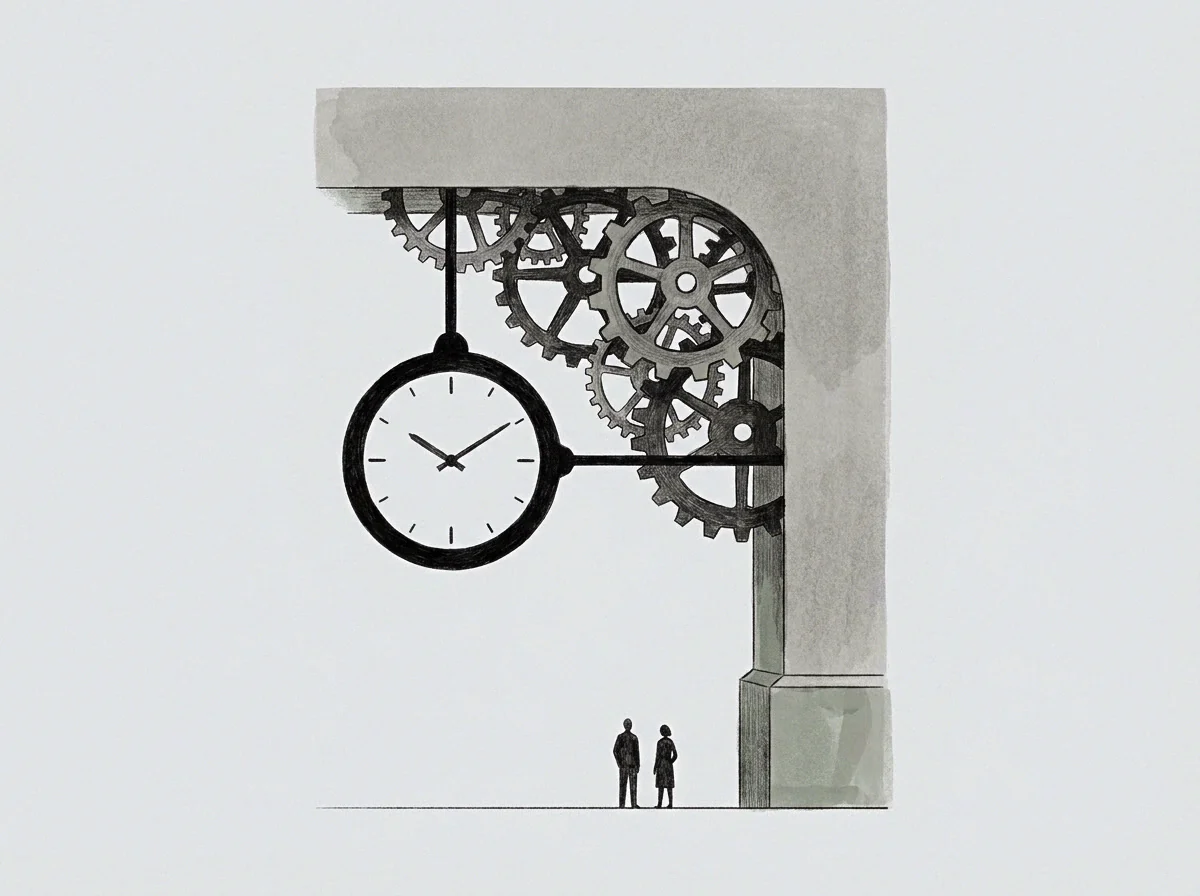
Which Temporal Bounds Absorb Variance Reliably?
Setting optimal buffer boundaries requires empirical measurement of team historical completion velocities. Sizing formulas draw upon historical p75, p90, and p99 completion intervals across distinct functional boundaries. Static padding strategies fail because different task classes carry wildly disparate variance profiles.
An API interface contract update between two experienced backend groups carries low variance, whereas an external compliance review involves severe tail latency.
| Buffer Model | Mathematical Formulation | Downstream Stall Risk | Attendant Carrying Cost | Optimal Workflow Domain |
|---|---|---|---|---|
| Deterministic Fixed Duration | Constant duration added to baseline estimate | High during distribution tail events | Low during predictable operations | Homogeneous collocated teams with minimal timezone separation |
| Quantile Variance Hedging | Difference between p85 and p50 task duration | Bounded below fifteen percent failure threshold | Moderate inventory accumulation in staging | Asynchronous cross timezone feature dependencies |
| Dynamic Headroom Allocation | Real-time adjustment based on active queue depth | Minimal across fluctuating cycle loads | Controlled through dynamic throttling | High-concurrency microservice platforms with automated CI gates |
| Tail Risk Margin | Three standard deviations above historical mean | Near zero downstream interruption | High cycle latency and stale code branches | Safety-critical infrastructure, schema migrations, public APIs |
Dynamic headroom allocation delivers superior capital efficiency on high-velocity teams by reading repository pull request backlog depth in real time. When upstream merge queues backup, the buffer window broadens automatically, signaling downstream consumers to avoid scheduling dependent stories in the immediate sprint. If upstream velocity clears smoothly, the headroom shrinks, accelerating cross functional delivery without exposing either side to unexpected blockages.
The buffer serves its purpose when its presence goes unnoticed by both teams throughout the release cycle.
Mesh
Coordination extracts an invisible penalty. In asynchronous engineering environments, teams do not coordinate through live conversations; they coordinate across structural boundaries using versioned interfaces, asynchronous documentation, and automated validation tests. The mesh of interactions across platform, infrastructure, web, mobile, and security teams requires clearly stated transfer conditions.
An unstated condition produces broken builds, conflicting migrations, and fractured data stores.
Every handoff introduces an interface. Treating handoffs as structural objects means defining unambiguous criteria for when an artifact enters and exits the temporal buffer. A staging build does not simply sit idle for twenty-four hours; it enters an automated gate where regression tests run against synthetic data profiles.
If the automated checks pass and no upstream blocking alerts trigger before the window elapses, the artifact passes automatically to downstream consumption without synchronous manual approval.
A contract states the criteria of clearance rather than the emotional confidence of the developer.
The handoff stops cold. When cross functional groups rely on goodwill rather than concrete interface conditions, the stronger team shifts cognitive load onto the weaker team. Upstream developers publish half-tested code, expecting downstream consumers to report bugs.
The temporal window eliminates this dynamic by enforcing an immutable boundary: downstream teams ignore upstream deliverables until the automated clearance window completes successfully.

Execution Of State-Gated Handoffs
State-gated handoffs replace human negotiation with verified structural thresholds across distributed organizations:
- Artifact Sealing freezes the upstream branch, producing an immutable release candidate tag alongside generated OpenAPI specs or protobuf definitions.
- Autonomous Verification Clearance triggers automated containerized test suites, contract tests, and static analysis sweeps inside an isolated namespace.
- Buffer Dwell Interval holds the candidate release in escrow for a predetermined period based on the calculated variance quantile of that dependency class.
- Downstream Notification Signal dispatches an asynchronous event to downstream queues verifying that the artifact meets all stated validation criteria.
Reviews stall without explicit terms. If an upstream group breaches an agreed handoff parameter, the buffer window resets entirely, protecting the downstream pipeline from absorbing unverified defect cascades.
The signed handoff contract stipulates that any artifact failing automated contract validation within the twelve-hour clearance window is returned to the author without downstream triage obligations.
Pace
Establishing an engineering tempo across global timezones requires detaching progress from immediate human availability. Teams that enforce a rigid cadence without accommodating temporal variance inevitably revert to frantic midnight firefighting. A sustainable pace treats temporal buffers as standard operational infrastructure, similar to how memory buffers prevent packet drops in high-throughput network interfaces.
The buffer creates operational breathing room, allowing engineers to maintain focus during their primary working hours.
Static calendars distort progress. When teams evaluate output strictly through weekly release targets, they compress buffer windows artificially to squeeze tickets into arbitrary calendar boundaries. This artificial compression introduces severe tail risk.
A feature deployed without adequate soak time in an asynchronous staging buffer frequently crashes in production, wiping out the paper velocity gains achieved by rushing the handoff.
Capacity disappears into waiting. If buffer windows are set purely through conservative historical margins, delivery velocity slows to an unacceptable drag. Engineering leadership must regularly audit handoff queues to identify structural bottlenecks.
When a specific cross functional boundary consistently requires a seventy-two-hour buffer window, the underlying issue usually stems from architectural coupling rather than normal review latency. Decoupling the software architecture through backward-compatible interfaces shrinks the required temporal buffer window naturally.
How an organization handles buffer calibration under shifting market pressures reveals whether engineering discipline can withstand executive deadlines, or whether teams will inevitably discard empirical windows to chase ungrounded delivery milestones.