Meaning
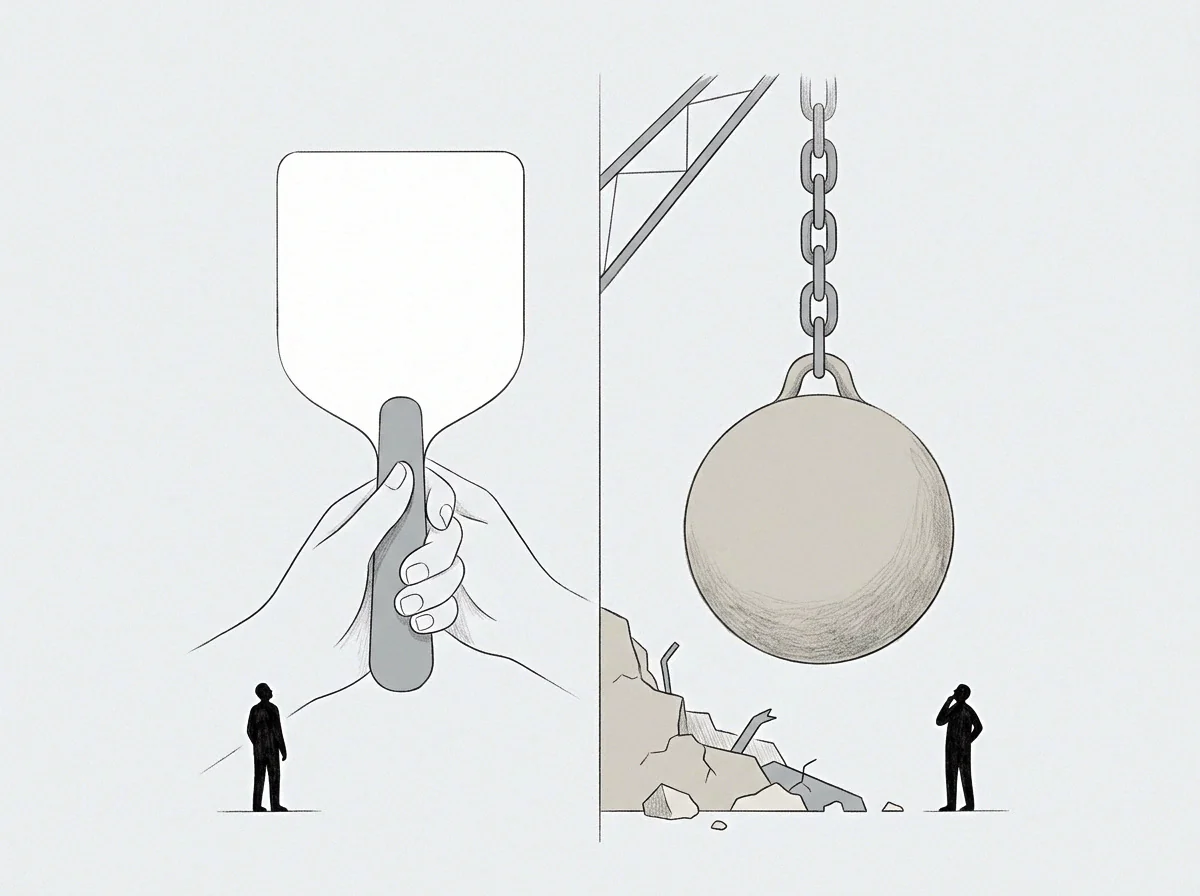
An architectural limitation marks the maximum organizational throughput attainable under a specific administrative and operational configuration. Encountering a structural ceiling triggers severe biological strain in founders attempting to bypass organizational limits through personal exertion. Individual energy cannot compensate indefinitely for deficient institutional design, and further effort yields diminishing systemic returns.
The limit stops defining performance once the operating system undergoes fundamental decentralization and formal architectural restructuring.
Systemic Maximum
Inherent procedural constraints inevitably cap the expansion of any centralized institutional arrangement. Hitting a structural ceiling exposes the boundary where informal coordination breaks down under operational volume. When operational pathways rely on personal relationships rather than documented procedures, administrative friction rises exponentially.
Output reaches an inflexible plateau where additional input generates disproportionate internal conflict. Recognizing this boundary prevents futile expenditures of personal physical stamina.
Saturation Index
Systemic saturation occurs when all existing operational channels operate at peak data throughput. Below the structural ceiling, localized effort can temporarily lift performance to meet unexpected market opportunities. At the ceiling, however, every incremental project displaces an existing task, triggering widespread execution errors across peripheral departments.
Operators experience this ceiling as a sudden wall of intractable organizational resistance. The resulting frustration drains motivational resilience while raising baseline physiological exhaustion.
Channel Failure
Continued expansion without architectural redesign eventually precipitates operational collapse. Pushing an enterprise beyond its structural ceiling forces communication channels to drop critical data packets and neglect compliance obligations. The executive experiences compounding cognitive overload from managing acute operational fires across multiple domains.
Long-term corporate continuity requires stepping back to completely rebuild administrative pipes rather than burning human capital against immovable ceilings.