
Structural Interventions For Overcoming Inverted Autonomic Regulation Templates In High Volatility Venture Leadership
Inverted autonomic regulation templates arise when leaders internalize sole stress stewardship, requiring physical and operational barriers to force co-regulatory recalibration.

Architecture
Executive self-control operates as a temporary drawdown on finite attentional assets, whereas autonomic regulation dictates the baseline metabolic expense of holding a seat under stress. In high-volatility venture environments, leaders frequently develop an inverted autonomic regulation template. Rather than utilizing external social presence to lower physiological threat responses, the leader internalizes a working model where they act as the sole stabilizing baseline for the entire enterprise.
Volatility taxes the nervous system. Metabolic resources deplete quickly.
Social baseline theory establishes that the human brain budgets energy under the assumption that reliable co-regulators are present. When proximity to a dependable other is established, the neural cost of environmental vigilance decreases. In early operational environments, however, the founder repeatedly experiences situations where external counterparties, investors, and team members transfer their destabilization upward.
The founder absorbs this ambient volatility to maintain institutional momentum. Over time, this operational reality conditions the autonomic nervous system to reverse its baseline intake. The presence of others ceases to register as a source of shared regulatory support and instead signals an additional demand for physiological composure.

The Internalized Model of Sole Stewardship
This structural inversion transforms how threat is processed at the physiological level. The leader constructs an internal working model that excludes the receptor slot for being held or supported by another person’s stable state. When operational shocks occur, such as a failed funding round, a key executive departure, or a sudden contract termination, the leader’s autonomic nervous system defaults to total self-containment.
Self-regulation carries a high metabolic price. The autonomic template forces the cardiovascular and endocrine systems to sustain high sympathetic output or profound parasympathetic dampening to project outward stability.
The outward appearance of such composure is routinely misread by board members and management teams as high resilience or capacity. This misinterpretation creates a systemic feedback loop. Because the leader appears unshakeable, the organization routes increasingly complex volatility directly to their desk.
The internal regulatory template solidifies: the leader acts as the universal absorber of organizational friction while operating with zero incoming co-regulatory offset. The physiological debt accumulates beneath a surface of steady execution.
An inverted autonomic template forces the leader to process systemic stress through solitary neuroception, elevating basal cortisol despite visible composure.

Metabolic Expenditure in Solitary Threat Processing
Continuous solitary regulation alters the baseline calibration of the hypothalamus-pituitary-adrenal axis. Proximity alters threat calculation. When an individual operates without access to coregulation, the brain treats every operational uncertainty as a primary survival challenge.
The metabolic expenditure required to maintain executive function under these conditions accelerates allostatic load accumulation. The leader experiences persistent autonomic overdrive, characterized by elevated baseline heart rate variability suppression, disrupted sleep architecture, and a narrowing of cognitive flexibility.
Cognitive strategies, such as intellectualizing the crisis or attempting intentional positive framing, fail to alter this subconscious metabolic calculus. The autonomic template sits below conscious cognitive control, responding strictly to perceived safety, relational predictability, and load distribution. Attempting to resolve autonomic inversion through cognitive self-instruction leaves the underlying baseline debt untouched.
The physiological apparatus continues to expend maximal energy to maintain an artificial equilibrium across the executive layer.
Failure to restructure the underlying regulation template leaves the leader operating in chronic allostatic overdrive, terminating in sudden executive collapse.
Relay
Organizational volatility travels downward until it hits a layer capable of absorbing it without immediate escalation. Team members naturally attach to the leader’s internal state rather than to written policies or structural directives. When the leader operates from an inverted autonomic template, this attachment dynamic becomes entirely one-directional.
The organization borrows calm from the leader, while the leader receives no regulatory return from the organization. The seat absorbs environmental friction.
This asymmetric exchange creates an operational environment where the founder’s physical or digital presence becomes the sole mechanism for team stabilization. During acute crises, direct reports seek meetings not merely for strategic direction, but to calibrate their own autonomic states against the leader’s composure. The leader supplies this steadying force continuously, paying for the team’s operational calm out of their own metabolic reserves.
The baseline shifts under threat. Silence often signals mounting load.
Which Structural Mechanisms Force Template Recalibration?
Intervening in an inverted template requires shifting the physical and operational structures through which relational load moves. Interventions must alter the immediate physiological cost of leadership by interrupting automatic load transfer. The following patterns signal that an executive team has locked into an inverted regulation dynamic:
- Unilateral Volatility Absorption occurs when direct reports routinely escalate unmitigated operational stress to the executive seat without attempting peer-level containment.
- Receptor Slot Atrophy manifests as the leader’s automatic physiological contraction or withdrawal when team members offer genuine operational or emotional support.
- Borrowed Calm Dependency appears when team execution velocity drops immediately upon the leader’s physical absence or communication disconnect.
- Vigilance Overdrive establishes itself as continuous, compulsory monitoring of organizational communications during designated recovery windows.
These failure modes reflect a deeply ingrained operational contract. The leader has become the designated regulator for the system, and the system has structured its routines around that availability. Restructuring this dynamic demands explicit operational boundaries that restrict direct autonomic exploitation.
A stated capacity cap converts implicit relational load into explicit operational bandwidth.

The Anomalous Register of Incoming Support
When an executive operating under an inverted template encounters an attempt at coregulation, the internal working model flags the interaction as an anomaly. An offer of assistance from a board member or a peer founder is frequently interpreted as an administrative task, an implicit audit, or a subtle sign of operational weakness. The nervous system, conditioned to view self-reliance as the sole path to safety, rejects the incoming stability.
Shared regulation lowers physiological expense.
This rejection closes the only natural valve for allostatic relief. The leader remains trapped in a self-reinforcing pattern: the higher the systemic volatility, the tighter the autonomic self-containment, and the more isolated the leader becomes from potential sources of co-regulatory recovery. Over time, the capacity to experience genuine relational safety deteriorates, leaving only functional endurance.
The leadership team will observe that every critical decision still requires the founder’s physical presence to feel stable.
Wall
Structural interventions must replace reliance on volitional self-control with fixed operational constraints. Operational walls protect the leader’s nervous system from continuous, unmitigated exposure to incoming organizational chaos. Insight alone changes no template.
By establishing physical, temporal, and procedural barriers, the enterprise forces a decoupling between operational urgency and autonomic activation.
Environmental hardening begins with strict communication hygiene and explicit availability protocols. Volatility accelerates allostatic accumulation. When a founder maintains continuous access to real-time communication channels, their autonomic system remains in a perpetual state of hyper-vigilant readiness.
Implementing hard structural barriers interrupts this continuous threat scan, establishing mandatory recovery zones that allow the baseline allostatic load to reset.
Structural constraints alter physiological expenditure long before cognitive shifts alter emotional state.
| Evaluation Criterion | Volitional Self-Regulation | Structural Environmental Constraints |
|---|---|---|
| Metabolic Expense | High; continuous cognitive energy consumed to maintain outward composure. | Low; physical barriers prevent baseline threat activation. |
| Signal Latency | Immediate; raw operational volatility hits the leader instantly. | Buffered; asynchronous queues filter incoming shocks. |
| Vulnerability to Volatility Spikes | Severe; unexpected shocks cause autonomic overdrive or collapse. | Protected; structural protocols enforce triage before escalation. |
| Long-Term Template Recalibration | Minimal; reinforces solitary self-reliance as the sole safety mechanism. | Significant; creates operational space required to form earned security. |

Sequential Protocols for Structural Load Reduction
Transitioning an executive seat out of inverted regulation requires an ordered deployment of operational constraints. These steps restructure how information and stress move through the leadership layer:
- Establish asynchronous information queues that isolate the founder from real-time operational pings during deep cognitive blocks.
- Define explicit escalation boundaries that require executive team members to formulate two actionable resolution options before initiating contact.
- Institute mandatory, non-negotiable disconnect windows where operational authority fully shifts to a designated chief operating officer or managing partner.
- Implement capacity caps on direct reports, limiting the total number of individuals who hold real-time access to the executive desk.
These structural interventions remove the immediate physiological necessity for constant vigilance. Structural boundaries enforce recovery limits. As the nervous system experiences repeated periods devoid of incoming operational shocks, the baseline metabolic expense of holding the leadership seat begins to decline.
The introduction of a mandatory seventy-two-hour asynchronous latency clause shifts emergency triage from real-time autonomic absorption to scheduled operational review.

Margin
Template update occurs through repeated, concrete experiences of relational safety under load, a process known in attachment literature as earned security. Cognitive insight into an inverted template identifies the pattern, but experiential recalibration dismantles it. Earned security requires repeated baseline stability.
To update an inverted template, the leader must experience operational situations where volatility is successfully contained by a partner, a co-founder, or an executive team without the leader needing to step in as the primary regulator.
Consider a venture-backed enterprise experiencing a sudden, public product failure during a major growth phase. Under an inverted template, the founder automatically assumes full responsibility for steadying customer success teams, fielding investor panic, and managing media inquiries. The metabolic cost of this total containment is extreme.
Assume instead that the enterprise operates under a restructured governance model where the managing partner assumes full external communications while the chief technology officer manages internal technical remediation. The founder is explicitly locked out of real-time mitigation channels for forty-eight hours.
The Experience of Delegation Without Collapse
During those forty-eight hours, the founder’s autonomic nervous system initially experiences intense threat activation, predicting systemic failure due to the absence of direct stewardship. However, as updates arrive showing that the executive team has successfully stabilized the situation without founder intervention, the nervous system receives a novel input signal. The predicted disaster does not occur.
The internal working model receives empirical evidence that external structures can hold organizational weight reliably.
Capacity caps restrict late pings. This delta between predicted catastrophe and actual structural containment is the precise mechanism through which autonomic templates update. Repeated exposure to this delta over twelve to eighteen months gradually installs a second regulatory template.
The leader begins to register shared operational structures as genuine co-regulatory assets rather than additional management burdens.
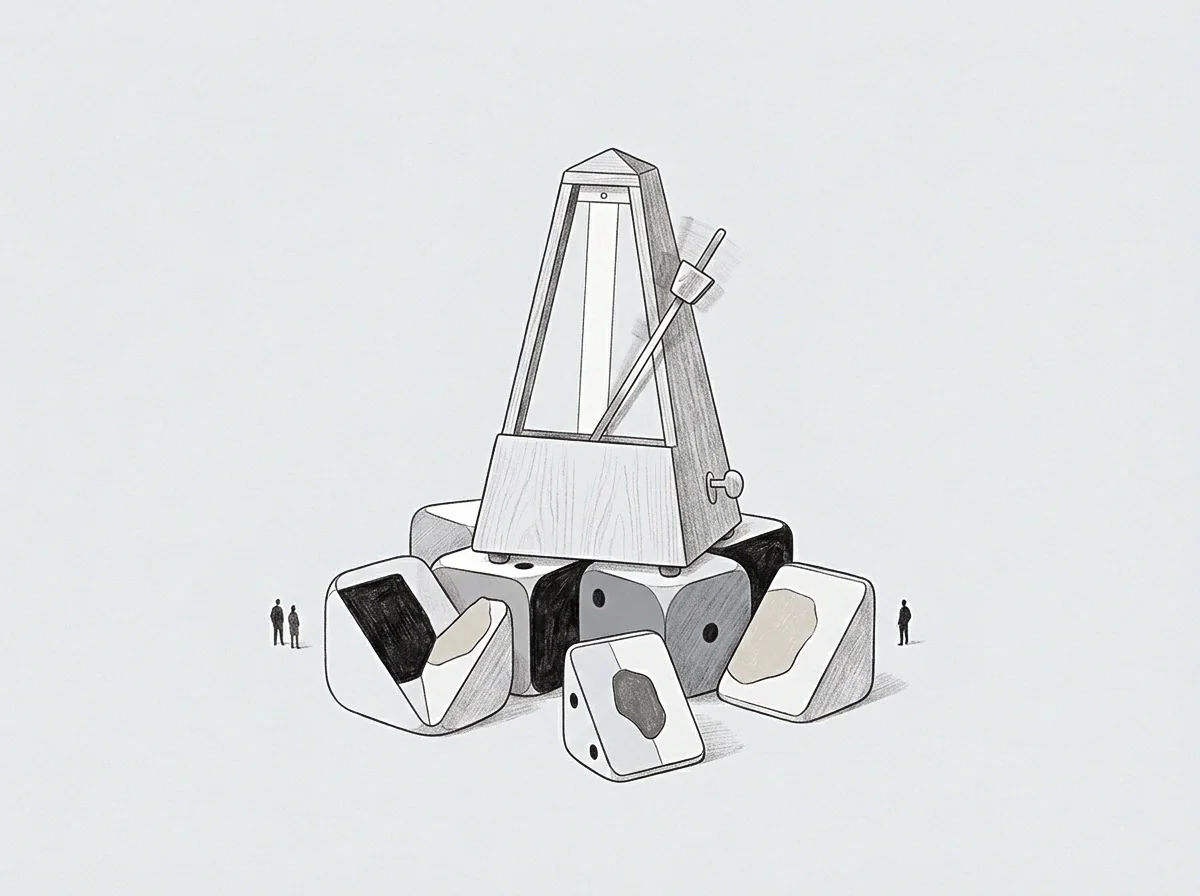
The executive team absorbs operational volatility when physical boundaries prevent direct load transfer to the founder.
Restructuring Relational Architecture at the Executive Layer
Building this secondary template requires high-fidelity counterparties capable of maintaining their own autonomic composure under extreme stress. If an executive partner collapses under pressure, the founder’s inverted template receives reinforcement, deepening the conviction that solitary containment represents the only viable survival strategy. Venture boards and executive recruiters must evaluate potential co-founders and senior operators not only for domain competence, but for their baseline autonomic stability under high-uncertainty conditions.
Placing a stable, self-regulating operator alongside a founder with an inverted template creates the necessary physiological conditions for earned security. Autonomic templates update through experience. The founder gradually relinquishes continuous system monitoring, allowing their baseline allostatic load to drop toward normal human levels.
The seat transforms from an isolated absorber of stress into a node within a distributed regulation architecture.
A nervous system accustomed to solitary load bearing accepts coregulation only when environmental barriers make solitary containment impossible.
Hinge
Maintaining structural interventions over long operational horizons requires continuous governance. High-volatility venture environments possess an innate gravity that constantly pulls organizations back toward centralized, founder-centric stress absorption. During acute market contractions or pivot phases, the institutional temptation to collapse boundaries and demand real-time founder availability is severe.
Operational discipline at the board level serves as the final barrier preventing this regression.
Longitudinal monitoring of baseline indicators provides objective tracking of template recalibration. Decreases in baseline resting heart rate, improvements in heart rate variability recovery post-crisis, and a sustained reduction in off-hours communication density indicate that the structural interventions are taking root at the physiological level. The leader shifts from surviving the seat through sheer endurance to operating within a sustainable metabolic margin.
Disputes Regarding High-Volatility Leadership Demands
A central dispute within executive performance research concerns whether high-volatility venture leadership inherently demands an inverted regulation template. One perspective holds that early-stage company creation is an extraordinarily abnormal human activity that temporarily requires unmitigated solitary load bearing. Proponents of this view argue that structural interventions introduced too early dampen organizational agility and slow critical crisis response times.
The opposing perspective, held by stress neuroscientists and long-horizon institutional investors, demonstrates that unmitigated solitary regulation inevitably leads to systemic executive failure, distorted decision-making, and premature founder exit. The data indicates that while acute solitary containment can preserve short-term momentum, it carries a compounding physiological interest rate that destroys long-term enterprise value. Implementing structural interventions early protects both the human asset in the seat and the capital deployed behind them.
It remains uncertain whether high-volatility venture structures can sustain long-term growth without occasionally triggering a temporary return to solitary autonomic stewardship.