
Executive Autonomic Regulation In High Pressure Leadership Roles
Executive autonomic regulation stabilizes institutional distress through metabolic vagal suppression, which extracts personal reserves absent true co-regulation.
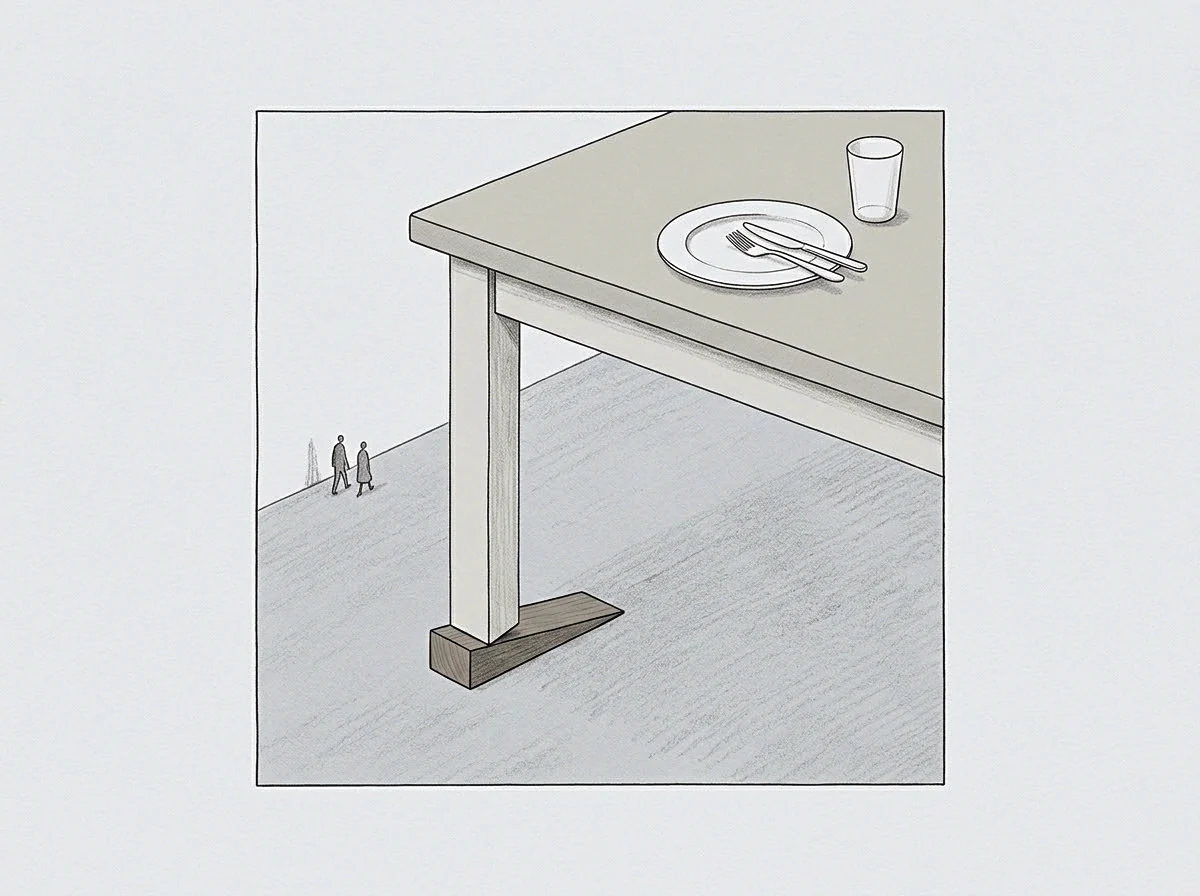
Desk
Four browser windows remain open past midnight while an unhedged currency exposure compounds across three subsidiaries. The executive sits motionless in an illuminated office, breathing at six cycles per minute to blunt an acute tachycardia response. Subordinates have departed after receiving steady, unhurried directives that masked the underlying operational crisis.
A solitary leader absorbs systemic volatility by deliberately suppressing peripheral motor tremors and vocal frequency fluctuations, a level of control that carries a measurable metabolic cost.
Internal stabilization during institutional distress draws directly on personal physiological reserves. When catastrophic information arrives, the sympathetic branch of the autonomic nervous system initiates a classic threat mobilization sequence. Epinephrine saturates arterial pathways, ventricular contractile velocity accelerates, and splanchnic circulation diverts toward skeletal muscle.
Executive roles demand the immediate physical concealment of these defense responses, requiring the leader to immobilize facial musculature, drop vocal pitch into a narrow baritone band, and keep respiration steady to project composure to the room.
The body pays the difference between institutional disorder and outward operational composure.
Solitary vigilance burns glycogen rapidly. The central nervous system treats chronic institutional isolation as acute biological exposure. Without a reliable peer to distribute environmental threat monitoring, the leader stays anchored in persistent preparatory arousal.
Heart rate variability contracts while peripheral microvascular beds constrict through protracted alpha-adrenergic signaling. Holding an enterprise steady from an isolated seat extracts energy directly from cardiovascular and neuroendocrine tissue.

Metabolic Consequences Of Sustained Motor Inhibition
Prolonged motor restraint during sympathetic arousal produces acute somatic friction. Active mobilization seeks physical discharge through movement, yet executive composure demands complete stillness behind a desk. Cortisol secretion continues unabated while voluntary motor pathways in the prefrontal cortex expend glucose to arrest muscular agitation, creating an isometric pressure chamber in the body.
- Vagal brake preservation maintains cardiac deceleration during acute operational panic through continuous parasympathetic nucleus ambiguus efference.
- Sympathetic vasoconstriction channels systemic blood volume away from visceral beds into tense skeletal muscle groups, absorbing tremor through sustained isometric tension.
- Neuroendocrine elevation floods systemic circulation with free fatty acids and glucocorticoids that remain unconsumed by physical action.
This prolonged state of unexpressed mobilization compromises cellular repair and sleep architecture. Extended sympathetic dominance degrades slow-wave delta cycles, blunting nocturnal growth hormone release and impairing prefrontal restorative clearances. Chronic nocturnal vigilance ultimately erodes cognitive flexibility, reinforcing rigid decision pathways and acute risk aversion.
Nerve
Autonomic regulation relies upon bidirectional communication between subcortical survival structures and the myelinated vagus. Phylogenetic analysis of cardiac regulation documents how the myelinated ventral vagal complex actively decelerates heart rate to support social engagement. Under intense executive pressure, maintaining this ventral vagal brake becomes metabolically expensive.
When ambient organizational threat escalates beyond operational margins, primitive unmyelinated pathways take over autonomic control.
The neurobiology of leadership isolation centers on the metabolic cost of unassisted down-regulation. The prefrontal cortex exerts top-down inhibitory control over the amygdaloid nuclei through dense gamma-aminobutyric acid projections. In high-pressure operational environments, the sheer volume of ambiguous threats outpaces prefrontal capacity.
The locus coeruleus releases noradrenaline throughout the neocortex, shifting processing toward fast survival heuristics and creating an unbuffered drain on neural energy reserves for anyone regulating without social proximity.
Vagal brake suppression accelerates whenever threat perception exceeds individual glucose availability.
Heart rate variability serves as the primary proxy for prefrontal regulatory headroom. High-frequency heart rate variability indexes the millisecond-by-millisecond modulation of cardiac output by respiratory sinus arrhythmia. Robust baseline vagal tone permits swift recovery from acute organizational shocks, but operating under chronic pressure without physiological down-regulation windows progressively deteriorates tonic vagal control.

Can Solitary Downregulation Sustain Chronic Allostatic Load?
Laboratory findings across multiple human trial cohorts reveal that individual self-regulation without relational buffering demands double the metabolic oxygen consumption of shared regulation. Functional magnetic resonance imaging demonstrates that individuals facing threat cues while alone exhibit significant dorsal anterior cingulate cortex and anterior insula activation, regions that compute somatic pain, uncertainty, and regulatory effort. When the brain assumes complete ecological self-sufficiency, it recalculates environmental load as severely threatening, immediately elevating allostatic expenditure.
Executive literature frequently misattributes autonomic exhaustion to mental weakness or emotional frailty, but the breakdown is fundamentally biophysical. The human central nervous system did not evolve to manage prolonged existential enterprise risk in social isolation. Solitary regulation forces the adrenocortical axis to maintain high basal salivary cortisol levels, flattening the diurnal cortisol curve and bringing on premature neurobiological exhaustion.
Whether prolonged solitary vagal stabilization causes irreversible autonomic dysregulation remains an empirical dispute within occupational neuroscience, as longitudinal cardiac telemetry across diverse leadership cohorts remains sparse.

Valve
The transmission of stability throughout an executive suite functions as an asymmetrical energetic pipeline. Subordinates, directors, and board members continually evaluate an executive’s micro-expressions, postural sway, and respiration to regulate their own autonomic state. A steady leader provides borrowed calm to the room, allowing others to reduce their internal allostatic load while returning zero regulatory relief to the person supplying the signal.
Social Baseline Theory explains why human physiology treats relational proximity as the default regulatory state. When reliable conspecifics are near, the brain budgets metabolic activity under the assumption of shared vigilance and distributed defense. In hierarchical corporate arrangements, this economy operates in reverse: the leader occupies an artificial biological position as a social animal surrounded by dependents who demand regulatory grounding while offering no mutual baseline support.
Unilateral autonomic buffering produces rapid systemic depletion whenever secondary parties offload internal panic onto a stable presence.
This dynamic creates a structural trap for competent leadership. A leader who displays exceptional stability under severe distress attracts compounding organizational anxieties. Team members subconsciously offload their regulatory requirements onto this steady node, escalating reliance during every operational tremor.
The leader becomes an autonomic heat sink, absorbing collective panic without a terminal channel to ground the accumulated charge.
| Regulation State | Vagal Efficiency | Prefrontal Energy Drain | Cortisol Recovery Latency | Long-Term Systemic Durability |
|---|---|---|---|---|
| Solitary Suppression | Severely Blunted | Maximum Glucose Clearance | Exceeds Twelve Hours | Rapid Neuroendocrine Collapse |
| Unilateral Absorption | Moderately Depressed | High Continuous Clearance | Eight To Ten Hours | Cumulative Cardiovascular Strain |
| Reciprocal Co-Regulation | Optimally Preserved | Low Baseline Consumption | Ninety Minutes | High Multi-Year Viability |
The operational divide between unilateral absorption and genuine co-regulation determines enterprise leadership longevity. An executive who absorbs organizational distress without reciprocal autonomic anchors undergoes progressive blunting of the reward pathway, as dopaminergic responsiveness in the nucleus accumbens attenuates and gives way to emotional anhedonia and somatic exhaustion.
Mechanisms Of Relational Capital Extraction
The somatic transfer between dependent teams and an executive leader follows predictable physiological sequences during high-stakes enterprise shocks.
- Vocal frequency entrainment causes agitated subordinates to match the leader’s slower fundamental speech cadence, offloading their autonomic acceleration into the acoustic space.
- Respiratory pacing convergence pulls panic-driven thoracic breathers toward the leader’s measured diaphragmatic cycle, stabilizing the subordinate while requiring the executive to resist erratic kinetic rhythms.
- Micro-gestural absorption forces the executive to suppress mirror neuron mimicry, expending inhibitory control to prevent reflexive displays of staff panic.
Subordinates infer complete safety when the executive sits without moving a single muscle during a liquidity breach.
Bank
Escaping autonomic depletion demands structural scaffolding rather than renewed cognitive exertion. The internal model of hyper-independent leaders merges self-regulation and other-regulation into a single continuous duty, leaving little openness to receive support. Earned security develops instead through repeated physiological experiences of safety alongside a non-evaluative counterpart; cognitive insight alone alters little in the subcortical brain stem.
Executives require dedicated relational circuits outside the corporate power structure, built with counterparts whose own autonomic stability does not depend on executive performance. In these specific environments, the ventral vagal system can release active postural and emotional defense scripts, as muscle tone stays rigid until the surroundings signal total freedom from evaluation.
Recovery demands physical safety. Somatosensory recalibration occurs when the central nervous system registers genuine relational presence that requires no reciprocal operational management. The prefrontal cortex can then disengage continuous inhibitory signaling over the amygdala, allowing systemic vascular resistance to drop and renal perfusion to normalize, restoring the biological reserves drained during high-pressure corporate execution.
Clear limits on personal availability establish the initial physical perimeter for autonomic recovery. A leader who fails to enforce hard biological cutoffs surrenders the final margins of vagal restoration. The nervous system rebuilds baseline capacity only when environmental threats are physically separated from rest cycles over predictable, repeated temporal blocks.
The stability of the enterprise never exceeds the unexpressed autonomic reserves of the person who leads it.