
Glucocorticoid Receptor Sensitivity Shifts During Sustained Solitary Leadership Operations
Sustained solitary leadership downregulates glucocorticoid receptor sensitivity through unbuffered stress drive, causing chronic inflammation and metabolic fatigue.
Receptor
Sustained solitary leadership forces the human brain to process environment-level threats through an unassisted metabolic budget. In social baseline theory, physical proximity to a trusted peer signals safety to the central nervous system, reducing the metabolic cost of environmental vigilance. When an executive operates in isolation for years, the hypothalamic-pituitary-adrenal axis remains in continuous drive.
Cortisol levels remain elevated without the periodic physiological drops induced by co-regulation. The single regulator bears all.

Nuclear Translocation Breakdown under Chronic Hypothalamic Activation
Extended duration under high glucocorticoid exposure induces structural changes within cellular feedback loops. Glucocorticoids cross cell membranes to bind cytosolic protein complexes. Under acute conditions, these complexes migrate to the nucleus to bind specific promoter regions, turning off inflammatory gene transcription.
Prolonged drive leads to ligand-induced down-regulation of alpha isoform expression. Ligand binding capacity drops, and nuclear migration efficiency degrades. Cortisol saturation blunts cellular signaling.
The down-regulation of glucocorticoid receptor sensitivity alters how the body terminates the endocrine stress response. Elevated circulating hormones no longer trigger normal negative feedback at the pituitary and hypothalamic nodes. The central nervous system continues generating stress signals despite high peripheral hormone levels.
Isolation alters neural baseline calculations.
Pro-Inflammatory Escalation Without Baseline Regulation
Blunted hormonal signaling alters systemic immune balance. Because peripheral tissues no longer respond to normal inhibitory signals, nuclear factor kappa B transcription pathways continue operating without interruption. Systemic cytokines including interleukin six and tumor necrosis factor alpha increase in baseline circulation.
The leader experiences continuous low-grade tissue inflammation alongside psychological flattening. Solitary operations carry physiological costs.
- Glucocorticoid Receptor Downregulation lowers transcription of anti-inflammatory genes during periods of sustained operational risk.
- Attenuated Cortisol Awakening Response flattens morning arousal peaks, making task initiation dependent on cognitive force rather than biological readiness.
- Uninhibited Cytokine Cascade maintains baseline vascular and neural inflammation, altering sleep architecture and emotional valence.
Continuous hypothalamic drive without proximity-based co-regulation downregulates cellular sensitivity to cortisol within eighteen months of solitary operation.
Inflammation rises without baseline buffering. The physiological state of a solitary leader shifts from acute mobilization to a refractory condition where standard biological recovery mechanisms cease operating efficiently. The precise threshold of isolation where cellular desensitization becomes permanent remains unresolved in longitudinal neuroendocrine studies.
Desk
A founder sitting alone at midnight reviews four operational fires across distant time zones. The room holds no secondary decision-maker to mirror physiological calm or share accountability. In this environment, every incoming operational threat hits a single hypothalamic-pituitary-adrenal axis without biological damping.
The Solitary Seat and Unreciprocated Regulation
Teams attached to an executive draw stability from the leader’s emotional steadiness. When an organization experiences turbulence, employees look to executive voice, posture, and response latency to gauge systemic risk. The leader absorbs collective panic and emits structural calm.
Because the team offers no reciprocal physiological buffering, the leader pays for collective stability out of an unreplenished personal metabolic reserve. The budget empties quietly.
People attach to a stable person’s state rather than to their artifacts. An executive’s clear memo or precise strategy document provides direction, but physical presence and vocal steadying lower the metabolic regulation costs of surrounding personnel. Borrowed regulation registers as the recipient’s own calm, leaving the source of that calm unrecognized.
Team stability drains executive reserves.
| Operational Criterion | Solitary Leadership Architecture | Co-Regulated Leadership Pair |
|---|---|---|
| Regulatory Budget Source | Single unassisted neuroendocrine system | Shared metabolic buffering across two peers |
| Cortisol Clearance Rate | Attenuated due to receptor desensitization | Normal diurnal clearance via social baseline mechanisms |
| Glucocorticoid Sensitivity | Progressive downregulation over multi-year eras | Sustained receptor sensitivity and feedback loop function |
| Decision Latency Under Threat | Elevated by cognitive fatigue and inflammation | Preserved through distributed cognitive and emotional load |
| Systemic Inflammatory Markers | Chronically elevated interleukin six and TNF-alpha | Baseline inflammatory profiles within normal reference bands |
How Team Co-Regulation Draws on a Single Reserve
Direct reports regulate their own acute stress by projecting expectations onto executive authority. A founder who maintains composure during capital crises lowers the cortisol output of surrounding directors. The surrounding directors leave meetings with restored baseline function.
The founder returns to an empty workspace with elevated vascular resistance and unchanged circulating cortisol. The body keeps the operational count.
An executive who functions as the sole emotional anchor for an enterprise consumes personal physiological reserves to maintain organizational stability.
Strength under stress attracts additional operational load. Organizations systematically transfer unresolved anxiety upward toward the person who demonstrates the highest capacity to bear it. This structural transfer continues until the leader’s cellular receptors desensitize, forcing a sudden systemic drop in executive capacity.
Regulatory debt grows whenever an executive absorbs team panic without access to a peer who shares the underlying operational risk.
Allostasis
Systemic adaptation to unremitting operational load alters long-term homeostatic set points. When stress systems operate at ceiling for multi-year durations, the neuroendocrine architecture shifts from transient defense to structural accommodation. This state represents an adaptive recalibration.
Simple metabolic exhaustion fails to capture the underlying receptor dynamics.
Distinguishing Glucocorticoid Resistance From Clinical Depression
Executive flattening frequently presents with symptoms overlapping major depressive disorders, including anhedonia, sleep fragmentation, and reduced drive. The underlying cellular state differs fundamentally. Standard major depression often involves altered monoaminergic neurotransmission alongside central glucocorticoid drive without systemic receptor blunting.
Solitary leadership fatigue stems directly from receptor-level desensitization caused by chronic ligand saturation.
Treating glucocorticoid resistance with conventional monoamine-focused interventions yields limited physiological shift. When receptor complexes cannot translocate to the nucleus, elevating synaptic neurotransmitters fails to lower peripheral cytokine cascades or restore diurnal cortisol rhythms. Receptor sensitivity requires time.
Do Solitary Leaders Re-Sensitize Glucocorticoid Receptors Through Stated Limits?
Establishing clear boundaries around operational availability halts the continuous influx of novel stressors. A stated limit creates a predictable schedule, allowing hypothalamic drive to decline. Receptor re-sensitization requires more than schedule boundaries.
Physical proximity to non-evaluative peers and shared decision authority are required to restore cytosolic receptor complex transport.
Schedule boundaries reduce incoming operational friction but fail to restore receptor sensitivity without authentic shared accountability.
Setting limits without altering proximity simply isolates the leader further within an unchanged physiological debt. The brain continues to register sole responsibility for systemic survival, maintaining baseline hypothalamic activity even during non-working hours. Misidentifying receptor desensitization as clinical burnout leads leaders to seek passive rest while leaving the unbuffered operational architecture intact, guaranteeing immediate relapse upon returning to the seat.

Attachment
Sustained solitary leadership alters internal working models developed early in life. The brain constructs mental representations of relationships based on whether others serve as reliable sources of safety. When a founder carries sole operational responsibility for years, the internal template rewires to define the self as the exclusive provider of stability.

The Backward Working Model of Self-Preservation
Repeated exposure to high-stakes environments without co-regulation forces the individual to run relational cycles in reverse. The leader internalizes a regulator template where self-regulation and regulating others merge into a single operation. In this configuration, receiving care registers as operational vulnerability or unpredictability.
The brain deletes the expectant neural pattern for support.
A person who operates on this reverse template reads external calm as a resource to be protected rather than shared. When an advisor or partner offers steady presence, the founder instinctively attempts to maintain the advisor’s state, assuming that any shift in the other person’s mood will increase total system load. The founder remains locked in the active regulator role.
Shared risk lowers metabolic stress.
The Structural Deficit of the Unoccupied Regulator Slot
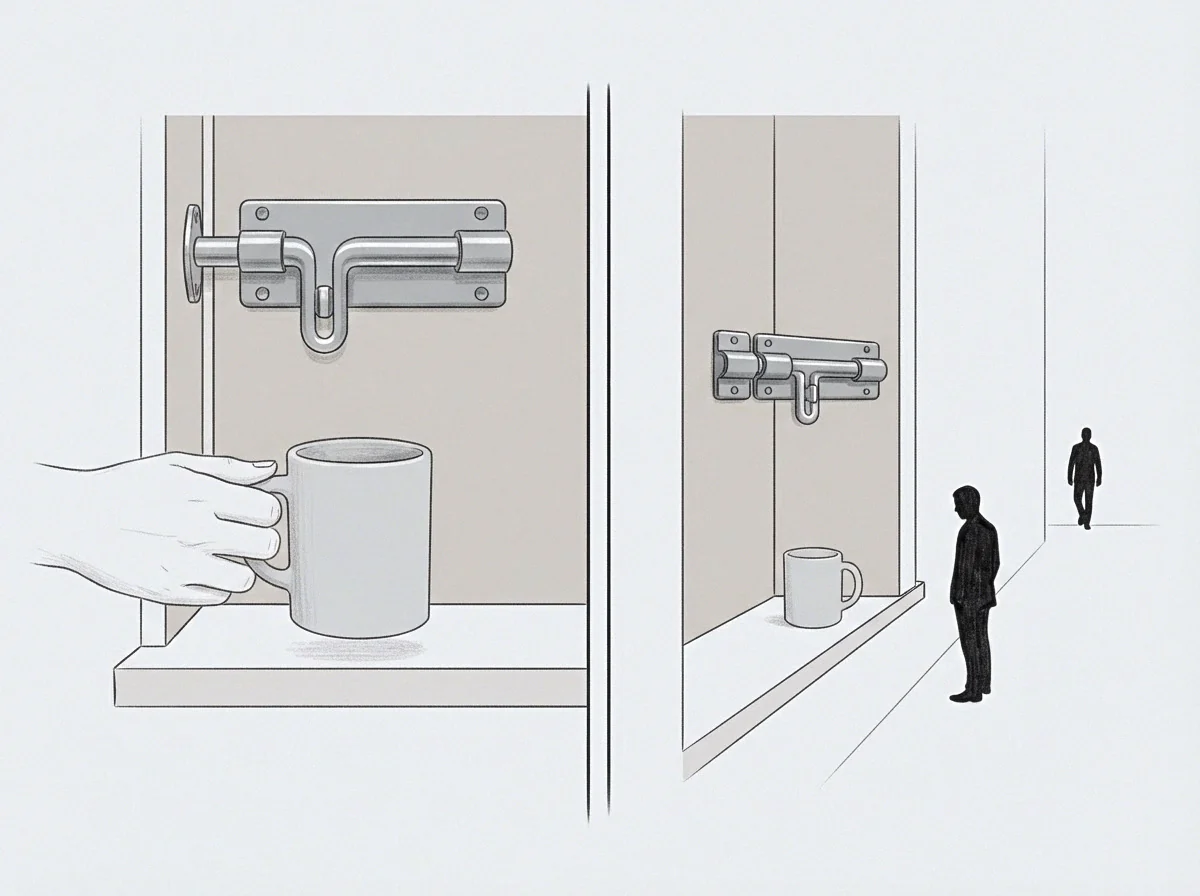
The human relational architecture includes a physiological receptor slot for external regulation. When an executive operates alone, this slot remains empty for extended durations. Offers of support from board members or personal partners fail to engage the mechanism.
The leader reads offers of presence as external demands requiring further emotional management. The slot atrophies.
- Sustained operational isolation forces sole reliance on self-soothing mechanisms during acute crises.
- Cognitive patterns shift to interpret external offers of help as added operational coordination costs.
- The internal template closes the capacity to experience physiological relief through physical proximity.
An internal working model that eliminates the expectation of external support converts every relational contact into an additional regulation task.
Rebuilding the capacity to use external regulation requires unlearning the habit of constant emotional containment. Cognitive insight changes nothing alone. The founder must experience concrete instances where operational risk is genuinely borne by another party before the internal working model permits receptor re-sensitization.
Offers of help are declined because managing another person’s presence takes more energy than bearing the decision alone.
Update
Modifying a deeply ingrained neuroendocrine template requires physical micro-experiences of shared regulation over extended timeframes. Cognitive insight into stress physiology does not alter receptor kinetics or restore hypothalamic sensitivity. The cellular apparatus updates only when biological safety is repeatedly experienced under real operational load.

Earned Security Through Physical Proximity and Shared Load
Developing earned security in executive roles demands structured co-presence during high-stakes decision cycles. Placing two operators with equal equity and voting power in the same room changes hypothalamic budgeting. When a critical threat arises, the biological burden splits between two active neuroendocrine systems.
Over twelve to eighteen months, baseline cortisol levels settle into normal diurnal rhythms. Glucocorticoid receptor expression gradually recovers as cellular ligand saturation subsides.
The update path relies on repeated exposure to a responsive other who does not default to offloading regulation onto the leader. In this arrangement, the leader experiences moments where personal vigilance can drop without systemic failure. The brain registers the reduction in metabolic expenditure and begins re-allocating resources toward cellular repair and immune regulation.
Micro-Disruptions in Solitary Executive Patterns
Rebuilding receptor sensitivity relies on small, non-negotiable structural changes in daily operations. Founders introduce shared decision protocols that eliminate single-sign-off bottlenecks on major financial exposures. Physical co-working sessions with non-evaluative peers take place without agenda or performance review.
Over time, the nervous system registers that operational survival does not depend entirely on solo endurance. The slot opens.
Cellular sensitivity returns as the nervous system accumulates evidence of reliable co-regulation. The physical baseline resets, the diurnal cortisol curve resumes its morning peak, and the body ceases treating continuous leadership as an unmitigated threat.