Meaning
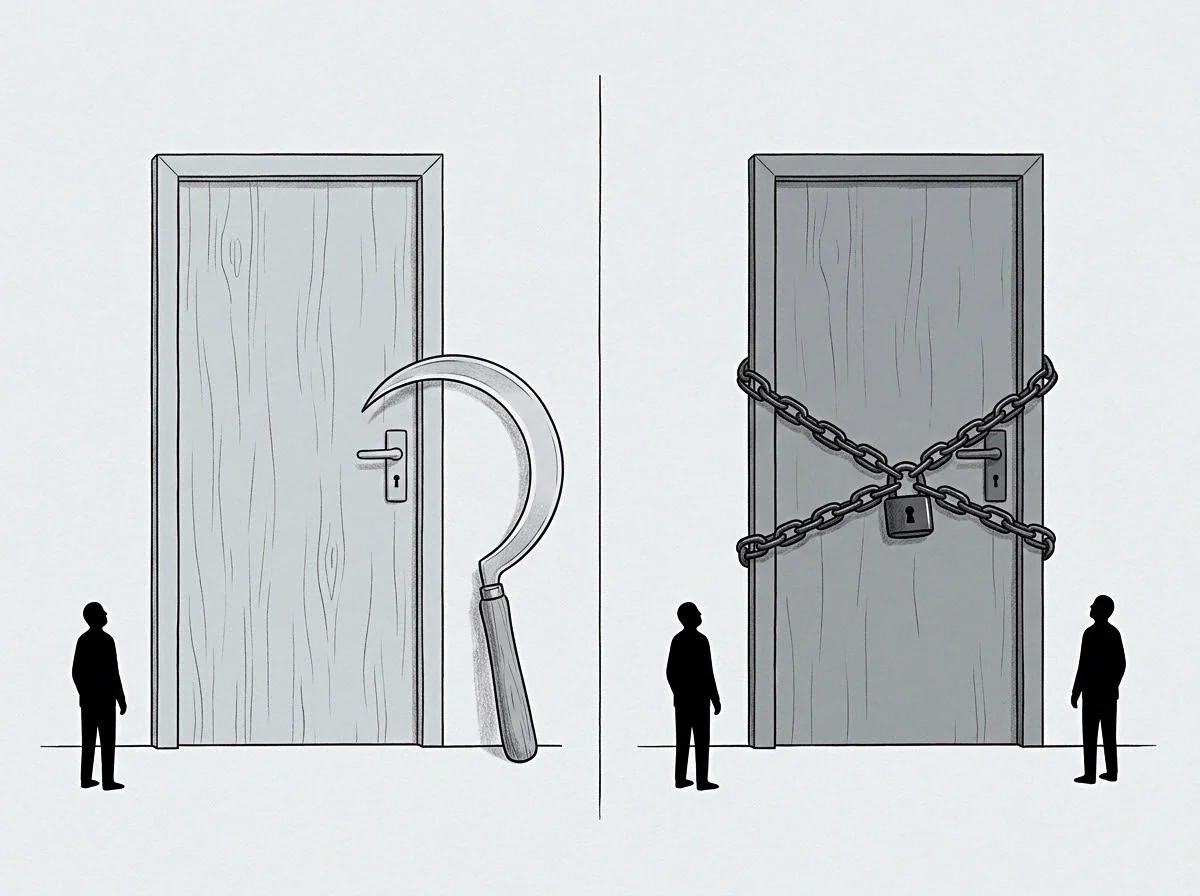
Expenditure of personal capacity, attention or hours without a corresponding inflow of social or organizational support defines unreciprocated expenditure. This loss occurs when a founder contributes cognitive or temporal resources to the infrastructure of a venture while failing to receive a reciprocal exchange of effort from the surrounding team. Such depletion happens at the boundary where individual autonomy meets institutional demand, and it ceases when the system integrates that individual work into the standard operating procedure.
Resource Drainage
Maintaining a high frequency of unreciprocated expenditure forces a steady reduction in the metabolic reserves of the individual. Persistent effort without feedback loops creates a structural deficit in the personal regulatory environment. The mechanism functions through the repeated engagement with tasks that require high coordination while providing no utility or validation back to the actor.
Eventually, this drain manifests as a measurable decrease in the capacity for sustained focus on subsequent strategic challenges.
Regulatory Load
Allocation of self-directed effort in the absence of external alignment functions as a high-friction mode of internal regulation. A founder operating under these conditions assumes the full load of coordination, which effectively replaces shared governance with individual enforcement. Borrowed regulation fails to compensate for the missing social support, and the resulting instability forces the person to expend extra hours to stabilize the output of the system.
Excessive reliance on this individual model prevents the development of distributed reliability across the organization.
Systemic Threshold
Capacity for enduring unreciprocated expenditure sits at the intersection of individual resilience and organizational inertia. When the load surpasses a specific limit, the quality of decision making decays due to the exhaustion of executive function. This limit provides the upper bound for what a person can maintain in isolation before performance degradation occurs across all domains.
A singular focus on self-reliance prevents the optimization of the system for sustainable throughput.