Meaning
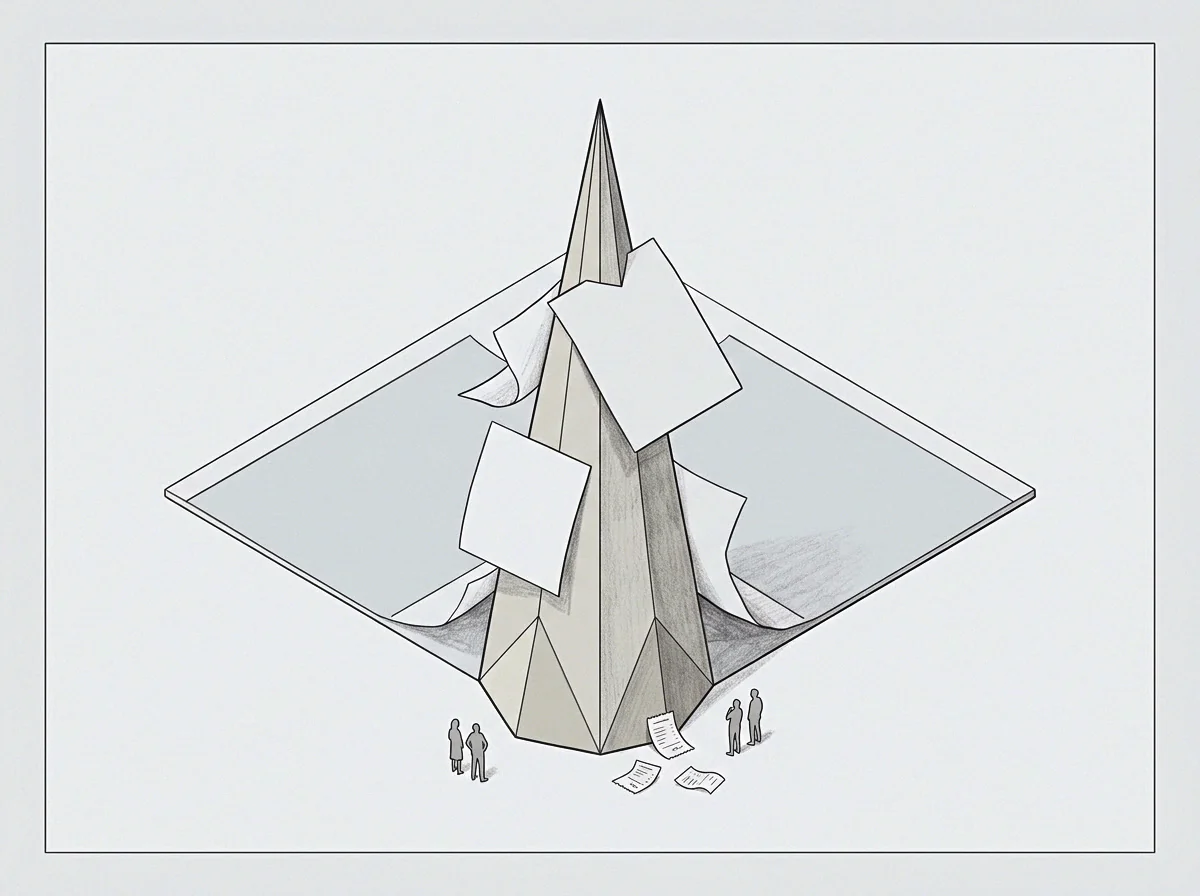
Simultaneous institutional breakdown marks the catastrophic functional failure of interconnected physiological and operational systems following prolonged resource exhaustion. Documented across ecological frameworks, financial networks, and high-stress organizational governance, systemic collapse measures the irreversible disintegration of coordinating mechanisms once internal buffering reserves are fully depleted. The dynamic ceases where radical structural amputation halts cascading failures and isolates surviving functional domains.
Cascading Decoupling
Mutual exhaustion between human biological capacity and organizational governance triggers uncontrollable multi-system failure. When an enterprise operates past sustainable limits, individual executive burnout directly precipitates strategic blindness, which in turn accelerates administrative confusion and institutional flight. The phenomenon of systemic collapse begins as micro-failures inside financial compliance, customer operations, and internal communications compound simultaneously.
Each failing institutional subsystem increases the cognitive burden on surviving leaders, accelerating their neurobiological breakdown and eliminating systemic repair capabilities.
Structural Failure
Interdependent organizational components lose their connective integrity in rapid succession. During the unfolding of systemic collapse, standard communication protocols shatter, contractual commitments lapse, and critical governance oversight dissolves entirely. The corporate apparatus ceases to operate as an organized collective entity, disintegrating into desperate, disconnected survival attempts by isolated nodes.
Capital reserves evaporate managing acute crises, leaving no liquidity to sustain baseline routines. The organization exhausts its functional adaptability, rendering traditional administrative interventions completely ineffective.
Irreversible Threshold
Passing critical tipping points eliminates any possibility of restoring the original institutional equilibrium. At this terminal stage of systemic collapse, the accumulated biological and institutional damage destroys the trust, capital, and neural headroom necessary to orchestrate a recovery. Surviving the destruction requires acknowledging that the prior operating model is dead, abandoning non-vital assets, and constructing entirely new, simplified governance structures from the ground up.
Attempting to resurrect the failed configuration merely wastes remaining resources on unviable organizational architecture.