

Measuring Executive Cognitive Latency Under Heavy Workload
Executive cognitive latency reflects working memory saturation and allostatic setpoints, shifting real-time processing to asynchronous throttling under load.
Executive cognitive latency reflects working memory saturation and allostatic setpoints, shifting real-time processing to asynchronous throttling under load.

Unstated executive regulatory strain forces depleted leaders to deploy capital as an energetic shock absorber to bypass high-friction interpersonal decisions.

Executive threshold breaches trigger automatic downstream attention rationing, shifting cognitive processing depth to protect core physiological setpoints under ceiling load.

Stating operational limits as fixed structural terms stops lateral load transfer by forcing adjacent leaders to resolve ambiguities internally.
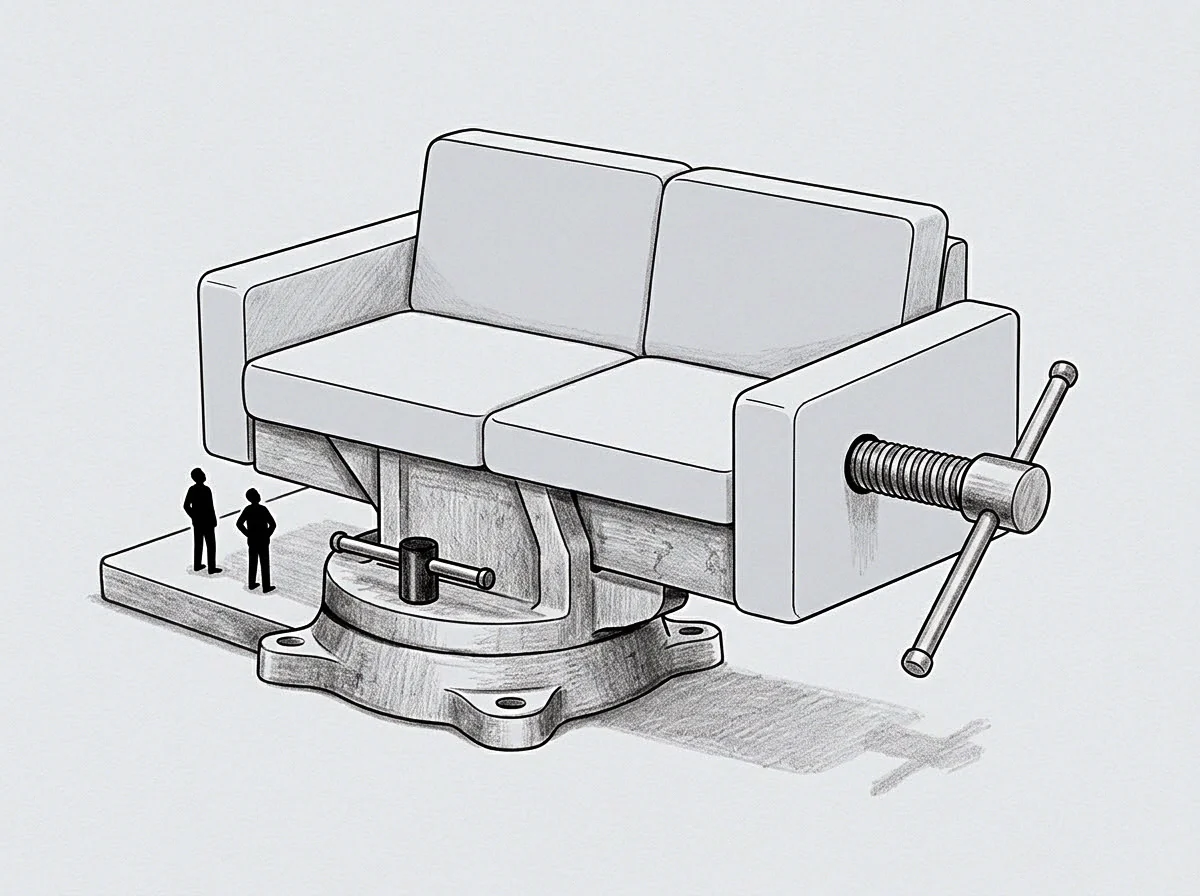
Structural jurisdiction disputes resolve through deterministic time-bounded leases and state-gated write constraints during executive recovery blackouts.

An operational floor trigger automates executive authority suspension during severe physical depletion, replacing subjective judgment with mechanical lockouts.

Pre-set governance parameters allocate authority away from depleted executive seats to rested secondary operators before cognitive exhaustion impairs sign-off quality.

Executive capacity limits emerge when stated operational limit conditions establish explicit walls that stop external system load transfer.

Explicit operational limits halt automatic risk transfer by forcing counterparties to build internal capacity rather than consuming external responsiveness.

Reconciling exploratory branches with fixed deadlines requires quarantining unhardened code while extracting verified specifications for subsequent releases.

An isolation interval breaks when external signaling penetrates set boundaries, requiring explicit state gated filters to reestablish focused synthesis.

Latency boundaries in handover protocols restrict continuous communication pings during system deployments, reducing autonomic stress and context switching.

Stated response limits decouple intake from execution, reducing allostatic wear by converting continuous interruptions into bounded processing windows.

Decoupling immediate availability demands reduces sympathetic arousal, restores vagal tone, and stabilizes autonomic baselines during rapid product iteration.

Versioned asynchronous state repositories transfer cognitive context from human memory to durable records, eliminating adrenal surges caused by live interruptions.

Organizational response latency scales non-linearly when asymmetric technical debt meets unthrottled upstream escalations, requiring state-gated intake limits.

Delayed response protocols convert continuous real-time engineering interruptions into asynchronous batch queues to preserve focus and reduce cognitive load.

Throttling executive intake requires inserting structured asynchronous templates and deliberate latency to force operational synthesis back onto the sender.

Stated operational intake limits convert incoming channel load into structured queue latency rather than internal cognitive depletion.

Enterprise scaling thresholds preserve executive capacity by delegating decision boundaries and filtering communication channels when headcount expands rapidly.

Bounded delegation protocols prevent cognitive overload by replacing continuous discretionary review with stated terms and explicit concurrency ceilings.

Executive decision filtering transfers operational load from central leadership to structural rules by defining explicit authority thresholds during expansion.

Executive teams operate on legible structural limits and unspoken relational contracts, transferring operational stress onto personal capacity until explicit terms set walls.

Capacity limits derive directly from explicit operational terms that convert human endurance bounds into objective organizational walls.

Stating explicit intake terms creates structural boundaries that throttle incoming operational demands and protect cognitive capacity from unbounded task sprawl.

Dynamic operational escalation limits prevent executive capacity exhaustion by converting unthrottled exception routing into automated structural boundaries.

Executive governance filters protect attentional bandwidth by establishing explicit operational latency floors and routing protocols upstream of leadership perception.

Stated decision limits create explicit authorization bounds that automatically transfer routine choices to functional leads during rapid scale pressure.

Systemic governance drift occurs when static operational spending limits force rapid market decisions into latency delays or unmonitored shadow channels.

Explicit monetary and operational autonomy boundaries prevent executive friction by stopping unnecessary escalations to leadership seats.
The terms are written where they belong. Each field holds three desks, and every entry a desk writes raises the terms it uses, each term given a meaning, a mechanism and the places it appears. The record on these pages stays first person and hand made; the fields grow the nomenclature.