
Structural Interventions for Executive Saturation Under Sustained Subordinate Anxiety Drift
Subordinate anxiety transfers upward through open communication channels, consuming executive cognitive capacity until structural gates force local resolution.

Sump
Four direct reports send messages across eleven minutes on a Tuesday afternoon. None involves an emergency: an ambiguous clause in an enterprise renewal, a vendor requesting revised deployment milestones, a junior hire questioning salary bands, and a department head asking whether to delay an infrastructure migration. None of these questions interrupts operations, yet the fourth message sits alongside the others, transferring unresolved operational probabilities from subordinate desks to the executive workstation.
The senders step away relieved while the person in the seat takes four open loops into working memory.
Cognitive capacity behaves like an electrical busbar under inductive load. When team hesitation goes unaddressed at the organizational boundary, it drifts toward the center. Staff experience operational uncertainty as personal exposure, and because uncontained risk elevates physiological stress, individuals routinely lean on organizational hierarchy to steady their own nerves.
The executive serves as that buffer. The biological energy cost of absorbing ambient tension does not vanish; it shifts across the organizational chart into a single nervous system.
When unresolved operational variance lacks an explicit local termination protocol, subordinate nervous systems offload autonomic arousal directly onto the nearest executive calendar.
Social baseline theory documents how the brain conserves metabolic resources through proximity to competent, predictable partners. Operating alone in high-stakes environments forces neural networks to burn glucose on constant environmental scanning, whereas proximity to a capable colleague lowers that expenditure. Within commercial hierarchies, the economy runs backward.
Subordinates reduce their regulatory effort by borrowing the executive prefrontal cortex for baseline stability. The reporting tier stays composed while the executive runs down.
An accumulation of unbuffered questions exhausts executive processing bandwidth before three in the afternoon. Each note brings an implicit request for reassurance wrapped in operational phrasing. When an organization grants continuous unstructured access, subordinate hesitation steadily siphons strategic attention until the desk becomes a holding pen for unresolved operational dread.
Routing low-grade ambiguity to executive desks by default fragments attention, eventually causing high-order decisions to stall under the sheer volume of trivial reconciliations.
Drift
The upward drift of anxiety runs along clear structural lines rather than interpersonal accidents. When staff encounter uncertainty around performance expectations, commercial threats, or runway, uncontained worry searches for an authoritative container and moves through standard corporate channels.
The Mechanics Of Regulatory Offloading
Faced with complicated trade-offs that have no clean answer, a subordinate often drafts a summary note asking for an executive preference rather than sitting with the exposure of an error. Passing the problem upward sheds personal responsibility. The sender regains a steady pulse, while the executive takes on an open thread that requires pulling context, weighing scenarios, and carrying the outcome.
A message bounded by scope, date, and terms demands little attention. An open-ended question without defined operational boundaries consumes an entire working slot. The human brain tracks roughly four complex working threads before performance drops; when five subordinates keep two ungated questions open with an executive, ten threads crowd those four slots, shrinking available headroom to zero.
This throttling reflects an executive operating at absolute regulatory capacity, entirely separate from emotional despondency or clinical depression. Motor execution persists and routine transactions continue, but the capacity to direct long-range strategy drops off. The person answers incoming pings while losing the physiological energy needed to initiate structural changes, a condition observers frequently mistake for aloofness or indecision before the physical toll becomes obvious.
A subordinate offloads accountability the precise moment an ambiguous operational trade-off is submitted upward without a documented recommendation.
Subordinates treat administrative silence as danger. When a throttled executive needs forty-eight hours to answer an ambiguous ticket, the delay prompts follow-up inquiries that consume whatever marginal capacity remained. The cycle accelerates until the executive calendar turns entirely into emergency triage.
Whether executive capacity erodes faster under the sheer volume of transactional pings or under the protracted weight of unresolved team anxiety remains an open question.
Buffer
Chronic subordinate anxiety calls for mechanical damping instead of personal reassurance or greater availability. Damping introduces explicit friction between ambient team hesitation and executive working memory, forcing decisions to resolve locally under codified constraints.
Architectural Gating Mechanisms
Maintaining stability requires trading synchronous chat for structured asynchronous filters. Open chat channels reduce the cost of handing off anxiety to zero; raising the friction of communication compels the sender to work through their own hesitation before hitting send.
Effective filters sort incoming ambiguity by operational stakes instead of emotional urgency. The following taxonomy shows how organizations separate legitimate escalations from regulatory drift.
| Escalation Path | Subordinate Trigger | Structural Gate | Bandwidth Footprint |
|---|---|---|---|
| Ad-Hoc Direct Message | Acute uncertainty regarding peer alignment | None; immediate message submission | Consumes immediate slot; fragments execution |
| Batch Escalation Memo | Trade-off exceeding team spending limit | Three-column written options paper | Consumes single scheduled review slot |
| Asynchronous Register | Vendor timeline slippage under five days | Shared tabular log updated bi-weekly | Zero synchronous operational load |
| Local Variance Absorption | Ambiguous client preference within scope | Pre-authorized discretionary budget | Zero executive cognitive involvement |
Requiring a three-column options paper fundamentally changes how problems escalate. A staff member facing an operational fork drafts a short document setting out the friction, two credible paths forward, and a clear recommendation that details the trade-offs. The author cannot simply flag that an issue feels risky; they must map its mechanics.
In sixty percent of occurrences, working through the document resolves the subordinate uncertainty on its own, cutting off the inquiry before it reaches executive attention.

Slot Rationing And Temporal Quarantines
Executive schedules need rigid calendar boundaries to keep incoming queries from consuming daily mental reserves. Quarantines specify hours during which messaging platforms are disconnected from executive machines, turning silence into the baseline working condition.
- Asynchronous batching windows designate specific ninety-minute operational blocks where written escalation documents receive administrative rulings, preventing continuous micro-interruptions throughout the working day.
- Variance authorization thresholds grant autonomous spending and contractual adjustments up to explicit monetary sums, entirely removing micro-approvals from executive oversight.
- Structured escalation artifacts mandate that every upward inquiry include an explicit consequence estimate, operational alternatives, and a named subordinate recommendation. This forces local processing before transmission.
Rigid gating initially provokes pushback from direct reports accustomed to quick reassurance. Staff often complain of isolation or argue that process slows execution, a predictable reaction when borrowed executive regulation gets cut off. Denied an immediate external container, teams have to build their own capacity to absorb uncertainty.
Discretionary operational authority without documented risk thresholds ensures continuous upward liability migration under market stress.
Occupational physiology shows that biological wear drops when information shifts from continuous streams into predictable batches. That finding draws largely on cross-sectional endocrine tracking among industrial plant managers managing constant telemetry feeds. Overturning it would require longitudinal trials showing that constant micro-interruptions produce equivalent cortisol clearance rates to consolidated batch processing.
Consolidated batching preserves cognitive headroom under commercial turbulence.
Operational policy dictates that any inquiry missing an explicit subordinate recommendation goes back unread, restarting the turnaround clock until the formal requirements are met.

Lock
Clear boundaries cut off the informal backchannels staff use to bypass structural filters. When an organization leaves ownership loose, employees elevate decisions to protect themselves. Structural locks anchor authority to defined seats with non-negotiable operational responsibility.
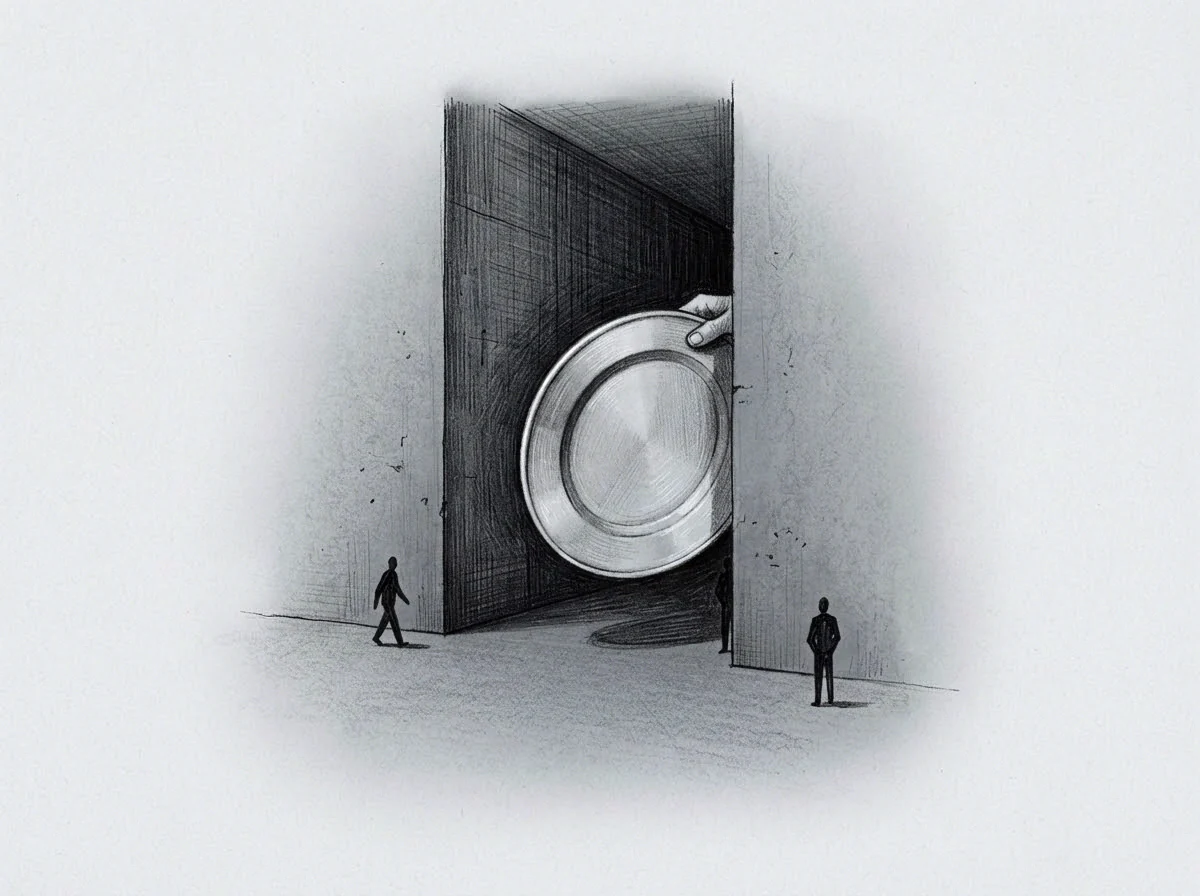
Whose Authority Absorbs The Residual Variance?
Ambiguity drifts upward unless a mandate pins operational responsibility to a functional seat. An employee facing market volatility will pass choices to a manager by default. To check that tendency, the executive marks out explicit zones of unescalatable authority where the subordinate keeps sole responsibility for outcomes, including the cost of mistakes.
A parked decision carries no load. Once authority is locked, the executive declines to offer views on tactical execution within a subordinate domain. If a department director asks how to approach an internal staffing reallocation, the executive confirms the decision falls within the director charter and declines to advise, closing the cognitive slot permanently.
The director leaves carrying the full operational weight of the role.
That refusal regularly triggers immediate discomfort. A team member used to executive backstopping interprets the returned responsibility as organizational abandonment, but the executive must let that tension sit. Stepping in to soothe an anxious subordinate restores the informal dependency pattern and undoes the boundary.
A leader who answers an ambiguous tactical question within a subordinate domain re-absorbs the operational liability and pays the full cognitive switching fee.
Operational ownership takes hold only when the subordinate recognizes that no executive will step in to pre-clear standard operational decisions. Over six to eight weeks of sustained locking, subordinate hesitation drops off, the reporting tier develops local problem-solving capacity, and the executive recovers strategic attention.
Subordinates routinely ask for thirty minutes to talk through options before moving forward with full confidence.
Post
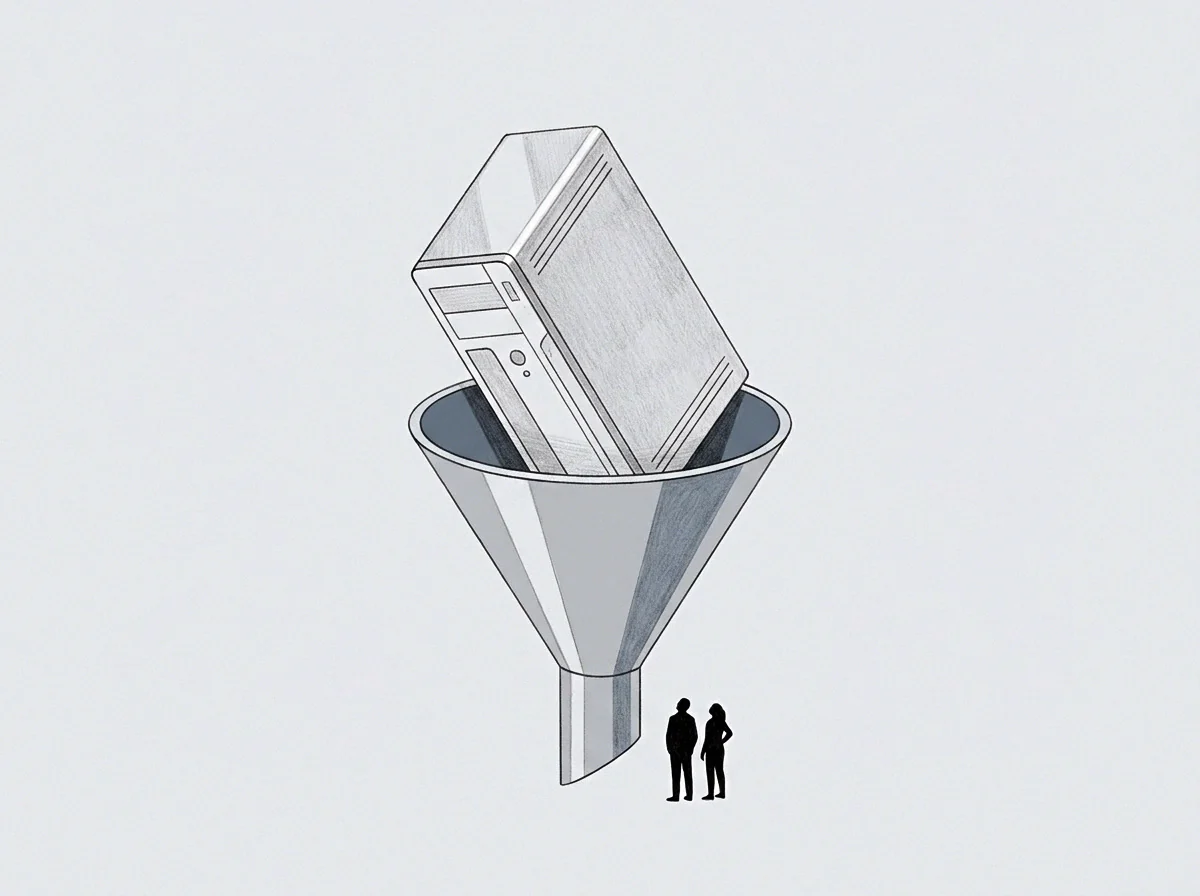
Building structural defenses against anxiety drift stabilizes team execution while protecting executive capacity. Maintaining those systems over time requires discipline when market volatility tempts an organization back into synchronous panic. Conditions will produce collective concern, but the post holds firm precisely because the surrounding ground moves.
A resilient enterprise operates through distributed decision nodes that absorb volatility without demanding centralized reassurance, leaving quiet channels as the mark of settled protocol. The executive seat retains the mental headroom needed for core questions of capitalization, structural solvency, competitive position, and governance. Subordinate worry remains at the operational edge, functioning as fuel for tactical adaptation.
The enterprise functions when its center stays clear of routine operational runoff. Gated communication, firm spending thresholds, and locked authority turn ambient friction into operational discipline.
Operational stability expands in direct proportion to the volume of ambiguity absorbed at the edge of the organization.