
Structural Intake Limits For Preserving Executive Focus
Structural intake limits preserve executive focus by gating ungated channels and capping open concurrent threads to keep allostatic load within system capacity.

Inlet
Four direct messages arrive across three messaging applications at seven on a Thursday evening while an executive evaluates a capital allocation contract. One message asks for approval on a marketing spend variance. A second requests an immediate phone sync regarding an engineer who wants to resign.
The third brings an un-scoped product feature request from a board member. The fourth contains a customer escalation that bypasses support operations entirely. Each notification forces immediate cognitive context-switching.
The executive switches focus four times in twelve minutes, leaving the contract unread while holding four incomplete mental operational loops. The processor stalls.

Ungated Channels and Baseline Vigilance
Continuous exposure to direct notification streams elevates neurological baseline alertness. When an operational environment permits any team member or investor to inject unscheduled requests directly into an executive schedule, the brain enters a state of chronic ambient monitoring. Vigilance consumes daily capacity.
This persistent neuroendocrine readiness keeps cortisol levels elevated and reduces executive headroom. Allostatic load accumulates from the cumulative wear of continuous intake monitoring across open channels. The intake stays open.
An un-gated intake channel transforms executive focus into a passive monitoring engine for team interruptions.

The Structural Origin of Intake Overflow
Intake volume expands to fill whatever bandwidth an executive seat makes publicly available. Without explicit intake boundaries, operational intake grows until cognitive capacity breaks. Operational dependencies form around fast executive response times.
Team members stop resolving ambient ambiguity independently when direct executive escalation requires minimal effort. A seat that accepts incoming requests without structural gates eventually processes only reactive traffic. Initiated strategic execution stops while reactive intake consumes the working day.
The incoming stream continues. Operating an executive seat without intake restrictions causes systemic cognitive exhaustion, complete loss of strategic focus, and operational breakdown across downstream teams.

Sieve
Filtering incoming requests before they land in an executive processing slot preserves primary system capacity. Incoming operational demands carry varying degrees of urgency, structure, and validity. Unfiltered channels allow low-priority, unstructured queries to displace deep analysis and long-term planning.

Scope Date and Terms as Filtering Gates
A request entering an executive intake stream carries defined structural boundary attributes before earning processing bandwidth. When an incoming item arrives without an explicit scope, a clear completion date, and stated operational terms, it functions as an open cognitive loop. Processing an incomplete request forces the executive to supply missing boundary parameters.
Request gating rules state that incoming items must declare the specific decision needed, the financial or operational boundary, and the precise deadline for resolution. Requests lacking these three attributes return automatically to the sender for complete definition. Terms filter intake before arrival.
Capacity drops without explicit gating. The slot remains occupied. Open threads cost slots.
A request carrying explicit scope date and terms consumes less than one tenth of the cognitive capacity required by an open loop.

Which Intake Channels Consume Executive Capacity First?
Direct messaging platforms generate the highest rate of cognitive switching due to their implicit demand for rapid response. Unstructured communication channels channel continuous micro-interruptions directly into executive decision slots.
- Direct Messaging Channels create continuous micro-interruptions that break deep concentration and force continuous context re-indexing throughout the working day.
- Unscheduled Synchronization Calls bypass preliminary structural filtering and convert low-priority operational questions into immediate executive time commitments.
- Open Decision Loop Notifications aggregate un-gated requests into a single continuous stream that prevents executive working memory from clearing between operational tasks.
The founder is completely unreachable, unresponsive to urgent messages, and refusing to support team execution.

Tally
Counting active projects provides a misleading metric of system load compared to tracking open ungated loops. A project with structured milestones places minimal ongoing cognitive weight on executive function. An open, un-gated loop constantly draws on processing attention regardless of project scale.

The Concurrency Limit as Thread Capacity
Executive capacity relies on a strict limit of active operational items. A single complex project containing ten resolved and scheduled milestones costs minimal real-time executive headroom. Conversely, three small projects carrying fifteen un-gated open loops will saturate executive processing capacity completely.
The concurrency limit measures how many un-gated loops an executive seat holds open at one time. A parked thread frees headroom. Gated channels protect executive focus.
Setting an explicit concurrency limit of four open operational threads preserves forty percent of daily capacity for strategic execution.

Measuring Cognitive Load Across Ungated Loops
Structural comparison reveals how intake policies directly determine daily cognitive wear and operational clarity.
| Performance Metric | Ungated Intake Model | Gated Intake Model |
|---|---|---|
| Active Concurrency Count | 14 to 22 ungated open loops | 3 to 5 gated operational threads |
| Context Switching Frequency | 18 switches per working hour | 2 switches per working hour |
| Executive Headroom Available | Less than 5 percent daily capacity | 35 to 50 percent daily capacity |
| Allostatic Load Elevation | Severe chronic elevation | Baseline operational level |
- Define explicit intake parameters for all incoming requests across internal operations.
- Establish a hard ceiling of four active open loops within the executive workspace.
- Convert open conversations into gated documentation carrying fixed scope and resolution dates.
- Park non-essential operational inquiries until active open loops reach complete resolution.
Enforcing a strict concurrency limit of four open threads converts reactive cognitive exhaustion into predictable executive execution.

Gasket
When total cognitive intake reaches peak biological threshold, the executive operating system initiates protective performance throttling. System regulation under high allostatic demand requires shedding secondary operational inputs to preserve operational viability.

Throttling Response Under High Intake Pressure
System throttling functions as an automated protective adaptation that sheds non-essential cognitive tasks when intake capacity saturates. Protective throttling presents as reduced emotional reactivity, delayed response times, and selective non-responsiveness to peripheral requests. In clinical stress physiology, this state reflects regulatory conservation under heavy intake wear.
Observers frequently misread throttling as clinical depression, loss of motivation, or executive failure. The system sheds low priority execution. The Throttling state protects baseline survival.
A throttled executive system actively conserves primary operational headroom by refusing secondary intake pressure.

The Misreading of System Throttling as Failure
Board members and operational partners often interpret reduced intake responsiveness as personal disengagement. When an executive stops responding to late-night direct messages, partners infer loss of commitment or emotional withdrawal. This diagnostic error leads counterparties to increase intake pressure through escalation, adding further load to a saturated system.
The correct operational response to executive throttling involves reducing incoming request volume, enforcing existing intake gates, and clearing open loops. System performance during peak operational stress depends on reducing incoming intake volume rather than demanding increased responsiveness from a throttled executive.

Reserve
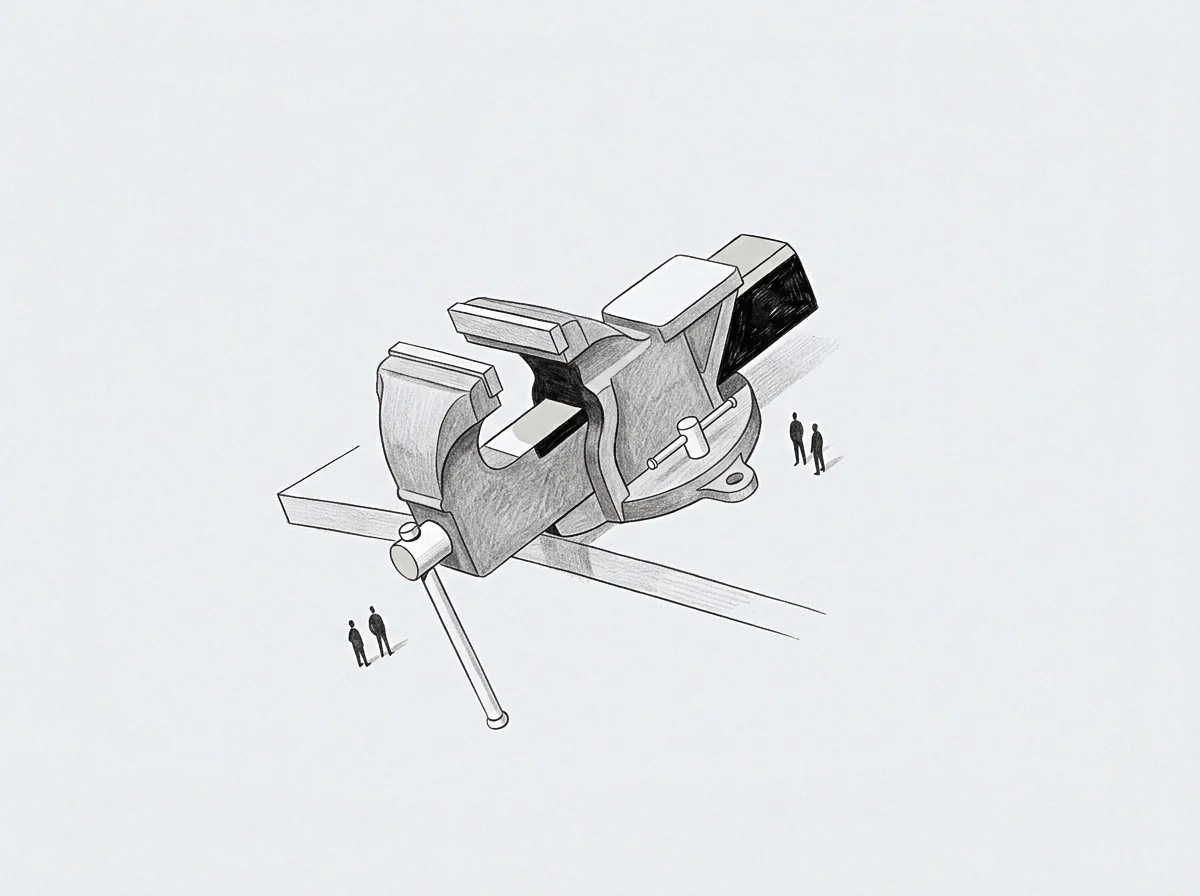
Rebuilding cognitive capacity depends on creating permanent structural intake barriers around executive working hours. Preserving long-term strategic focus demands systematic isolation of decision slots from routine administrative traffic.
Allocating System Headroom for Initiated Work
Initiated execution depends on dedicated temporal blocks completely isolated from external intake streams. Executive headroom represents the unallocated processing capacity required to synthesize complex information, evaluate risk, and initiate self-directed strategic work. When incoming intake consumes total capacity, an executive operates exclusively as a message router.
Structural limits restore headroom by establishing fixed intake hours, automated request batching, and strict channel isolation.

Sustaining Structural Limits Under Organizational Pressure
Maintaining structural intake limits becomes difficult when organizational growth accelerates incoming request velocity. As companies expand, team heads and investors naturally push against intake gates to secure direct executive attention. Sustaining intake limits demands clear governance rules and consistent enforcement by executive assistants or operations leads.
The floor remains firm. Structural limits maintain daily headroom.
Whether a growing organization can sustain executive intake boundaries when external board members insist on direct emergency access remains an ongoing operational challenge.