
Structural Governance Interventions for Throttled Executive Teams Facing Relational Drift
Structural governance interventions replace reactive bilateral negotiations with bounded decision rights and gated queues to prevent relational collapse.

Bolt
Four communication tabs flash on a desk monitor at eleven at night while an unread board inquiry sits next to an escalating disagreement over technical hiring. The chief technology officer stopped replying to messages five hours ago, leaving the operations lead to interpret the silence as hostility. When operational intake exceeds processing capacity, interpersonal friction is a mechanical outcome rather than a personal failing.
Sustained cognitive overload pushes individuals into an involuntary defensive posture.
Stress physiology defines allostatic load as the physiological wear accumulated through ongoing adaptation to environmental demand. Executives facing relentless context switching incur significant neuroendocrine costs. The autonomic nervous system responds to persistent operational ambiguity by prioritizing immediate threat detection over collaborative reasoning to protect basic function.
A team running without structural buffers converts biological exhaustion into interpersonal suspicion.
Colleagues frequently misinterpret this survival response as personal alienation. When an executive retreats from casual contact, ignores speculative proposals, or delivers curt answers, the team reads the withdrawal as rejection. Working memory is depleted, cortisol remains elevated, and the nervous system drops non-urgent exchanges to preserve basic function.
A leader who defaults to silence under heavy volume needs fewer communication channels, not softer words.

Pipe
Unchecked intake at the perimeter of an organization funnels directly to senior leaders when filters are absent. In early stages, peer coordination relies on open streams where any leader pings another at will. As the organization grows, this informal pattern creates continuous operational interruptions, where every unassigned task consumes cognitive capacity.
Cognitive science establishes that each task alternation incurs a metabolic switching penalty. When an executive receives thirty unstructured requests across disparate functions within a single morning, deliberate attention collapses as incoming volume saturates cognitive capacity. The executive team enters a reactive loop where strategic planning ceases.
Ungated communication channels accelerate operational drift across departments.
Unmetered message channels consume attentional reserves before strategic decisions begin.
Teams begin to fracture along operational seams. When a product lead sends an exploratory message regarding interface revisions, an engineering lead experiences the inquiry as an operational ambush. The ensuing argument centers on tone, yet the actual driver is an unbuffered channel that allows unvetted requests to bypass organizational priority.
Undifferentiated channels force continuous scanning.
Leaving operational volume unmetered across executive communication channels converts ordinary delays into lasting structural fractures between leaders.

Grid
Structural boundaries replace interpersonal negotiation. When executive capacity reaches its biological limit, resolving jurisdictional overlap through open-ended conversations fails because the parties lack the energy for delicate relational repairs. Authority mandates must specify decision boundaries with precision.
Explicit authority lowers operational friction. Clear jurisdictional lines eliminate the recurring cognitive cost of determining who holds responsibility for cross-functional initiatives.
| Intervention Model | Authority Distribution | Attentional Cost | Primary Failure Mode |
|---|---|---|---|
| Bilateral Informal Consent | Shared consensus across executive peers | Continuous coordination meetings | Relational friction during resource scarcity |
| Decoupled Domain Mandates | Absolute autonomy within bounded territories | Zero coordination for unilateral items | Territorial silos along functional lines |
| Asynchronous Gated Queues | Single arbiter with scheduled submission windows | Predictable batch review sessions | Delayed cycle times on urgent dependencies |
| Structural Escalation Paths | Predetermined criteria for board or chief executive resolution | Zero bilateral friction before handoff | Overuse of formal arbiters under operational ambiguity |
Decoupled mandates alter how peers interact during operational bottlenecks. Instead of requiring mutual signoff on ambiguous projects, governance rules designate a single final arbiter for each domain. Fixed review windows clear working memory.
A structural boundary established in advance removes the burden of personal refusal between peers.
A mandatory forty-eight-hour silent escalation window transfers operational pressure from personal working relationships to pre-agreed jurisdictional boundaries.

Wedge
Separating operational execution from strategic evaluation prevents relational strain. When an executive team operates in survival mode, members stop experiencing each other as resources and start viewing each other as sources of distraction. Slower response cycles restore biological stability.
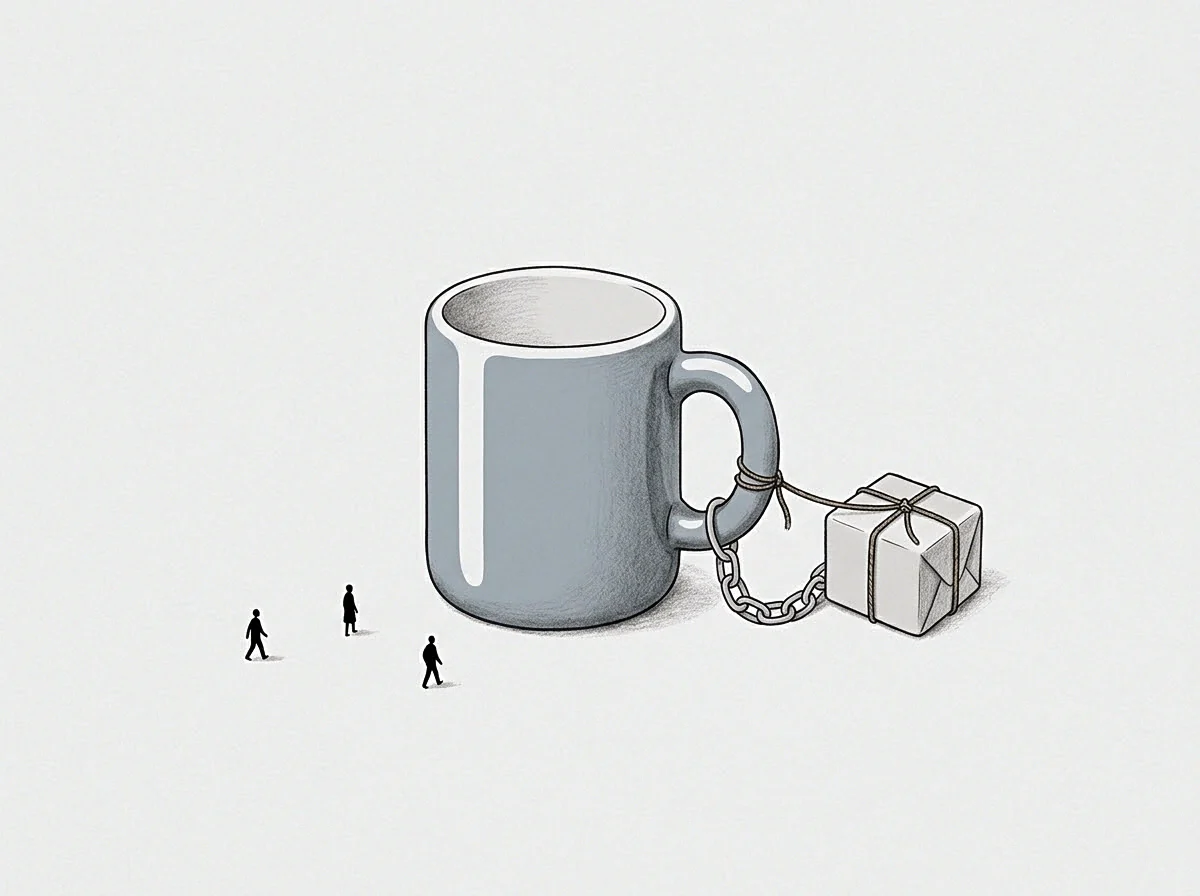
Where Relational Distance Follows Unchecked Demand?
Prolonged exposure to unmanaged incoming volume degrades coordination between co-leaders. When one party requests assistance and receives delayed, minimal responses, trust erodes. The requesting party feels ignored, while the overwhelmed party feels pressured.
Sustained strain suppresses deliberate planning.
To reverse this dynamic, executive teams implement strict behavioral gates around availability and response times:
- Asynchronous batching windows designate specific afternoon intervals for evaluating non-urgent operational tickets, protecting morning hours for uninterrupted deep work.
- Explicit triage tiers categorize inbound demands by objective revenue impact, eliminating subjective debates between departments over resource priority.
- Dedicated recovery intervals enforce full disconnection from communication platforms during scheduled operational pauses, restoring capacity across the leadership group.
Unanswered pings drain working memory. Without formal boundaries, expecting immediate availability generates sustained physical strain, leaving leaders unable to collaborate effectively. Physical exhaustion often resembles disinterest.
The silence felt deliberate until the operational load broke the schedule.

Shelf
Administrative structures must absorb operational volatility so individuals do not bear the entire weight of market uncertainty. When companies scale rapidly, leadership teams routinely treat physical stamina as an infinite resource. Unbounded availability drains executive capacity, leading to detachment, cognitive inflexibility, and operational friction.
Governance mechanisms transform communication patterns from erratic personal appeals into standardized operational workflows. Pre-scheduled reviews replace reactive direct messages, while written executive memorandums replace unstructured meetings that degenerate into emotional disputes. Gated queues conserve executive attention.
An executive team that depends on continuous personal goodwill eventually exhausts the biology that generates it.
Whether an executive team can maintain relational cohesion once biological reserves deplete without resetting their underlying governance architecture remains an open question for leadership groups operating under perpetual delivery constraints.