
Resolving the Structural Tension Between Operational Autonomy and Asynchronous Coordination Latency Across Growing Teams
Operational autonomy creates coordination latency when decoupled teams queue dependencies without contractual review windows and clear interface bounds.

Desk
A software team lead sits before three monitors at nine in the evening, watching seven pull requests age past forty-eight hours while two upstream service teams ignore asynchronous review pings. Each engineer on the squad retains full discretion over their working hours and task selection, yet five independent work streams remain halted at external boundary interfaces. Operational autonomy was intended to eliminate synchronous meetings and management bottlenecks.
The real consequence is a dispersed cluster of unintegrated branches, creeping merge conflicts, and silent calendar stalls.
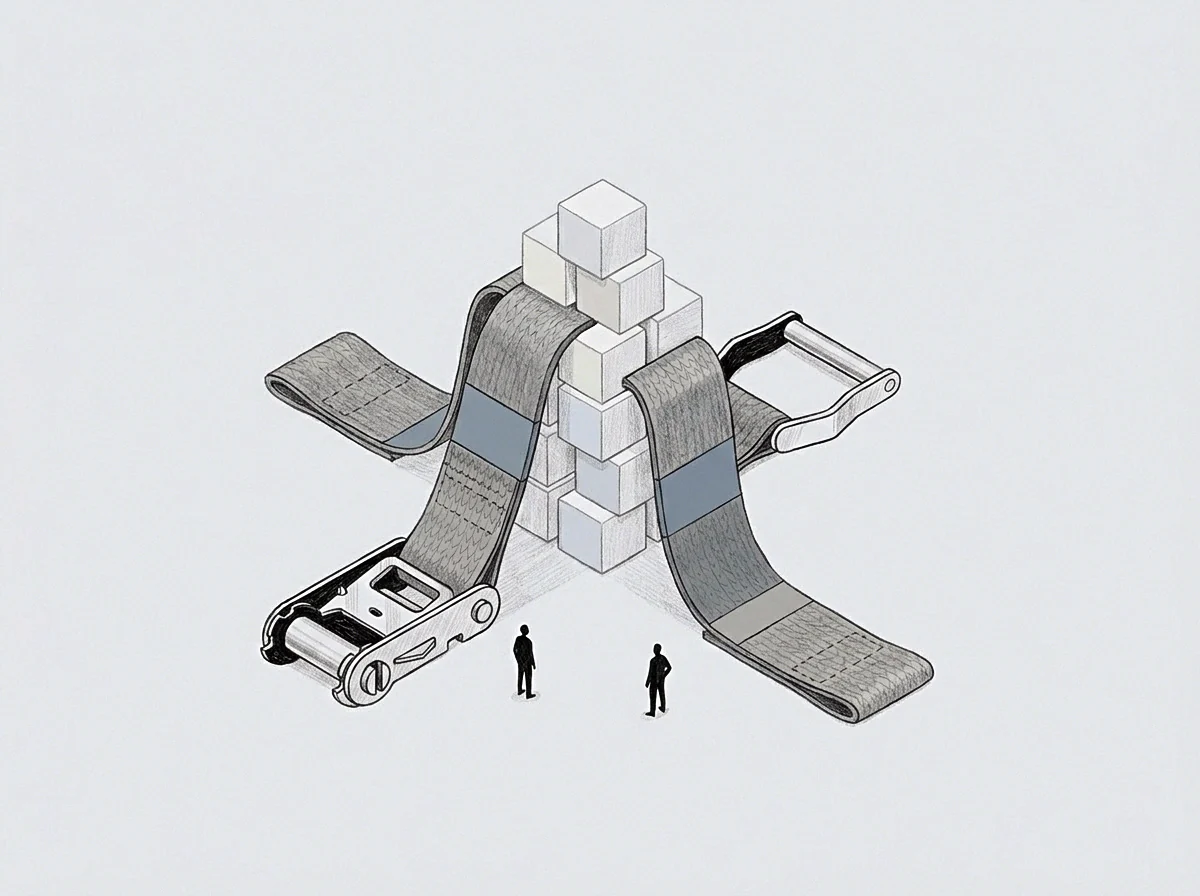
Autonomous Isolation and Boundary Friction
Distributed organizational designs systematically miscalculate the cognitive toll of uncoordinated independence. When individual operators or localized pods possess the charter to move without sequential clearance, their local production rate outpaces the integration throughput of the surrounding organization. The resulting disconnect manifests as invisible waiting queues between teams.
A software engineer writes code in four hours, submits documentation asynchronously, and shifts to a secondary project to preserve personal velocity. The reviewer on the receiving squad, operating under identical personal autonomy, schedules code inspection for three days later.
The thread stays open.
During that three-day interval, the initial engineer does not remain static. They pull a fresh assignment from the backlog, loading an entirely distinct domain model, set of dependencies, and edge cases into active cognitive storage. When the delayed review feedback arrives with requested alterations, the engineer faces acute context eviction.
Reconstructing the mental state of the original submission consumes forty to sixty minutes of orientation time before writing a single correction.
A stalled handoff converts sovereign working hours into chronic background surveillance across open channels.
This operational dynamic generates severe allostatic load, understood strictly as the biological and systemic wear accumulated under persistent regulatory demand. Human cognitive systems maintain a finite concurrency limit for unresolved tasks. An open pull request, an unanswered specification query, or a pending cross-boundary approval does not vanish from neurological bookkeeping simply because an operator closes the messaging tab.
Each unresolved thread occupies a persistent slot in working memory, steadily eroding the mental headroom necessary for sustained deep execution.
The slot is gone.
Local speed creates systemic drag. The squad leader watching the aging pull requests perceives an unresponsive engineering organization, whereas the upstream service leads see an undisciplined stream of uncoordinated interruptions encroaching upon their scheduled focus blocks. Neither team has failed in its explicit mandate.
The structural architecture itself creates coordination latency by granting absolute scheduling freedom without establishing deterministic boundaries for cross-team integration.
The message sender expects an immediate review because the ticket blocks production, while the recipient treats the notification as an optional distraction to evaluate whenever their current sprint concludes.
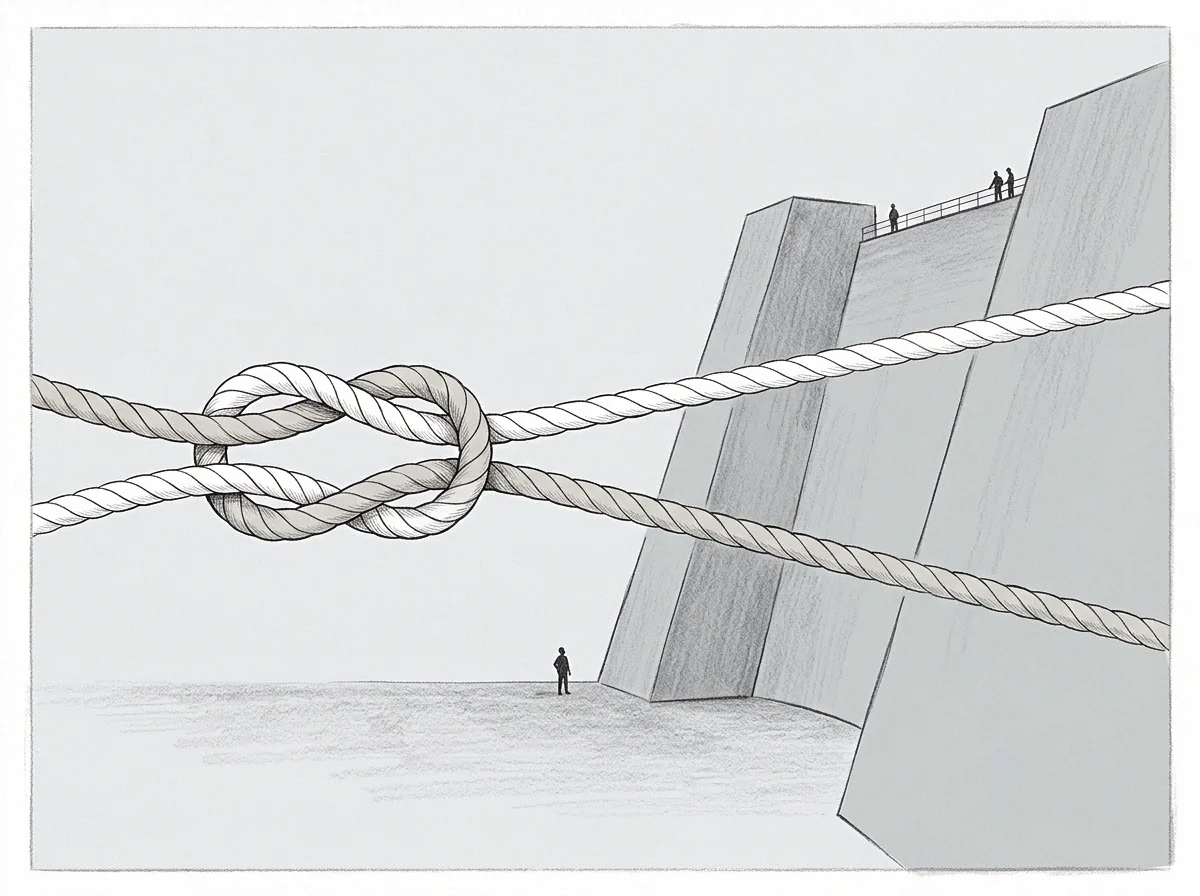
Queue
When organizations expand past forty employees, asynchronous latency ceases to be an individual communication preference and becomes a compounding mathematical tax on throughput. Each new autonomous pod introduced into an organization multiplies the potential communication vectors across boundaries. Without formal synchronizing boundaries, the total volume of work in progress expands uncontrollably across every decoupled branch.

Thread Accumulation and the Concurrency Limit
Unconstrained autonomy incentivizes operators to initiate new tasks whenever existing tasks encounter an external dependency. A developer blocked by security review begins refactoring an internal library. A product designer waiting for customer interview transcripts starts an unvetted interface prototype.
An engineering lead waiting for database provisioning launches an exploratory tooling audit. On paper, utilization rates appear exceptional. Every contributor records full days of uninterrupted activity.
Idle capacity decays quickly.
The true systemic condition is widespread operational throttling, where execution capacity runs at its absolute ceiling while net organizational delivery drops toward zero. Cognitive scientists measuring task interference observe that each concurrent open task degrades processing efficiency on primary focal work. When an operator attempts to maintain four to six ungated operational loops simultaneously, switching costs consume up to forty percent of daily attention.
The individual experiences exhaustion, cognitive depletion, and memory fragmentation, states commonly misdiagnosed as psychological burnout or clinical depression rather than physiological exhaustion from unregulated concurrency.
| Autonomy Model | Scheduling Latitude | Handoff Determinism | Cognitive Concurrency Load | Integration Latency |
|---|---|---|---|---|
| Unbounded Autonomy | Complete operator discretion over working hours and review timing | Ad hoc notification via asynchronous messaging channels | Severe task fragmentation across six or more open threads | Five to twelve business days per cross-boundary dependency |
| Scheduled Convergence | Discretion within fixed daily or weekly integration windows | Predictable batch review at pre-agreed operational gates | Bounded load capped at two concurrent active contexts | Twenty-four to forty-eight hours per cross-boundary dependency |
| Contracted Isolation | Total operational discretion within strictly scoped interface contracts | Standardized input and output artifacts with automated verification | Minimal load isolated to a single active execution thread | Sub-hour automated validation with zero human waiting time |
The table establishes how decoupled teams incur non-linear coordination delays when scheduling discretion operates without handoff contracts. Unbounded autonomy exhibits the longest calendar latency because neither party accepts accountability for interface synchronization. The system experiences gridlock precisely because every participant protects their local schedule at the expense of organizational convergence.

The Fallacy of Sovereign Speed
Individual autonomy without bounded handoff times creates an organizational illusion. Contributors feel productive because their personal calendars remain free of recurring meetings. Meanwhile, the actual time required to deliver customer value stretches from days into quarters.
A feature requiring handoffs across four autonomous teams routinely sits in latent queues for eighty percent of its total lifespan.
Waiting consumes working memory.
The hidden cost of this latency surfaces during late-stage convergence. When isolated teams eventually attempt to integrate work developed over weeks of decoupled autonomy, irreconcilable architecture choices emerge. The database team constructed an event-driven schema while the application team assumed synchronous REST endpoints.
Resolving these incompatibilities requires emergency escalations, duplicated labor, and tense alignment sessions that annihilate the very autonomy the teams sought to protect.
- Context Eviction forces engineers to abandon active working memory models whenever an unblocking message arrives from another timezone, introducing fresh defects into codebases that were previously stable.
- Dependency Stacking blinds leadership to structural progress blockers by scattering waiting tickets across disparate project management boards and isolated squad repositories.
- Priority Inversion occurs when an upstream team classifies a shared service integration as a minor backlog item while downstream product squads treat the identical dependency as an urgent critical path blocker.
Unregulated asynchronous latency transforms autonomous pods into disconnected operational silos, generating compounding rework cycles and systemic delivery failure across the entire engineering organization.

Wire
To resolve the friction between operational sovereignty and asynchronous latency, leadership must establish immutable interface protocols rather than relying on cultural goodwill or ambient chat channels. Hardware designers solved this challenge decades ago: two microchips operate at completely different internal clock speeds and operational logic, provided the physical wire connecting them adheres to an unyielding electrical and data protocol. Growing software and knowledge organizations require identical structural scaffolding.
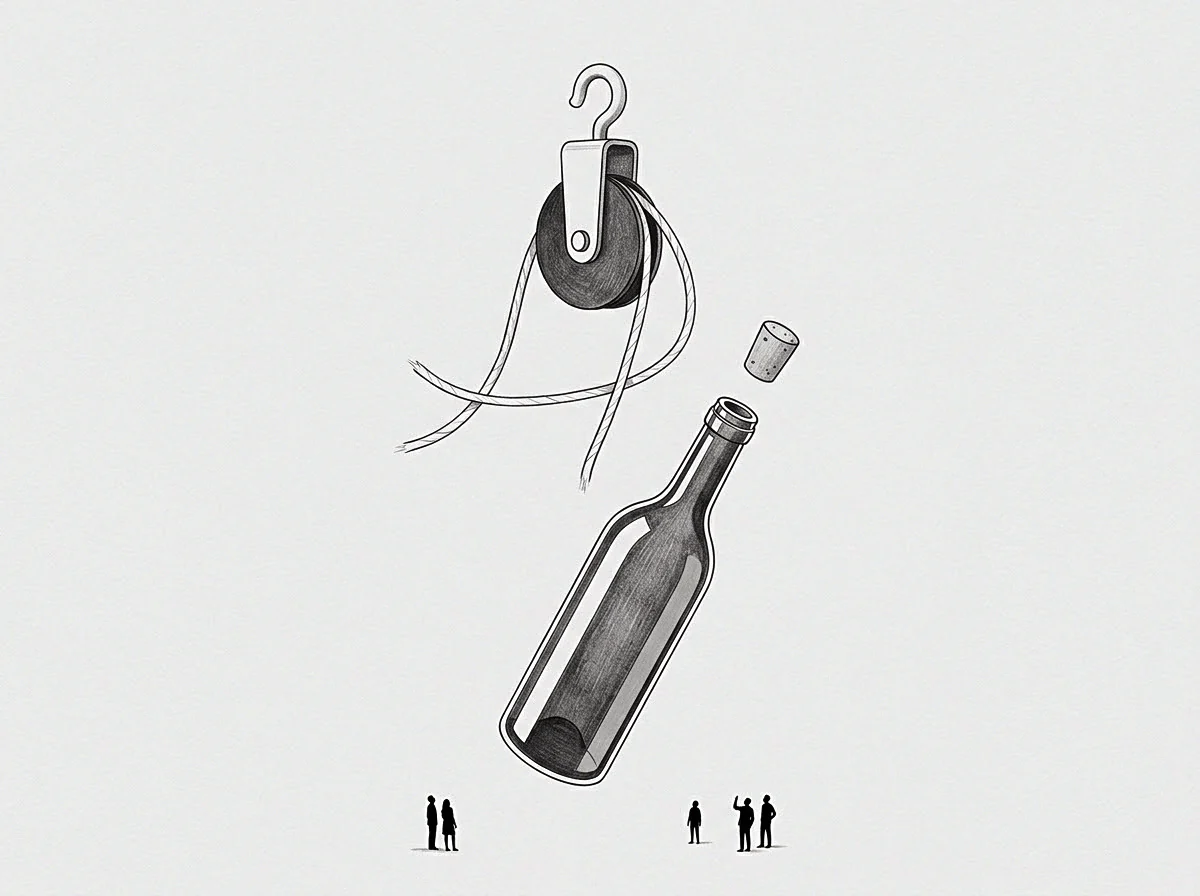
Whose Priority Governs Blocked Cross Boundary Work?
Tension between squads invariably peaks when one team demands immediate unblocking while the other defends its planned sprint priorities. Without structural arbiters, resolution defaults to political influence, personal relationships, or executive escalation. This dynamic introduces relational wear and covert contracts between operators, where favors are traded to secure basic code reviews.
The interface remains brittle.
Organizations eliminate this friction by instituting strict Service Level Expectations for cross-boundary handoffs. These operational agreements mandate that any request crossing team boundaries contains explicit scope, target completion dates, and immutable validation terms before entering the recipient queue. The receiving squad preserves total autonomy over how and when the task is executed within that bounded window, but forfeits the discretion to ignore the ticket indefinitely.
A parked ticket with clear acceptance terms costs zero cognitive slots until its scheduled evaluation window arrives.
Once a handoff contract is established, the requesting engineer parks the dependent task completely. Because the validation terms and delivery boundaries are deterministic, the engineer releases the cognitive thread from working memory rather than tracking the dependency via ambient monitoring. Headroom returns to the squad.
Deep execution resumes on secondary objectives without chronic switching anxiety.
Inspection replaces ambient trust.
When dependencies are mediated by strict interface standards, teams interact through verifiable artifacts rather than subjective negotiation. An engineering pod submits a pull request accompanied by comprehensive integration tests, deployment plans, and boundary specifications. The receiving team evaluates the submission against objective criteria rather than stylistic preference.
Ambiguity disappears from the asynchronous exchange.
A formal cross-team handoff agreement binds the receiving unit to evaluate external integration requests within twenty-four hours of artifact submission, provided the inbound payload satisfies all predefined compilation, linting, and behavioral test criteria.

Batch
High-latency asynchronous coordination becomes catastrophic when transactions occur in microscopic, continuous increments. An autonomous engineer who pings a remote teammate fifteen times across a working day with fragmented inquiries destroys both parties’ operational focus. Conversely, aggregating dependencies into deterministic integration batches synchronizes organizational momentum while safeguarding operational autonomy during execution intervals.

Synchronous Windows and Asynchronous Depths
Total reliance on asynchronous coordination is an extreme structural error, matched in severity only by calendar-saturated meeting cultures. Effective distributed teams operate on rhythmic alternation between asynchronous depth and concentrated synchronous convergence. Autonomous squads spend eighty percent of their sprint cycles in uninterrupted production, insulated from cross-team noise and ambient status requests.
Coordination lag compounds silently.
The remaining twenty percent of organizational time is allocated to highly concentrated, predictable synchronization cadences. Cross-functional dependencies are not negotiated ad hoc across private direct messages. They arrive at structured convergence sessions where technical leads possess the mandate to arbitrate conflicts, approve architectural interfaces, and sequence joint releases in real time.
Decisions that would consume three weeks of back-and-forth email and issue comments resolve in twenty minutes of co-located analysis.
Context evaporates without written records.
The success of synchronous convergence rests entirely on the quality of asynchronous preparation. Participants arrive with written architectural decision records, pre-circulated performance benchmarks, and documented alternatives. Oral presentations are banned.
Attendees spend the initial fifteen minutes reading the documentation in silence, ensuring identical context density before entering debate. Autonomy is protected because preparation occurs independently, while coordination latency is compressed by eliminating asynchronous round-trip times during decisive alignment moments.
The dependency tree expands.
When teams decouple operational execution from continuous coordination, personal agency increases. Contributors schedule their daily hours according to their natural productivity peaks, family obligations, or geographical timezones. They work with deep concentration because they know the rest of the organization will not interrupt them for mundane clarifications.
The predictable batch schedule acts as a pressure relief valve, gathering organizational entropy into contained, manageable intervals.
Dependencies submitted in complete, self-contained packages resolve far more rapidly than urgent requests trickling across disjointed chat threads.

Post
Establishing operational balance across growing teams requires leaders to measure latency as an objective structural indicator rather than a personal character flaw. When an asynchronous team slows down, inexperienced management instinctively deploys synchronous oversight: mandatory standup meetings, weekly status spreadsheets, and surveillance metrics tracking activity timestamps. These interventions degrade autonomy while leaving the underlying integration bottlenecks completely untouched.
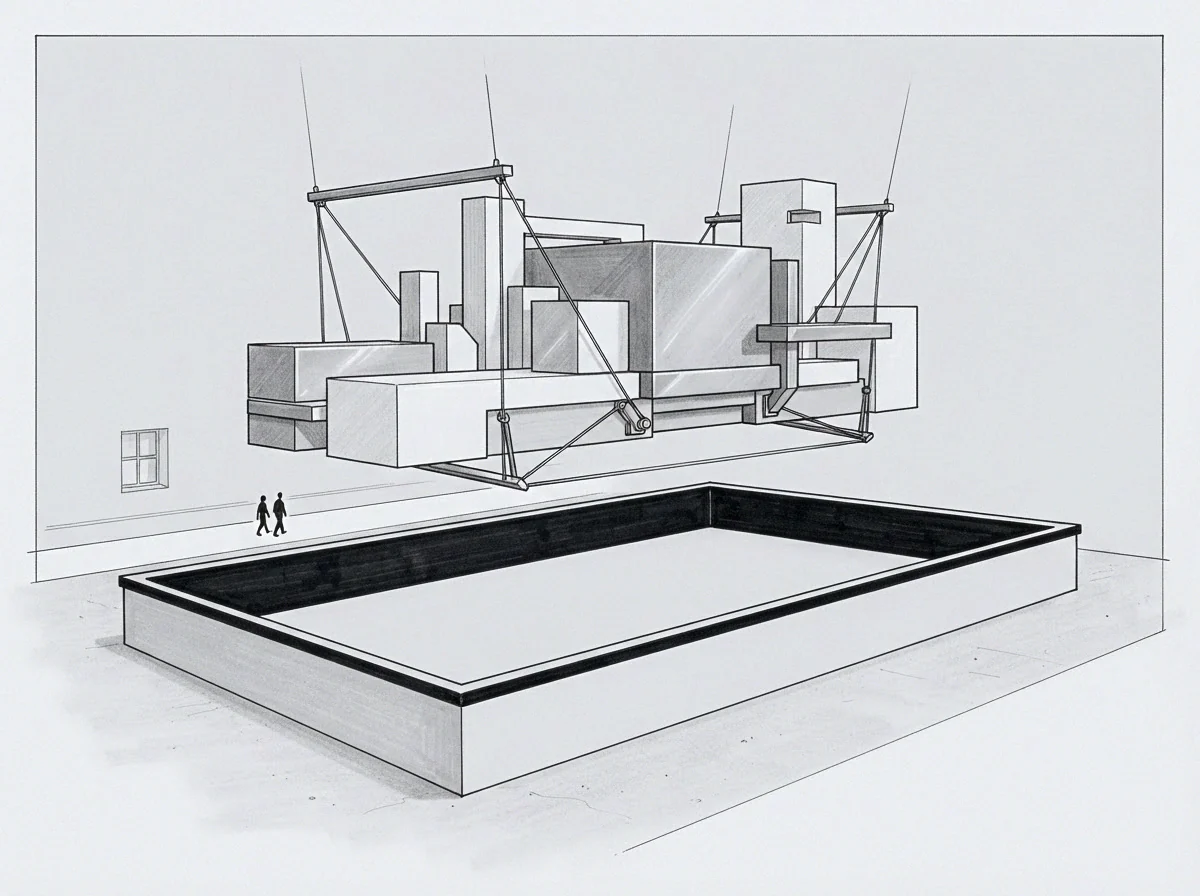
Instrumentation of the Organizational Boundary
Structural remediation begins by charting the exact path of work crossing team perimeters. Operators track queue dwell time, measuring how long a finished artifact waits for external review relative to the time spent actively modifying the asset. In poorly configured organizations, artifacts spend ninety-two percent of their lifecycle in queue dwell states, completely motionless while local squads report ninety percent individual task utilization.
Silence carries a steep tax.
By shifting operational metrics from individual labor utilization to end-to-end integration velocity, leadership realigns team incentives. Squads cease optimizing purely for local output volume and begin prioritizing cross-boundary unblocking efficiency. A senior engineer receives organizational recognition not for writing three thousand lines of isolated code in a vacuum, but for reviewing and merging two upstream dependencies that unlock eight colleagues on dependent teams.
The handoff window closes.
Over time, organizations internalize that absolute local autonomy and zero coordination latency cannot coexist simultaneously within a shared architecture. Concessions are structural, mathematical, and unavoidable. A team can operate with high local sovereignty if it accepts wider integration boundaries, or it can operate with immediate cross-team responsiveness if it accepts standardized scheduling protocols and constrained work in progress limits.
How much latency can an autonomous organization absorb at its external customer boundary before the competitive cost of delayed market release exceeds the creative productivity gains of decoupled internal squads?