
Quantifying Attentional Residue and Context Loss across Asynchronous Technical Team Operations
Asynchronous context switching leaves persistent attentional residue that degrades technical accuracy and inflates task recovery duration.
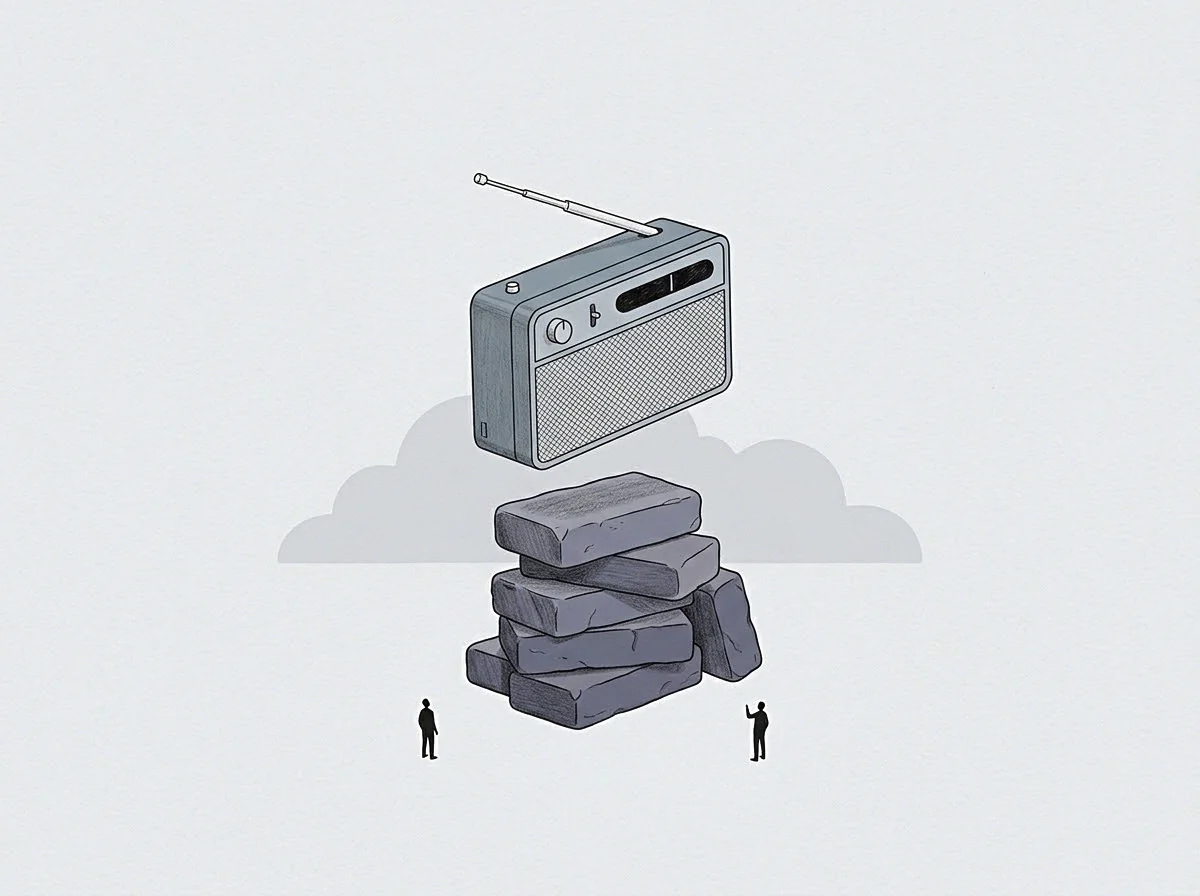
Lag
A software engineer opens an asynchronous pull request comment thread at eleven in the evening, scans three unresolved reviews across distinct repositories, and spends forty minutes reconstructing the architectural rationale before typing a single response. The processor stalls. Work on the primary task stops while the individual parses historical conversation logs to recover state.
Attention remains divided long after the browser tab closes. This pattern recurs across distributed technical organizations where asynchronous communication is treated as frictionless transmission.
Cognitive Attentional Residue in Asynchronous Work Environments
When an engineer pauses work on a complex code branch to read a notification, neural activation associated with the initial task persists. Cognitive load theory establishes that working memory capacity is strictly bounded. The human brain does not clear active memory buffers instantaneously during a task switch.
Instead, lingering activation from the prior activity consumes a portion of available working memory. Attentional residue represents this persistent mental engagement with an incomplete secondary objective. The thread stays open.
In asynchronous technical environments, workers routinely switch between deep architecture work, code reviews, incident channels, and project tracking boards. Each uncompleted thread leaves a residual activation footprint. Capacity drops immediately.
When an individual accumulates five or six active asynchronous interactions, the available capacity for primary cognitive execution shrinks significantly. The individual experiences a state of chronic cognitive fragmentation while appearing fully occupied across multiple administrative channels.
The Physics of Intermediate Switching States
Moving between unrelated tasks forces the working memory buffer to flush active configurations. This process is not instantaneous. Context loss occurs when the precise sequence of variables, parameters, and architectural assumptions stored during deep concentration dissolves during an interruption.
The recovery cost is cumulative.
The time required to rebuild full working memory context scales with the depth of the initial task. A superficial task shift to answer a direct message incurs a moderate recovery cost. Conversely, leaving a complex software refactoring task to address an incoming pull request review wipes the working memory slate entirely.
Re-establishing that specific mental environment demands substantial energy and focused re-reading of surrounding code modules.
Interrupting an active execution thread leaves state variables active in working memory for up to twenty minutes after the switch occurs.
The operational impact of this decay manifests as elevated error rates, extended pull request cycle times, and reduced output in creative system design. Distributed organizations frequently misattribute these operational delays to individual productivity deficits or poor time management. The root mechanism is structural: ungated asynchronous input streams force continuous, uncoordinated context switching.
A system operating without strict input controls will inevitably degrade working memory headroom across all participating nodes.
Every unbuffered notification stream generates an ongoing cognitive tax that consumes execution headroom before any primary work begins.
Clock
Time delays in asynchronous execution generate structural uncertainty regarding task status. An engineer submitting a pull request at the end of a local workday enters a passive waiting state while awaiting feedback from team members located in different time zones. The open loop persists.
This latency transforms linear execution paths into fragmented, multi-day operational sequences.

Cadence Disruption and Context Decay
Operational delays between communication exchanges alter how knowledge is stored and retrieved. When feedback arrives sixteen hours after code submission, the author no longer holds the mental model in active memory. Re-engaging with the reviewer’s comments demands a complete reload of the technical domain.
Context decays rapidly.
This decay curve follows an exponential trajectory. Within the first two hours following a context switch, high-fidelity memory of specific logic choices fades. By twenty-four hours, the author relies primarily on written documentation and code artifacts to reconstruct their own thought process.
Asynchronous latency therefore multiplies the total energy expended per unit of output, as the initial conceptualization phase must be partially repeated upon every review iteration.
Asynchronous Ping Rates and Regulatory Wear
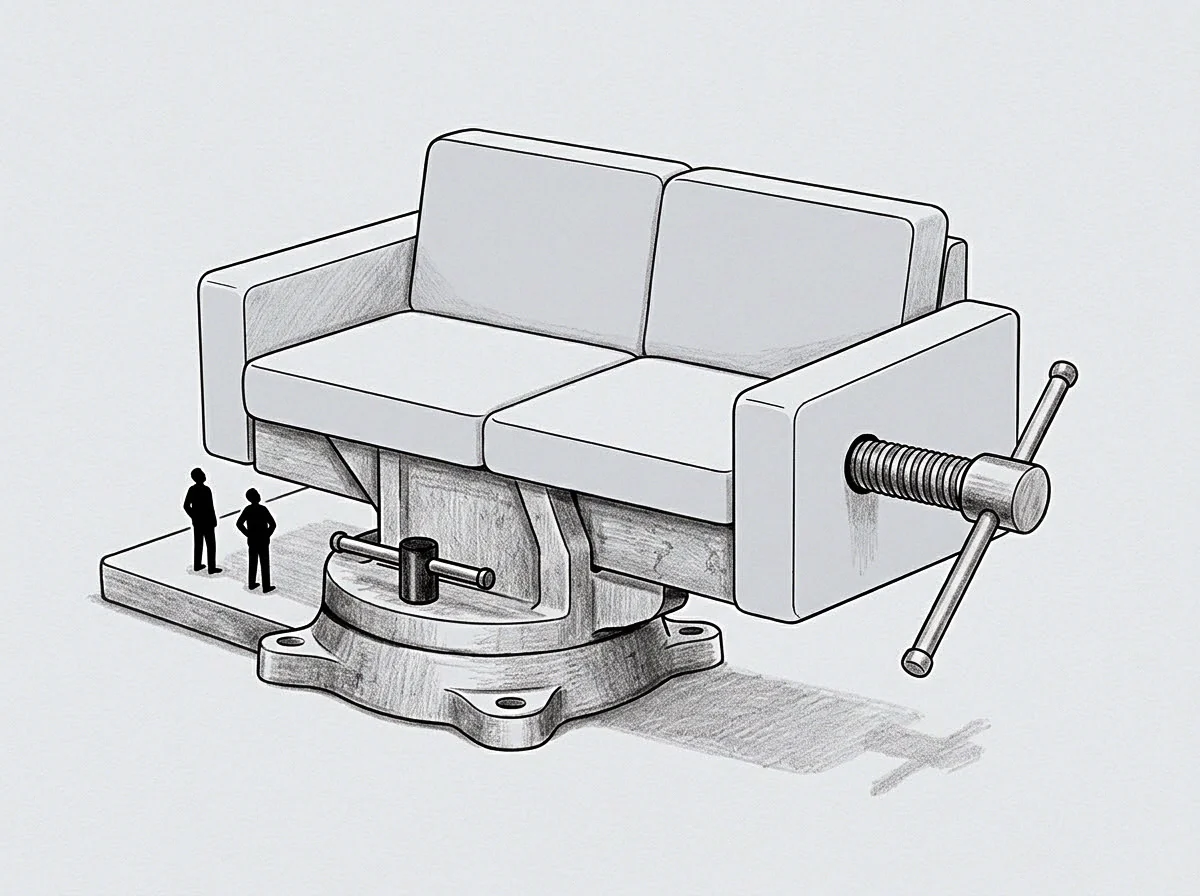
Frequent incoming notifications trigger continuous micro-appraisals of priority. Even when an engineer chooses not to respond immediately to a incoming message, the act of evaluating the notification consumes executive function. The limit is reached.
This continuous evaluation cycle builds allostatic load, defined as the physiological wear and cumulative burden of chronic regulatory demand.
An ungated asynchronous ping converts a passive waiting period into an active monitoring state.
Continuous background monitoring degrades systemic resilience over time. Technical workers who maintain multiple open communication channels experience constant low-level alertness, which depletes energy reserves needed for complex problem-solving. This depletion is direct structural wear on the human cognitive system.
- Unbounded Notification Fan-out creates continuous micro-interruption patterns across engineering units, preventing sustained deep work blocks.
- Implicit Immediate Response Expectations force workers to monitor channels passively during high-complexity execution tasks, splitting working memory.
- Fragmented Code Reviews split single technical additions into multi-day review loops that require repeated context reconstruction.
- Ungated Channel Creation expands the surface area of incoming requests without clear priority filters or batching controls.
Failing to establish temporal boundaries around asynchronous updates causes continuous working memory drain and inflates project delivery schedules.

Trace
Reconstructing context from passive written records requires active cognitive synthesis. When technical decisions are scattered across chat channels, pull request comments, and issue trackers, workers spend significant energy assembling an accurate picture of current state. The signal dissipates.
The cumulative overhead of this reconstruction work degrades total operational capacity across distributed software teams.
Does Context Recovery Scale Exponentially?
Rebuilding operational state after a distraction consumes non-linear energy relative to the duration of the interruption. As the number of active, interlinked components in a technical system increases, the mental map required to safely alter any single component expands. When an engineer is forced to abandon this mental map mid-task, restoring it later requires re-evaluating the relationships between all connected components.
Recovery demands energy.
This non-linear relationship implies that frequent short interruptions are significantly more damaging to deep technical output than rare, long interruptions. A developer interrupted four times an hour never reaches the threshold of deep working memory integration. The team remains trapped in a shallow processing mode where complex architectural synthesis is impossible.
| Switch Complexity Level | Reconstruction Time (Minutes) | Attentional Residue Half-Life (Minutes) | Error Rate Probability Increase (%) |
|---|---|---|---|
| Low-Friction Inline Update | 4 to 7 | 10 to 15 | 12 |
| Multi-Repository Thread Reactivation | 18 to 25 | 35 to 45 | 38 |
| Deep Architectural Re-contextualization | 40 to 60 | 70 to 90 | 65 |
Consider two engineering teams operating across a nine-hour time offset. Assume the primary repository contains thirty interdependent microservices. Team A utilizes real-time synchronous handovers at overlap boundaries, passing an explicit document detailing active state, open hypotheses, and pending pull requests.
Team B operates strictly asynchronously, relying on pull request comment threads and automated notification pings. Execution halts.
Over a four-week iteration, Team B incurs a measurable penalty in cycle time. Engineers on Team B spend an average of twenty-two minutes per pull request re-reading previous comment threads to understand why specific design choices were made. The switching cost for Team B includes both the time lost to reading past records and the mental fatigue generated by holding unvalidated assumptions in working memory while awaiting clarifying responses.
The open loops accumulate, consuming available system headroom.
When open loops exceed four active threads, context recovery overhead consumes more operating capacity than execution itself.
The code cannot move forward until someone explains what was intended three days ago in that unmerged branch.

Friction
Operational slowdowns in distributed teams stem primarily from uncoordinated communication patterns. When technical information is delivered in unstructured, piecemeal updates, recipients must spend time and energy filtering, organizing, and clarifying the input before actionable work can begin. The cost is cumulative.

Quantifying the Recovery Overhead
Measuring the time spent re-reading historical threads reveals hidden operational losses. Quantitative tracking of engineer activity shows that up to thirty-five percent of an asynchronous worker’s day is spent navigating intermediate information structures. This includes tracking down ticket statuses, checking build outputs across multiple dashboards, and reading fragmented discussion threads.
Context reconstruction represents a massive hidden operational expense in modern engineering organizations.
Clear ownership terms reduce intermediate status inquiries faster than automated tracking tools.
This overhead scales directly with team size and repository complexity. In the absence of structured documentation protocols, the volume of noise increases faster than the rate of useful signal generation. Workers adapt to this noise by increasing their polling frequency, which further elevates overall cognitive wear.

Structural Remediation of Open Information Loops
Systematic gating protocols prevent uncoordinated context switching across technical operations. Managing asynchronous flow requires structural barriers that control when and how external requests interrupt active execution streams.
- Enforce strict asynchronous batching protocols where incoming reviews and non-urgent communications are processed during designated operational windows.
- Mandate comprehensive pull request description templates that include complete architectural rationale, reducing clarifying comment cycles.
- Establish explicit thread caps that prevent individual contributors from holding more than three active unmerged pull requests concurrently.
- Implement asynchronous handoff documents for cross-time-zone operations, explicitly detailing pending state variables and blocking conditions.
A stated protocol limiting active pull request threads to two per developer changes incoming review load from an uncontrolled stream into a predictable queue.

Bound
Establishing strict operational limits preserves cognitive capacity across asynchronous engineering environments. Without deliberate operational boundaries, asynchronous technical work defaults to continuous, high-friction task switching that exhausts engineering personnel and inflates software defect counts. System capacity is finite.

Systemic Limits on Active Operations
Enforcing thread caps stabilizes cognitive performance across distributed teams. Restricting the number of active projects, open pull requests, and ongoing communication loops protects individual working memory headroom. When an organization respects these hard cognitive constraints, technical output shifts from fragmented administrative triage to continuous, high-fidelity engineering execution.
Memory retains the previous state when protected by clear structural gates.
The concurrency limit for effective deep technical execution remains strictly bounded by human cognitive architecture. Organizations that attempt to bypass these physiological boundaries through continuous asynchronous connectivity suffer systemic operational slowdowns, elevated defect rates, and chronic fatigue across their engineering cohorts. Sustainable asynchronous operations demand rigorous input filtering, explicit state handovers, and absolute limits on active information threads.
How can engineering organizations accurately measure the invisible cognitive tax of open asynchronous threads before context loss manifests as schedule failure?