
Managing Chronic Allostatic Load in Founding Partner Operations
Chronic allostatic load in founding teams occurs when unconstrained, ungated operational threads exceed executive neurobiological capacity, forcing systemic throttling.
Wear
Four conversations run on a phone screen at eleven at night while the body holding it produces the chemical signature of physical retreat. A partner asks about client churn, an engineering contractor asks about invoice timing, an investor leaves an open inquiry about gross margins, and an operator asks whether a stalled hiring process can proceed. The person holding the screen replies to three of them within ten minutes, giving each sender the flat, composed direction expected of an executive.
Sleep follows four hours later, broken at three in the morning by an unprompted cortisol surge that brings a dry mouth, an elevated heart rate, and an immediate inventory of unresolved cash demands. The day begins without rest, yet the operational log shows every ticket cleared.
This state is routinely misdiagnosed as an affective disturbance. In clinical and occupational literature, allostatic load denotes the cumulative multisystem physiological wear resulting from sustained adaptation to chronic neuroendocrine arousal. The body maintains stability through alteration, deploying catecholamines, glucocorticoids, metabolic shifts, and immune modulations to meet perceived threat.
When the operational environment presents continuous, non-terminating demands, the regulatory machinery never returns to baseline. Tissues bear the physical cost of continuous readiness.
A biological system adapting to unceasing threat burns its operational reserves to preserve short-term homeostatic equilibrium.
Stress physiology distinguishes clean transient stress from secondary allostatic wear. In acute activation, cortisol rises, mobilizes hepatic glucose, suppresses peripheral inflammatory response, and recedes once the environmental condition resolves. In chronic founding environments, resolution never arrives.
The partner relationship operates without fixed boundaries on liability, capital exposure remains personal, and every peer looks to the same central seat for stabilization.
Biological Indices of Continuous Readiness
Neuroendocrine exhaustion alters the sensitivity of the hypothalamic-pituitary-adrenal axis. Sustained hypercortisolemia leads to glucocorticoid receptor resistance in peripheral tissues, leaving systemic inflammatory cascades uninhibited. This physiological shift changes daily executive function across specific axes:
- Glucocorticoid receptor downregulation elevates baseline morning inflammatory cytokines, producing muscular stiffness and cognitive fog prior to operational exposure.
- Sympathetic tone dominance suppresses high-frequency heart rate variability, eliminating the cardiovascular elasticity needed to absorb minor tactical surprises without peripheral vasoconstriction.
- Prefrontal metabolic contraction shifts task prioritization toward reflexive threat suppression, degrading systemic architectural reasoning across rolling four-quarter horizons.
The daily consequence appears in the operational log: tactical issues receive prompt resolution, while high-order capital allocation and structural personnel restructuring remain untouched for quarters at a time. The system protects its immediate perimeter at the expense of its longitudinal structure.

Ceiling
A persistent operational puzzle in early venture leadership is the founder who executes every administrative task while experiencing an inability to begin strategic work. Observers often treat this pattern as a lack of visionary focus or task deferral, but stress physiology identifies it as throttling: an autonomic conservation state in which an organism operating at physiological ceiling systematically drops high-metabolic-cost processing while sustaining low-cost maintenance routines.
Depressive withdrawal involves a generalized loss of drive across all operational domains. Throttling is distinct: it preserves execution on externally cued tasks while suppressing self-generated, exploratory actions that consume heavy executive bandwidth. The person answers every incoming email within twelve minutes, drafts clean operational procedures, and signs every compliance document, yet cannot open a blank text document to write an annual strategy memo.
Throttling preserves low-overhead external execution to prevent system collapse under total cognitive load.
This distinction carries operational stakes. Treating an executive running at ceiling with conventional behavioral activation interventions accelerates systemic exhaustion. What is missing is neurobiological headroom, the unallocated physiological and attentional capacity required to hold unstructured future variables in working memory without triggering autonomic alarm.

Operational Manifestations of the Concurrency Limit
Human working memory operates under a strict concurrency limit. When incoming threads remain ungated, each active thread consumes an autonomic monitoring slot. A thread is an unresolved obligation whose parameters, delivery dates, or outcome terms remain undefined.
A venture partner holding three gated commitments executes with normal cardiac intervals, whereas the same partner holding fifteen ungated conversational threads operates in constant sympathetic arousal, regardless of how trivial each task is.
Consider the allocation of autonomic slots across typical executive setups:
| Operational Thread Type | Attentional State | Physiological Overhead | Autonomic Slot Allocation |
|---|---|---|---|
| Gated operational ticket with defined completion metric | Dormant until scheduled execution | Baseline cortisol, preserved heart rate variability | Zero active slots during latency period |
| Unstructured Slack thread regarding equity reallocation | Continuous peripheral vigilance | Intermittent sympathetic discharge, sustained vascular tension | One permanent slot until documented execution |
| Ambiguous partner responsibility over enterprise sales delivery | Hypervigilant threat tracking | Elevated diurnal cortisol curve, flattened nighttime dip | Two slots carrying emotional and structural monitoring |
| Unscheduled capital call discussion with lead investor | High-frequency rumination | Elevated systemic inflammation, sustained elevated resting pulse | Three slots suppressing forward-looking strategic action |
A partner holding eight ungated conversational threads has effectively zero capacity left for systemic analysis. Attentional capacity is consumed by the peripheral monitoring machinery. The partner appears functional in meetings and speaks with analytical precision, yet makes no structural progress on the firm foundation.
The slot arithmetic prevents execution.
When counterparties misinterpret this preservation state as willful detachment, they invariably increase oversight frequency, adding monitoring pings that demand immediate reassurance and consume the final remaining biological reserve.

Anchor
Social baseline theory establishes that the human nervous system does not calculate survival from an isolated individual baseline. Proximity to reliable, predictable peers reduces the physiological cost of environmental regulation. Within a high-trust partner dyad, the neurological cost of tracking systemic threats is distributed; the presence of a co-founder whose competence and contractual alignment are clear functions as a primary borrowed regulation mechanism.
In unstable partnerships, the reverse occurs: the co-founder ceases to function as a regulatory anchor and transforms into the primary source of environmental unpredictability. The nervous system must now run two parallel monitoring programs. One program tracks external operational risks, such as runway consumption, product outages, and market dynamics.
The second monitors internal relational risk, including ambiguous authority boundaries, friction over workload disparities, and unpredictable emotional reactivity.

The Metabolic Cost of Covert Contracts
Relational load in founding teams stems from covert contracts, unspoken agreements where one partner assumes disproportionate operational drag under the assumption that the other will eventually recognize the contribution and reciprocate with labor or deference. Because the terms were never explicitly stated, reciprocation rarely arrives. The accommodating partner perceives the omission as exploitation, while the other partner remains unaware of the unstated transaction.
The neurobiology of this dynamic is taxing. The accommodating partner sustains high allostatic load by regulating the emotional climate of the firm, absorbing client friction, and mediating personnel disputes. This emotional labor does not show up on financial records, yet it extracts the same metabolic toll as physical labor.
A partner who absorbs regulatory drag for the leadership team experiences accelerated somatic exhaustion, manifesting as gastrointestinal disruption, disrupted sleep architecture, and eventual sudden operational detachment.
When an accommodating partner hits an absolute ceiling, they rarely negotiate before exiting. They leave the partnership abruptly, leaving counterparties surprised by the sudden termination of what had appeared to be a frictionless operational arrangement. The arrangement collapses once the biological cost of sustaining unspoken terms exceeds the individual’s total adaptive reserve.
Silent over-performance creates an illusion of operational stability that is continually funded by the physical depletion of the accommodating partner.
Limit
Conventional prescriptions for executive load reduction center on psychological reframing, cognitive restructuring, and leisure allocation. These interventions fail in founding partner operations because they treat a structural capacity problem as a perceptual defect. A founder experiencing chronic allostasis facing eighteen active structural crises needs a direct reduction in open loops, not a change in perspective.
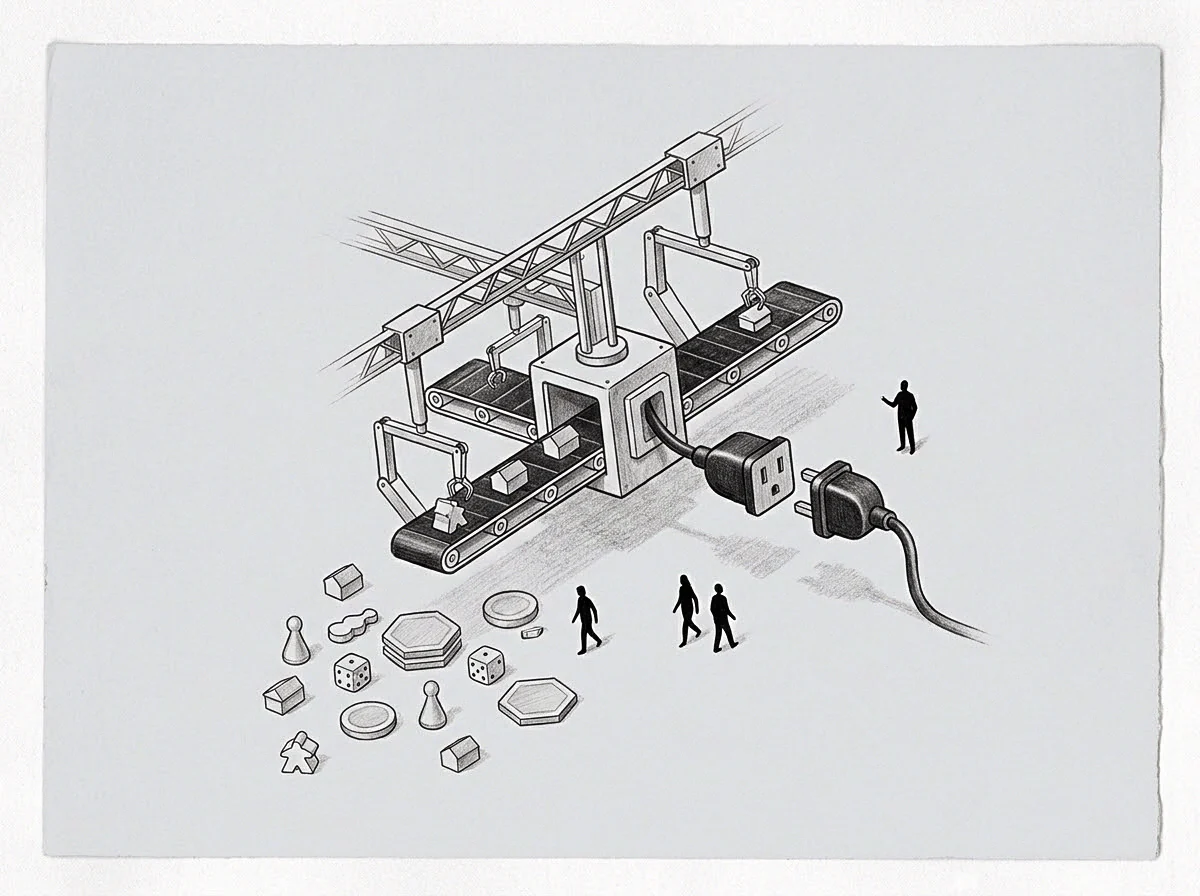
The primary move is architectural: transforming ungated communicative streams into gated operational protocols. A gate is a clear boundary that rejects input lacking explicit parameters. It requires three variables before an issue enters the partner’s cognitive queue: explicit scope, a definitive completion date, and hard acceptance terms.
Without all three, the issue remains the requesting party’s operational responsibility.
A stated structural boundary terminates allostatic expenditure by transferring the burden of clarity back to the requester.
Discussions in occupational design often center on whether hard limits impair early-stage organizational agility. One view holds that rigid communication boundaries slow responses to emergent market opportunities. The alternative observation is that unconstrained executive availability causes chronic biological wear, degrading decision quality across capital allocation moments.
Empirical evidence from high-reliability organizations supports the second position: operational elasticity depends directly on the biological stability of central decision nodes.

Implementing Asynchronous Structural Firewalls
To restore biological headroom, founding partners establish explicit structural terms governing information ingress. The operational framework requires concrete boundaries:
- Channel isolation protocols separate real-time emergency infrastructure failures from operational debate, eliminating continuous vigilance over primary communication tools.
- Batch-processed decision windows restrict operational evaluation to two designated two-hour intervals per week, leaving remaining business hours dormant to tactical pings.
- Asynchronous clarity thresholds reject any partner initiative submitted without an explicit statement of capital requirements, operational execution cost, and non-negotiable termination dates.
Under this discipline, discussions are not left open. If a proposal arrives without actionable terms, it is rejected at the perimeter rather than parked in an active cognitive register. The cognitive slot remains clear.
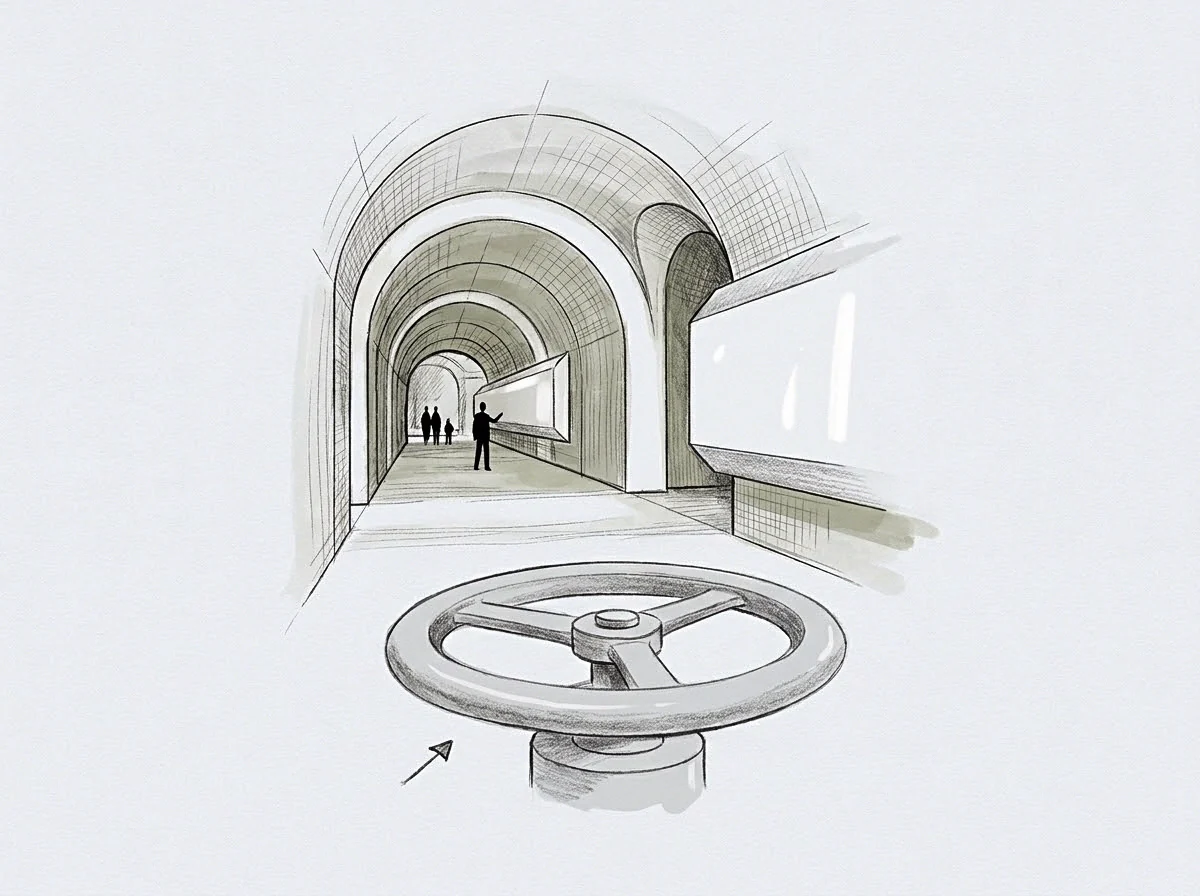
In mechanical engineering, a pressure relief valve vents automatically when its pressure threshold is crossed, regardless of ambient conditions or operator preferences.

Room
Restoring regulatory headroom requires redesigning the physical and temporal environment where a founding partner works. When every working hour is spent in direct conversational range of staff, partners, and investors, the physiological system remains locked in social presentation mode. Every micro-expression, tone modulation, and posture adjustment consumes prefrontal metabolic energy, preventing low-arousal, regenerative states within open floor plans.
A founder operating at allostatic ceiling requires structural containment. This involves stepping away from real-time communication tools for rolling 72-hour periods during acute recovery phases, alongside explicit operational re-anchoring with the co-founder. The co-founder assumes external regulatory responsibility during this window, serving as an operational shield rather than a communication conduit.
Consider an enterprise software firm with two equal partners that operated for three years without structural boundaries. The operational partner absorbs all customer delivery complaints, investor runway anxieties, and personnel disputes while the technical partner builds infrastructure. By year three, the operational partner experiences acute sleep architecture fragmentation, resting heart rates consistently above eighty-five beats per minute, and an inability to process contracts exceeding ten pages, bringing the partnership toward structural dissolution.

Can Strategic Re-Anchoring Restore Operational Capacity?
The recovery process starts with mechanical slot reclamation rather than strategic offsites or interpersonal processing. The partners draft a firm jurisdictional boundary that isolates the operational partner from low-severity tactical noise.
The intervention deploys specific jurisdictional allocations:
- Jurisdictional isolation assigns sole unilateral execution authority over operational dispute resolution to the technical partner for sixty days, eliminating joint debate over secondary decisions.
- Synchronous communication blackouts prohibit unannounced voice calls, real-time messaging, and emergency escalation protocols between partners during non-core hours, except under bank-account compromise or total data loss.
- Explicit operational triage criteria direct all personnel grievances through an intermediary administrative channel, preventing direct emotional dumping into the operational partner’s cognitive space.
Within thirty days of operational slot reclamation, the diurnal cortisol slope typically begins to steepen, indicating improved neuroendocrine flexibility. Systemic attentional capacity recovers through the mechanical reduction of active background threads rather than conscious cognitive effort. Physiological capacity returns once structural extraction terminates.
The firm sustains minor operational inefficiencies when issues wait forty-eight hours for batch review, representing the explicit operational cost of preserving central decision-making infrastructure. The alternative is severe administrative disruption if biological capacity collapses entirely.
The partner leaves the office, walks into a quiet domestic space, places the phone in a drawer in another room, and sits in an unlit armchair for ninety minutes without taking notes, listening to audio, or tracking time.

Shift
Transitioning from a high-wear operational configuration to a sustainable executive structure requires renegotiating the founding partnership’s initial psychological contract. Most founding teams treat this contract as static once corporate papers are signed, but an operational division agreed upon during capitalization often becomes obsolete as product validation transitions into multi-department scaling. When the division of labor does not evolve, allostatic load settles disproportionately on whichever partner has the lowest threshold for administrative chaos.
This structural misalignment creates an unspoken pattern where the more reliable partner absorbs an increasing volume of diffuse operational problems. The partner with higher distress tolerance becomes the default recipient of structural ambiguity. Over multi-year operating horizons, this dynamic generates deep relational cynicism that masks underlying physiological exhaustion.
A partner who consistently acts as the emotional shock absorber for an organization will inevitably be discarded by the system they stabilize.
Resolving this dynamic requires treating partner operational capacity as an unalterable resource constraint. When financial capital runs out, spending stops; when biological capacity runs out, founders frequently borrow against their cardiovascular and neuroendocrine systems using chemical stimulants and compensatory adrenaline. This biological debt carries heavy costs that eventually compound into clinical collapse.
The final operational move is establishing permanent structural governance between partners. This includes explicit quarterly reviews of all active administrative slots, third-party operational audits to rebalance invisible relational labor, and a mutual commitment that operational boundary defense takes precedence over investor or client appeasement. A firm can survive missed revenue milestones, but it cannot function through the physical and cognitive collapse of its executive leadership.
The question of whether founder load is primarily a structural capacity constraint or an interpersonal failure mode remains open in organizational theory, leaving leadership teams to navigate the boundary between mechanical slot gating and relational co-regulation through ongoing practice.