
Calibrating Concurrency Limits Under Asymmetric Authority and Emergency Escalations
Calibrating concurrency limits under asymmetric authority relies on gating emergency overrides and enforcing explicit scope terms to protect cognitive headroom.
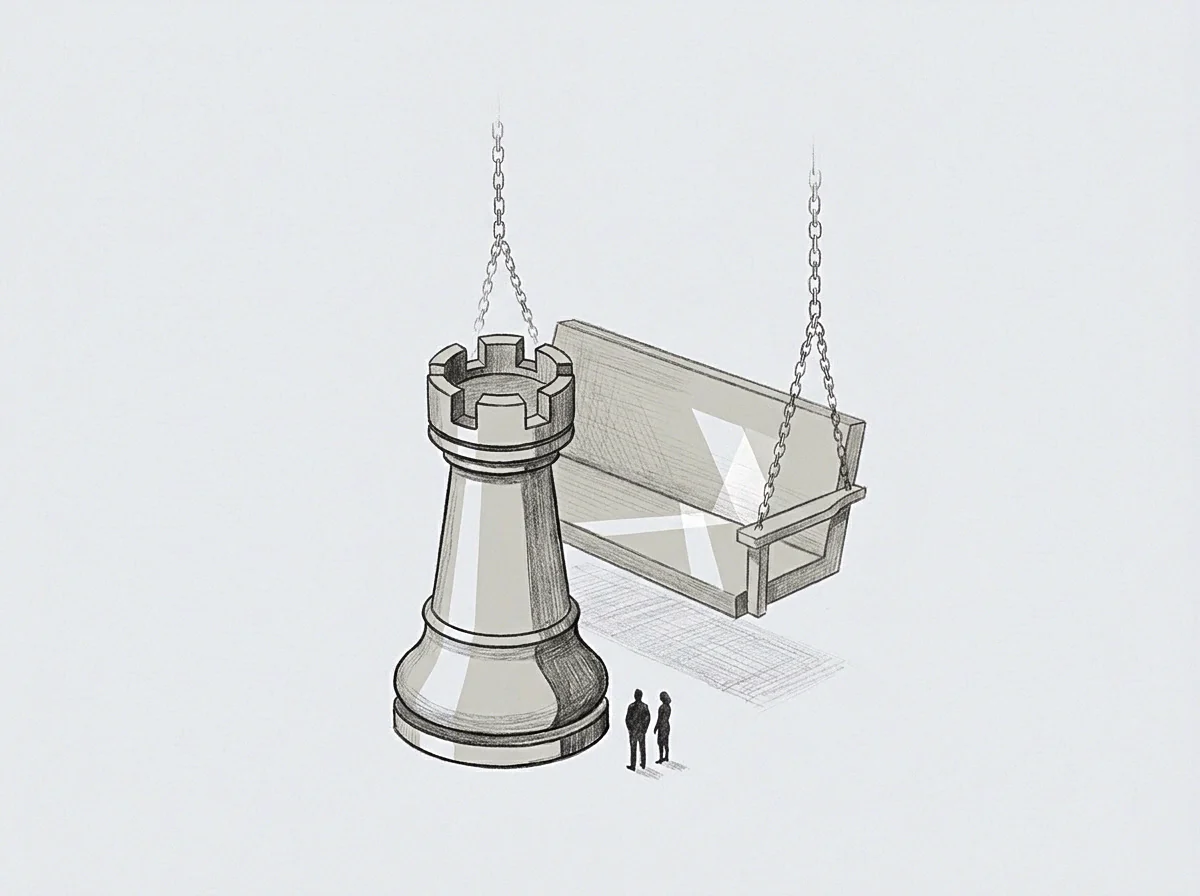
Hook
Four operational alerts arrive across three messaging channels late in the evening, each carrying an implicit demand for immediate acknowledgment. The person receiving them is already holding three active structural problems, two client escalations, and an unfiled regulatory disclosure. Total capacity is capped by biology, yet the sender of the late messages holds higher institutional authority and treats every ping as an emergency override.
The receiver moves to open a seventh cognitive thread. Processing stops on the existing priorities, not because the new demand is complex, but because the count of un-gated tasks has breached the cognitive limit.
In high-pressure organizations, the primary limit on output is rarely total work volume. The true constraint is the concurrency limit, defined as the maximum number of active, ungated cognitive threads a single individual can track simultaneously without experiencing systemic decay in decision quality. When authority across an organization is equal, individuals negotiate capacity by setting terms, dates, and boundaries.
Under asymmetric authority, however, senior figures frequently use their institutional weight to bypass these filters, converting routine queries into emergency escalations. This dynamic destroys operational headroom, forcing the subordinate actor into a state of chronic regulatory throttling.
A concurrency ceiling measures active open threads rather than total assigned projects.
Ungated threads carry immense hidden costs. A thread with clear scope, a fixed resolution date, and explicit terms consumes minimal cognitive processing. It sits quietly in working memory as a parked item.
An ungated thread, created whenever an incoming ping arrives without scope or explicit deadline, continuously claims processing slots. The mind checks the open loop repeatedly to evaluate potential risk. When asymmetric authority introduces continuous, uncalibrated escalations into a receiver’s workflow, the receiver’s internal processing capacity becomes entirely saturated by coordination overhead.
The seat holds.
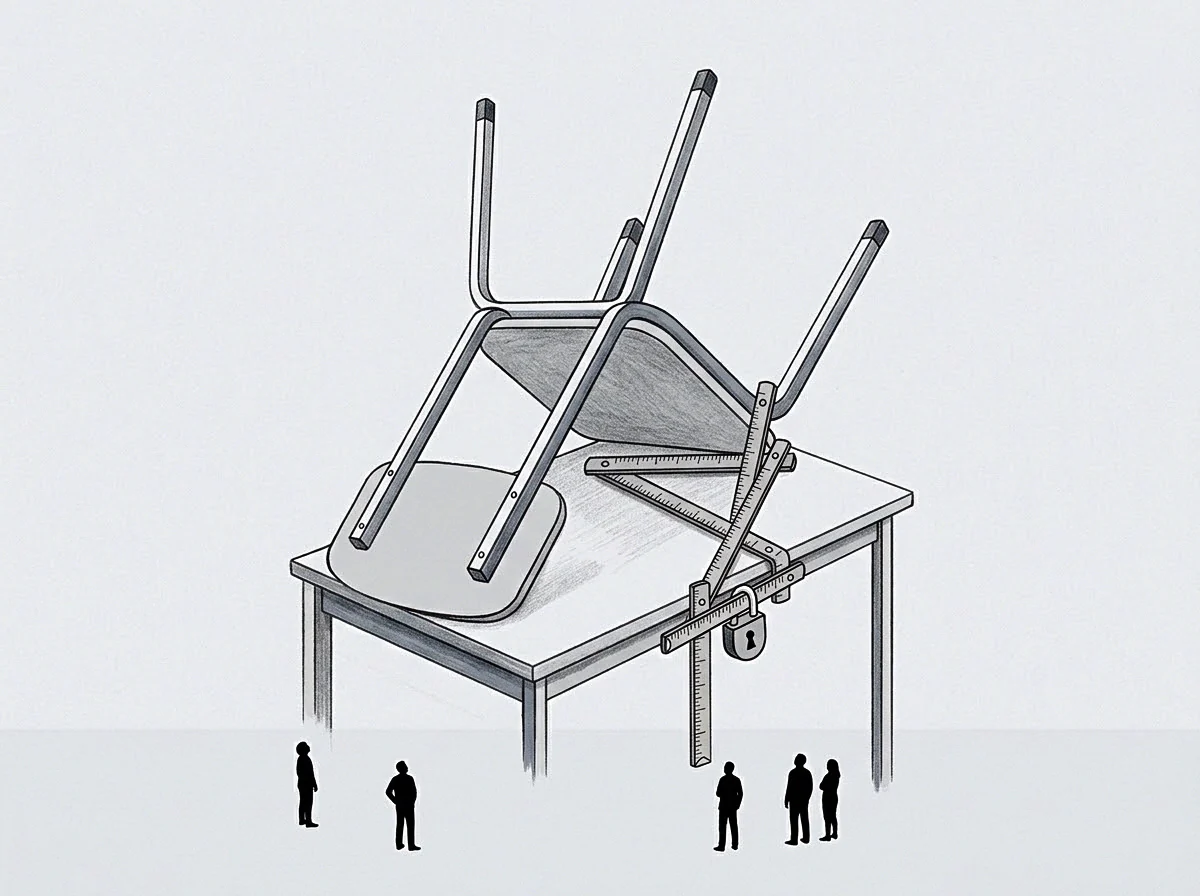
Asymmetry
Structural inequality in decision rights changes how operational interruptions consume working memory. When an actor with lower formal standing receives a direct request from an actor with senior governance control, the implicit cost of delaying a response rises dramatically. The receiver cannot simply ignore the input or assign it a low priority without risking institutional friction.
Consequently, every ping initiated by an authority figure automatically forces its way into an active processing slot, regardless of whether the content constitutes a genuine operational emergency.

Authority Differentials and Open Loop Creation
Power imbalances disrupt standard queue management. In a balanced peer-to-peer working environment, tasks enter a pending queue where they await triage based on objective impact metrics. Under hierarchical divergence, the senior sender operates with an implicit privilege to preempt the queue.
This preemptive right transforms what should be background inquiries into live cognitive demands. The internal system of the recipient reads the senior sender’s impatience as a direct threat to operational standing, triggering immediate focus shifting.
The total state of strain experienced by an individual under continuous regulatory demand is known in stress physiology as allostatic load. Unlike acute stress, which dissipates once a discrete problem is resolved, allostatic load accumulates when an individual must constantly monitor their environment for unexpected shifts in external demands. Senior stakeholders who freely exercise unilateral escalation privileges inflict continuous regulatory wear on their execution teams.
The receiver remains in a persistent state of hyper-vigilance, reserving processing power for incoming interruptions rather than applying it to deep core output.
- Uncalibrated Override occurs when senior authority figures label routine status updates as operational emergencies, forcing immediate thread creation without objective cause.
- Loop Proliferation manifests when multiple ungated inquiries remain active simultaneously, driving switching costs up and reducing primary task execution speed to zero.
- Asymmetric Vulnerability develops when the subordinate actor lacks the structural permission to state explicit terms, dates, or capacity limits to the senior requestor.
- Headroom Depletion happens as the total reserve capacity required to process real operational shocks is entirely consumed by ongoing status maintenance.

Mechanics of Unilateral Escalation
Unscheduled interventions act as regulatory systemic shocks. When a senior partner demands immediate attention to an unvetted problem, the subordinate must suspend current operations and reallocate cognitive assets to construct a response. This context switch incurs a heavy switching cost, requiring significant time just to restore the previous mental state once the interruption concludes.
Repeat this cycle five times in a single afternoon, and the primary work of the day remains completely untouched.
System limits remain real. When an executive assumes that subordinate capacity is infinitely elastic, they mistake a throttled system for a functioning one. The subordinate continues to acknowledge messages and attend emergency sessions, but self-initiated strategic development halts.
The organization reads the continued responsiveness as strength, completely unaware that the individual has crossed into systemic exhaustion. Interruption carries a cost.

Drain
Systemic exhaustion occurs when the rate of external intrusion exceeds the cognitive recovery speed of the operator. Consider a typical operational arrangement involving a founding technical lead and an primary institutional investor who holds a controlling board seat. The arrangement assumes that the technical lead maintains full execution speed while providing ongoing transparency to the board.
However, the operational reality breaks down under the weight of unmanaged communication channels.
Assume the investor sends multiple uncalibrated requests per day via direct messaging, demanding immediate metrics, ad-hoc projections, and immediate explanations for minor technical deviations. Assume further that the technical lead operates with a hard maximum capacity of four concurrent complex threads. The baseline load already occupies three full slots: primary infrastructure deployment, key engineering hiring, and core product architecture.
The investor’s direct line introduces a continuous stream of volatile fifth, sixth, and seventh threads. The technical lead cannot gate these inputs because the authority structure makes non-responsiveness appear non-compliant or incompetent.
Allostatic load measures the biological wear of persistent regulatory demand rather than temporary workload spikes.
The outcome is structural breakdown. To keep up with the investor’s real-time inquiries, the technical lead pauses architectural work. Code reviews slow down, deployment schedules slip, and engineering quality degrades.
When the investor observes these operational delays, their anxiety increases, driving them to escalate the frequency of their pings. The systemic feedback loop accelerates: incoming load increases precisely because execution capacity is collapsing under the weight of previous intrusions. Wear accumulates without pause.

Can Emergency Overrides Coexist With Thread Caps?
Integrating protocol-driven filters protects operational stability without compromising accountability. The central challenge lies in separating legitimate systemic crises from administrative anxiety. Without explicit operational gates, every inquiry from an authority figure functions as a maximum-priority override, instantly draining the organization’s execution reserves.
Resolving this tension requires establishing clear explicit criteria for what constitutes a true emergency. A operational crisis demands an immediate drop of active tasks only when baseline system availability, legal compliance, or solvency is directly threatened. All other requests, regardless of who originates them, must pass through structured queues bounded by scope, date, and terms.
Priority shifts instantly.
The cost of failing to establish these operational bounds is total functional paralysis. When an operator runs out of cognitive slots, their system enters throttling, a protective state where the mind limits processing speed to prevent complete structural breakdown. External observers frequently misdiagnose throttling as depression, disengagement, or lack of capability.
In reality, throttling is the natural physical response of a system forced to run past its biological limits under unmanaged asymmetric pressure.

Gate
Filters constructed around incoming requests isolate core operations from structural noise. Establishing structural protection against asymmetric authority requires moving from informal availability to formal, explicit communication contracts. The goal is to transform ungated open loops into cheap, fully specified parked items.

Comparative Threshold Models
Different governance architectures process incoming operational demands with varying degrees of cognitive wear. Comparing these structures reveals why ungated asymmetric channels systematically destroy execution capacity.
| Evaluation Metric | Symmetric Escalation Protocol | Unmanaged Asymmetric Override |
|---|---|---|
| Cognitive Slot Consumption | Low (Tasks are queued with fixed scope and dates) | Critical (Every ping creates an immediate ungated thread) |
| Recovery Velocity | Fast (Headroom is explicitly preserved) | Severe Delay (Allostatic load remains chronically elevated) |
| Operational Friction | Front-loaded (Requires initial triage criteria) | Back-loaded (Explodes into operational delays and burnout) |
| Systemic Visibility | High (Queue state is clear to all stakeholders) | Low (Work sits invisible inside individual memory) |
Implementing effective gates requires defining clear boundaries that govern how and when authority figures can bypass standard channels. These rules must be established during quiet operational periods, long before an actual crisis occurs. Open loops demand processing.
- Define explicit impact thresholds that must be met before an incoming message can be classified as a high-priority emergency escalation.
- Establish dedicated single-purpose channels for emergency alerts while muting all routine direct communication during deep execution blocks.
- Require every incoming work request to include a clear scope definition, required delivery date, and explicit acceptance terms before it enters active memory.
- Enforce maximum limits on simultaneous high-priority projects across the operational team, automatically parking new requests when slots are full.
When these parameters are formally documented and agreed upon, the nature of interaction changes. A senior partner seeking a status update no longer sends an open-ended message that disrupts an afternoon of deep focus. Instead, the query enters a standardized dashboard that provides visibility without claiming cognitive slots.
Gated lines save slots.
Throttling is an active protective state of a system running at its limit, not a psychological failure of motivation.
The primary barrier to implementing these controls is the anxiety of senior stakeholders who associate immediate access with operational control. Educating authority figures on the reality of cognitive limits is an essential leadership task. When a senior partner understands that ungated access directly reduces the yield of their assets, agreeing to structured communication gates becomes a clear strategic choice.
The operational partner simply states that immediate access to real-time status reduces total delivery speed by half.

Buffer
Reserving operational capacity ensures continuous functioning during genuine operational shocks. Cognitive headroom is not idle time; it is the essential safety margin required to process unexpected events, analyze complex choices, and maintain emotional regulation under intense pressure. Operating continuously at one hundred percent capacity guarantees catastrophic failure when an actual emergency hits.

Preserving Regulatory Headroom
Maintaining a dedicated operational buffer requires continuous monitoring of capacity variables rather than relying on subjective feelings of fatigue. Feeling overloaded is a late-stage indicator that appears long after performance has begun to degrade. The primary metrics to monitor are objective and structural: the count of open un-gated loops, the frequency of unscheduled context switches, and the total duration of uninterrupted focus blocks available per week.
When open loops accumulate beyond the designated limit, the operator must execute immediate thread suppression. This involves actively closing, delegating, or formally parking open tasks regardless of their completion state. Parking a task requires communicating a clear update to all interested parties, stating explicitly when the item will be re-examined and under what specific conditions it will be resumed.
Thread suppression frees cognitive slots immediately, restoring the headroom required to tackle core execution risks.
The ultimate responsibility for preserving operational stability rests on setting clear, non-negotiable capacity limits. An organization that permits unrestricted asymmetric overrides will eventually exhaust its best talent, trade strategic progress for reactive noise, and mistake systemic wear for individual weakness. Calibrating concurrency limits is the fundamental prerequisite for sustainable, high-velocity execution.
A stated capacity limit of four active threads with mandatory scope gating changes any direct message into a queued request, requiring written board approval to bypass.