
Autonomic System Shifts Following Executive Role Departures
Executive role departure triggers autonomic recalibration when chronic sympathetic tone drops, unmasking accumulated allostatic load and parasympathetic rebound.
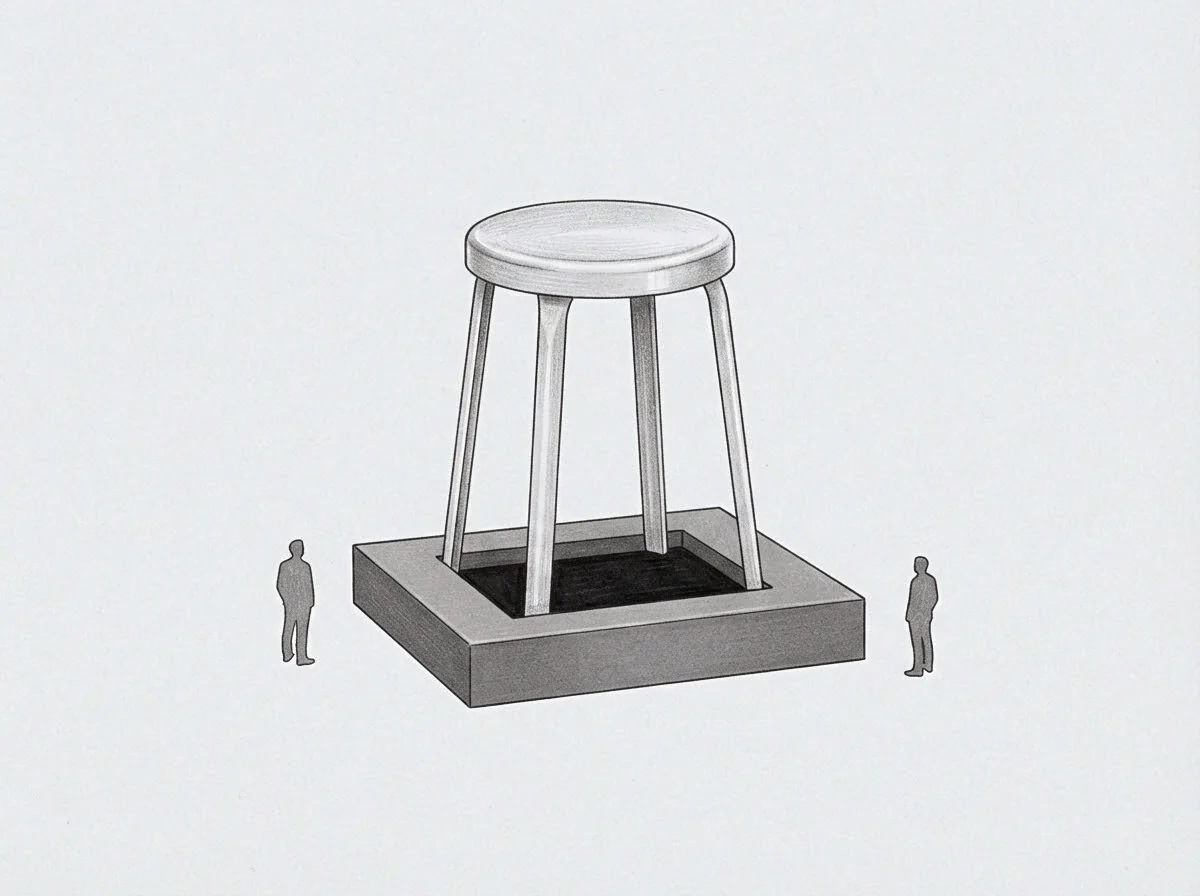
Removal
Four messages arrive on an unmonitored screen at midnight three days after formal exit, but no neuroendocrine cascade triggers an executive response. During high-concurrency tenure, the central nervous system maintains an elevated sympathetic baseline. The role demands continuous environmental threat monitoring, ungated decision processing, and perpetual availability.
This operational state relies on chronic activation of the hypothalamic-pituitary-adrenal axis, elevating circulating cortisol and catecholamines to suppress underlying physiological fatigue. The executive seat operates as an exogenous governor, dictating system rhythm through external pings and scheduled crises.
The calendar empties overnight. When formal role departure occurs, these external pacing inputs drop to zero within hours. The abrupt removal of exogenous stress signals leaves the autonomic nervous system without its primary entrainment mechanism.
Endogenous arousal does not clear at the same speed as the calendar. Instead, the physiological architecture continues to operate as if high-concurrency demand remains active, producing a profound mismatch between external environmental demands and internal autonomic state.
The body maintains its chronic arousal pattern for weeks after the calendar clears.
This phase of departure exposes the distinction between structural exit and physiological reset. While operational authority ceases immediately upon signing departure documentation, autonomic recalibration operates on a delayed biological timeline. Cortisol production remains high even as task inputs collapse, creating an internal state of hyper-arousal without an external target.
The nervous system searches for non-existent operational emergencies, generating feelings of phantom urgency during periods of enforced stillness.
Interpreting early structural quiet as complete systemic recovery causes leaders to accept new governance obligations before baseline physiological headroom returns.

Bench
Physical stillness after years of high-concurrency demand exposes the accumulated wear on autonomic structures. When chronic sympathetic drive finally recedes, parasympathetic rebound takes over with unexpected intensity. Vagal brake activation, previously suppressed to maintain continuous executive readiness, returns rapidly.
This sudden shift in autonomic dominance leads to marked somatic changes that often alarming the individual experiencing them.
The physiological clock runs slow. As circulating catecholamines decline, vascular smooth muscle tone drops, resulting in reduced systemic vascular resistance. Gastrointestinal tract perfusion, long restricted by sympathetic vasoconstriction, increases sharply, frequently triggering visceral discomfort, digestive irregularity, and intense metabolic craving.
Immune system pathways previously dampened by elevated glucocorticoids re-engage, precipitating localized inflammatory responses, systemic stiffness, and sudden onset fatigue.
Departing executives display distinct autonomic signatures during this transition:
- Nocturnal adrenaline surges occur when suppressed daily cortisol drops below the threshold needed to inhibit locus coeruleus activation during sleep cycles.
- Visceral motility shifts manifest as rapid alterations in bowel transit time once chronic splanchnic vasoconstriction relaxes.
- Postural orthostatic drops register as transient lightheadedness when vascular smooth muscle tonus fails to adapt rapidly to reduced circulating catecholamines.
External pacing cues vanish. Without structured demands gating the day, the brain struggle to regulate sleep-wake architecture. Deep slow-wave sleep remains suppressed while rapid eye movement sleep surges, filling nights with vivid, operationally focused dreams that mimic active role demands.
Suppressed inflammatory pathways re-engage the moment circulating glucocorticoid levels return to baseline.
The body reads stillness as danger. Decades of evolutionary wiring link sudden isolation from group coordination to immediate survival threats. Consequently, the nervous system misinterprets the absence of high-density incoming communication as an environmental isolation event, triggering intermittent panic spikes designed to force re-engagement with social baseline networks.
A non-disclosure window that restricts public statements without defining a clear termination date prolongs sympathetic baseline elevation by keeping the threat-monitoring system active.

Rebound
A sudden cessation of chronic exogenous stress unmasks the true magnitude of central nervous system exhaustion. In clinical evaluations, the physical presentation of autonomic throttling post-departure frequently mimics depressive illness. Yet, the underlying mechanisms differ fundamentally.
Depression involves a primary deficit in motivational processing and systemic anhedonia. Autonomic throttling represents a protective down-regulation enforced by a system running at its absolute concurrency limit. The operator misreads the fatigue.

Why Does Inactivity Trigger Sympathetic Spikes After Leaving?
When external demands vanish, the internal regulator throttles capacity to prevent structural neural damage. Cognitive capacity drops, decision velocity slows, and affective flattening ensues. This state serves as a biological brake rather than a mood pathology.
Intervening with traditional clinical models without accounting for prior allostatic load risks misdiagnosing a necessary recovery sequence as a psychiatric crisis.
| Physiological Variable | Executive Tenure Baseline | Post-Departure Transition Baseline |
|---|---|---|
| Sympathetic Tone | High continuous activation | Oscillatory spikes during rest |
| Vagal Brake Activity | Suppressed via central inhibition | Acute parasympathetic rebound |
| Cortisol Secretion | Flattened diurnal curve with high floor | Trough drops with erratic morning spikes |
| Visceral Blood Flow | Constricted via alpha-adrenergic drive | Hyperemic restitution and cramping |
| Sleep Architecture | Truncated slow-wave sleep | Fragmented REM with nocturnal awakening |
Vagal brake suppression suddenly lifts. Circulating catecholamine levels drop rapidly. Inflammation rises as cortisol drops.
Throttling is not system failure. It is an active safety mechanism executing its protocol.
Treating autonomic throttling as clinical depression introduces inappropriate chemical interventions that prolong the recalibration cycle.
The board expected an immediate transition to advisory availability rather than three months of complete cognitive unresponsiveness.

Toll
Holding background vigilance across multiple ungated projects consumes energy long after operational authority ceases. An executive rarely exits a role cleanly at the cognitive level. Internal decision loops remain open, tracking former team members, pending strategic outcomes, and equity valuations.
Cognitive threads cost active capacity. Each unresolved mental loop occupies a physical processing slot within the prefrontal cortex, maintaining baseline autonomic tension.
Open loops keep vigilance high. Structural exit precedes autonomic exit. The transition process follows a sequential physiological clearing pattern:
- Primary operational disengagement removes real-time incoming demands while maintaining high background vigilance.
- Internal thread inventory processing begins as the central executive network attempts to resolve ungated decisions.
- Somatomotor down-regulation completes when environmental safety cues replace high-concurrency monitoring protocols.
Uncertainty keeps sympathetic baseline high. If departure terms remain vague, the brain classifies the former organization as an ongoing source of potential risk. The absence of strict temporal boundaries on non-compete agreements or advisory obligations prevents the neural architecture from reaching complete disengagement.
Headroom returns only as open loops are systematically gated and parked.
Whether the autonomic system can fully restore its baseline vagal tone while the former executive retains significant equity exposure remains an open physiological question.

Lag
The nervous system adapts to structural changes over months rather than days. Autonomic recalibration cannot be accelerated through sheer cognitive effort or intentional relaxation techniques. The biological machinery requires precise structural conditions to down-regulate permanently: explicit dates, closed scope, and immutable transition terms.
Clear gates restore baseline headroom. The body demands quiet execution. Establishing clear parameters around post-exit availability acts as a structural splint for the autonomic system.
When an outgoing executive converts floating commitments into fixed contractual boundaries with explicit start and end dates, the neural monitoring apparatus finally disarms.
Unstated terms in a departure agreement prolong autonomic hyper-vigilance.
Restoration of baseline vagal tone and diurnal cortisol rhythms signals the end of the post-departure transition phase. Systemic capacity returns gradually as allostatic load clears and internal headroom opens. The individual re-enters a baseline state capable of supporting new creative and operational initiatives without triggering immediate sympathetic exhaustion.
Clear temporal gates allow full autonomic reset when formal responsibility ends.