
Resolving Chronic Co-Founder Interface Failures Stemming From Unstated Operational Asymmetries In Enterprise Expansion
Resolving co-founder operational failures requires converting unstated capacity limits into explicit governance pacts that halt informal load transfer.

Seat
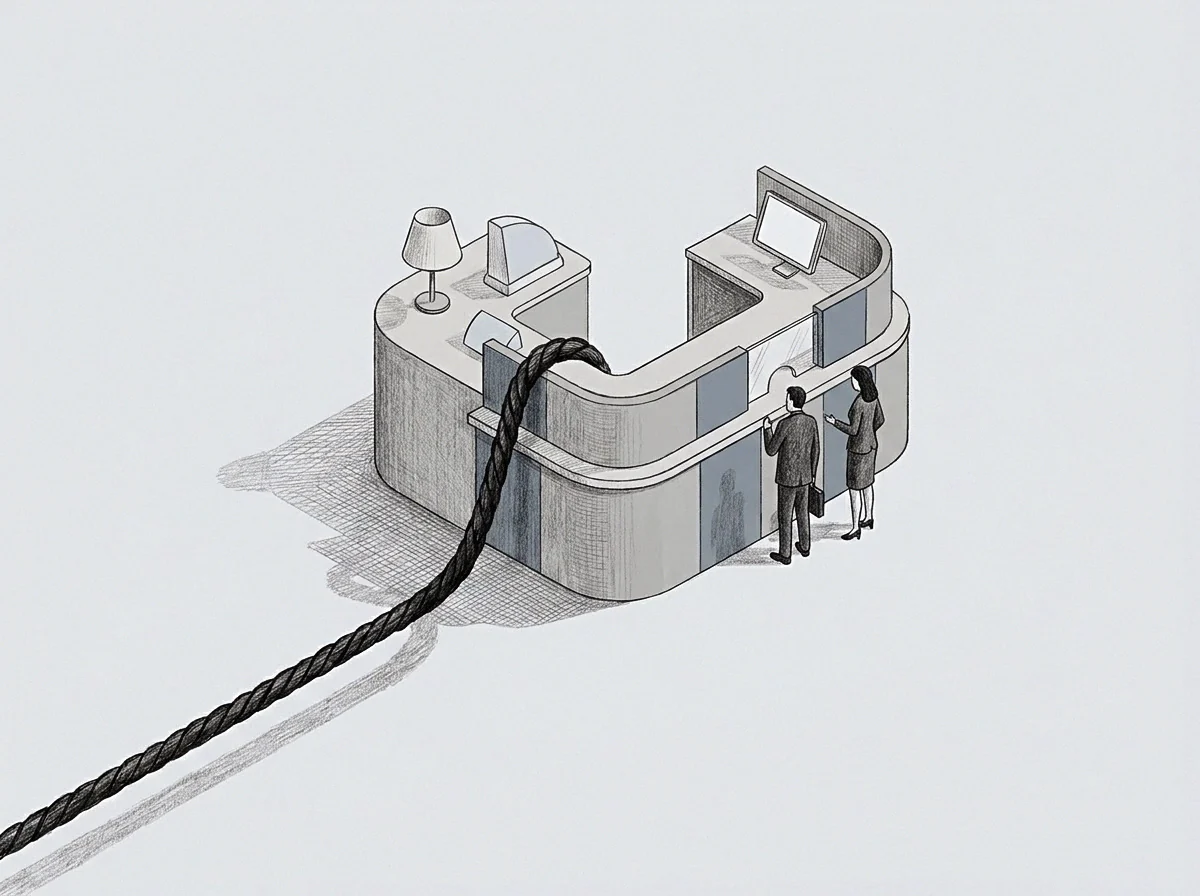
Early Architecture Meeting Contract Demands
Two operators sit across a table at midnight reviewing twenty security questionnaires, five custom service-level agreements, and an enterprise master services agreement spanning ninety pages. Twelve hours went into detailing data residency policies, encryption key rotations, and SOC2 compliance controls on one side of the table, while the other operator spent those same twelve hours pushing production code to preserve sprint velocity for upcoming enterprise pilots. Neither openly acknowledges how commercial growth has altered the substance of daily work.
The technical partner expects compliance obligations to dissolve into administrative routine; the commercial partner assumes software delivery continues without interruption despite constant sales engineering calls. An unspoken division of labor takes root without explicit consent.
Enterprise procurement introduces administrative friction that early workflows never built for—legal redlines, security reviews, customized audit trails, and multi-tier vendor portals that require sustained executive attention. Without an explicit owner for institutional governance, operational weight defaults to whichever partner has the lower tolerance for deal delays. As governance duties absorb one partner’s schedule, visible engineering throughput drops.
The partner remaining in technical execution notes the divergence and suspects declining engagement, leaving operational reality out of alignment with early expectations of parity.
A regulatory obligation left unassigned defaults directly to the operator with the lowest tolerance for corporate delay.
Task-switching across distinct institutional domains wears down executive focus far faster than single-track technical problem solving. In laboratory settings, fragmented attention schedules double the incidence of procedural omissions during technical reviews among single operators managing concurrent enterprise workflows. In live environments, interruption penalties vary based on asynchronous communication tools, but the structural outcome remains consistent: the operator handling institutional expansion becomes a buffer absorbing client ambiguity, while the counterpart remains focused on core delivery, insulated from commercial turbulence.
Weekly capacity reviews highlight the split. One partner arrives bearing institutional risk, enterprise buyer commitments, and regulatory exposure; the other brings code revisions, infrastructure upgrades, and product backlog items. Because neither cataloged the overhead of corporate expansion, both evaluate performance using benchmarks set when the business operated as a three-person workshop.
Friction surfaces during scheduling syncs, and unacknowledged enterprise requirements strain the leadership interface, causing misallocated executive capital, delivery delays, and administrative gridlock.

Load

Covert Transfer Across Asymmetric Channels
Capacity limits first show up in off-hour communications. The commercial lead drops enterprise customer requirements into private messaging channels at dawn, expecting rapid feasibility checks. The technical lead filters the alerts during morning sprint cycles to preserve engineering focus.
The sender interprets non-responsiveness as operational neglect, while the receiver sees unscheduled pings as an intrusion. When an organization expands from serving small teams to signing multinational accounts, ticket volume shifts toward high-touch bespoke requests, transferring operational load through whichever channel yields first.
When client demands spike, whichever partner sets softer boundaries absorbs the overflow, acting as an unstated operational buffer. Systems under continuous load rebalance stress onto adjacent components, and the individual serves as that flexible element until fatigue forces a stop. Escalations get handled quietly without notifying the peer, holding the buffer intact until operational exhaustion halts delivery.
Operational asymmetries manifest across three distinct execution vectors:
- Governance Absorption occurs when one partner handles enterprise compliance, insurance audits, and legal negotiations while the other operates entirely within product parameters.
- Availability Drift develops when enterprise client expectations force an unannounced shift to round-the-clock responsiveness for one leader alone.
- Decisional Latency emerges when complex contractual commitments bypass technical validation, forcing retroactive architecture compromises to satisfy client milestones.
The operational interface breaks down when load distribution goes unmeasured. One partner tracks hours logged inside enterprise sales calls while the other counts merged pull requests, leaving each to calculate contribution using incompatible metrics. Neither communicates the actual overhead required to sustain multi-million-dollar enterprise accounts.
The firm experiences missed enterprise release targets, unaddressed customer tickets, and mutual operational withdrawal, while the partner absorbing client escalations stops reporting backchannel compromises to avoid circular arguments.

Grid

Which Operational Signals Expose Divergent Enterprise Capacity?
Objective metrics identify systemic failure long before personal relations collapse. Industrial steam systems use calibrated relief valves to bleed off excess pressure and prevent ruptures across rigid pipeline junctions, but human organizations lack automated valves. Response latency acts as the primary signal of interface degradation: when approving enterprise contract amendments stretches from two hours to four days, operational asymmetry has hit a structural ceiling.
That delay points to a bottleneck where one person attempts to adjudicate complex technical risk without institutional authority.
Allostatic load research shows how chronic operational uncertainty degrades decision quality across executive pairs. Physiological field studies measuring salivary cortisol during organizational restructuring confirm that sustained responsibility without operational agency accelerates executive exhaustion—though those findings rest on corporate mid-level executives facing rigid performance quotas. Whether identical physiological markers manifest within early equity partners remains open to dispute, since equity ownership alters perceived autonomy, but under acute uncertainty an experienced operator tracks observable throughput drops rather than trying to divine emotional states.
| Expansion Phase | Interface Surface | Dominant Load Vector | Error Signal | Capacity Cost |
|---|---|---|---|---|
| Direct Product Velocity | Informal syncs | Feature delivery | Missed code commits | Technical debt accumulation |
| Initial Enterprise Pilot | Ad-hoc Slack channels | Procurement redlines | Delayed contract returns | Fragmented engineering focus |
| Multi-Account Expansion | Formal steering calls | Regulatory compliance | Unanswered internal pings | Severe partner operational drift |
| Scaled Global Accounts | Dedicated review boards | Enterprise change control | Backchannel bilateral vetoes | Executive interface gridlock |
The operational grid clarifies structural disparity. Enterprise expansion permanently terminates informal parity. As client counts expand, enterprise accounts demand formal change control boards, dedicated account management, and rigorous release coordination.
The firm cannot maintain informal peer arrangements when external buyers enforce institutional controls, requiring the co-leadership interface to convert into an explicit operational grid where every functional duty carries an assigned owner, defined capacity limits, and clear escalation thresholds.
Unstated capacity limits generate defensive operational silence across executive channels.
The operational load remains unmanageable until executive pairs stop interpreting administrative friction as personal failing. The pressure belongs to the enterprise operating model itself. When partners fail to map interface requirements, external regulatory pressure gets misread as internal friction, and operational clarity survives only when capacity limits receive explicit systemic recognition across the executive suite.

Pact

Establishing Explicit Operational Interfaces
Resolution requires replacing implicit understandings with written operational pacts. The co-leadership structure must treat personal availability and execution focus as scarce physical assets subject to budgetary limits. Setting explicit boundaries turns relational ambiguity into structural constraints: a stated limit operates as a hard wall rather than an emotional plea.
When an operator establishes that enterprise compliance review occurs exclusively during dedicated four-hour blocks on Tuesday and Thursday, enterprise sales teams adapt pipeline timing accordingly.
The formal operational covenant codifies functional division without ambiguity:
- Execution Boundaries assign exclusive authority over technical architecture to one partner and corporate governance to the other.
- Concurrency Thresholds establish explicit maximums for simultaneous enterprise contract negotiations to prevent operational saturation.
- Escalation Channels define formal criteria for emergency client interventions, replacing erratic private messaging with documented triage queues.
A stated boundary converts relational resentment into an engineering constraint.
A structural operational contract resolves interface failures by enforcing stated limits over informal accommodations. Enterprise contracts cannot dictate daily founder focus unless internal agreements allow client pressure to penetrate without filtration. The co-founder pact specifies that client commitments involving custom code delivery require formal sign-off from both technical and commercial leads within forty-eight hours of submission, with unilateral commitments rendered null and void internally.
This single operational clause eliminates covert load transfer, forcing commercial expansion to match actual operational capacity.