
Reconciling Irreversible Operational Commits Executed by Autonomous Secondary Authorities During Extended Blackout Windows
Autonomous secondary authorities resolve blackout partition commits by processing deterministic forward state mutations bounded by pre-configured execution limits.

Blackout
Four link monitors drop silently from green to red on a central status board while edge systems operate without external synchronization. Communication channels sever when network partitions occur across physical infrastructure or high-latency satellite uplinks. Secondary authorities, designed to maintain operational continuity, detect the absence of central command heartbeats within designated threshold parameters.
Telemetry fails first. Control logic at remote locations relies entirely on cached state tables and local policy engines when upstream signals disappear. Systems enter autonomous execution modes to prevent immediate service disruption or physical equipment failure during connectivity drops.
The transition from core oversight to isolated execution transforms the authority architecture of distributed infrastructure. Central management nodes hold global operational context, whereas edge systems hold immediate telemetry from localized hardware sensors. During extended signal isolation windows, edge nodes continue processing workloads under pre-configured autonomous fallback protocols.
Local state determines execution. The primary control plane loses visibility into real-time state changes occurring at isolated nodes. Without central synchronization, secondary authorities operate under the assumption that local continuity holds higher operational priority than centralized consensus control.
System availability during prolonged connectivity failure derives from pre-stated operational bounds rather than active command signals.
Extended partition windows expose system vulnerabilities through accumulated operational divergence. As disconnected hours accumulate, edge authorities execute decision loops based on incomplete environmental datasets. The divergence between central expectations and localized execution widens progressively across prolonged isolation cycles.
Hardware locks do not wait. Central systems cannot issue preemptive cancellation commands to isolated compute nodes running independent state machines. Operators monitoring primary dashboards observe frozen operational metrics, unable to determine whether remote hardware sits idle or actively mutates local environments under autonomous emergency routines.
Systems designed without hard local execution limits generate unmanageable operational debt by allowing edge nodes to continue executing escalation policies without verification.
Commit
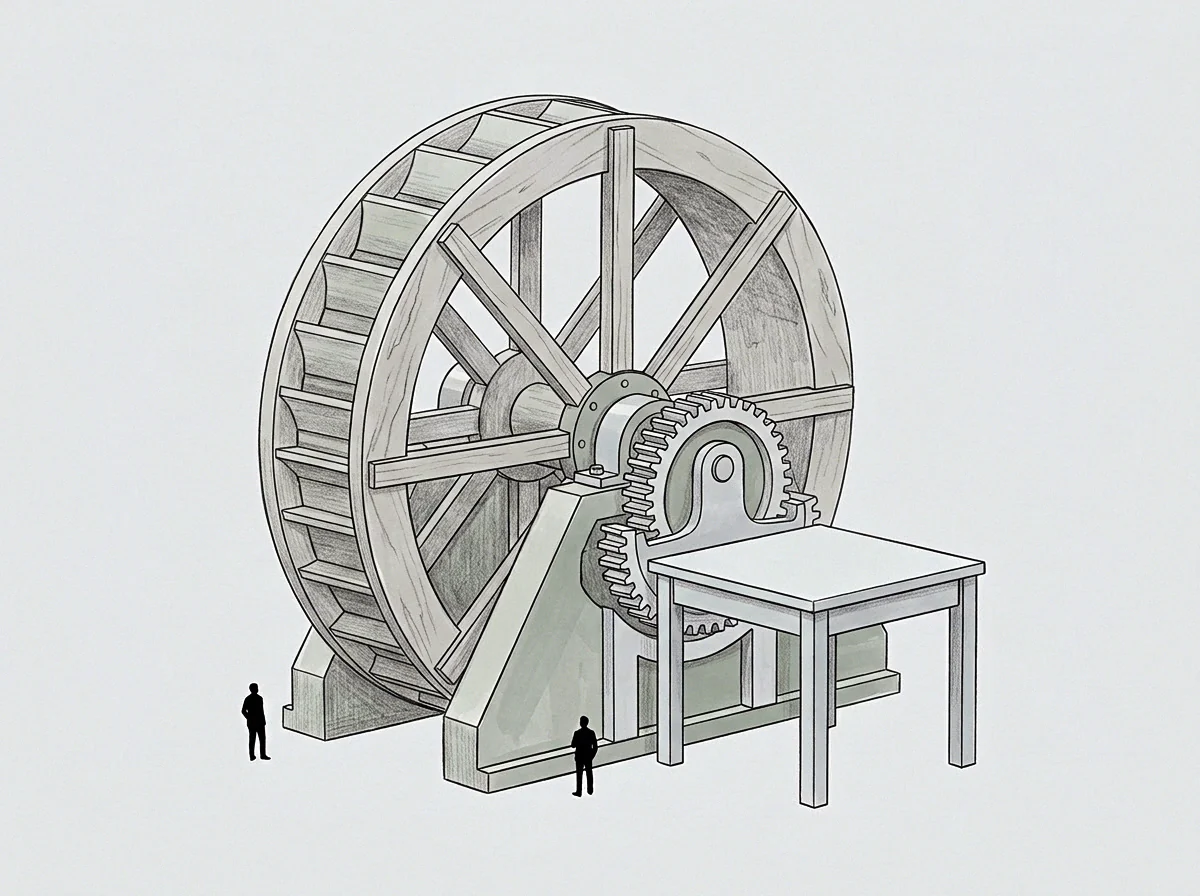
State changes executed by isolated node authorities frequently cross boundaries into physical or financial irreversibility. When remote controllers trigger physical hydraulic valves, release stored chemical compounds, initialize permanent cryptographic ledger records, or disburse funds via local payment rails, those execution operations cannot be cleanly rolled back upon network reconnection. The log records every write.
Physical mutations remain permanent. Traditional distributed database transaction patterns relying on two-phase commit protocols freeze operational throughput when consensus links break, forcing edge systems to choose between complete execution paralysis and uncoordinated local mutation.

Isolated State Mutation Mechanics
Secondary authorities operating without network validation rely on local state evaluation logic to authorize actions. The architecture enforces specific execution boundary patterns based on the target system environment:
- Hardware actuation triggers execute physical equipment moves through direct sensor feedback loops that cannot be reversed by software commands after state execution completes.
- Immutable ledger entries write state changes directly to local storage devices using cryptographic signing keys stored on isolated node hardware modules.
- Financial disbursement operations release settlement tokens or capital to local counterparty accounts based on pre-calculated execution thresholds stored prior to telemetry loss.
- Resource allocation shifts reassign compute capacity, power distribution feeds, or physical access privileges across localized sub-networks without upstream confirmation.
Memory retains the sequence. Secondary authorities log every executed operation locally within encrypted append-only operational tables. These tables document the precise timestamp, telemetry context, and policy rule applied for every autonomous decision made during signal isolation windows.
Execution costs accrue instantly.
Operational autonomy without hard execution ceilings converts network partition events into cumulative system liabilities.
When primary command channels reconnect, central controllers receive thousands of logged local state mutations executed without upstream validation. Reconciling these mutations demands structural evaluation mechanisms capable of processing irreversible actions without causing secondary state collisions. The secondary authority maintains that local execution adhered strictly to the policy rules stored in local memory at the moment of isolation.

Floor
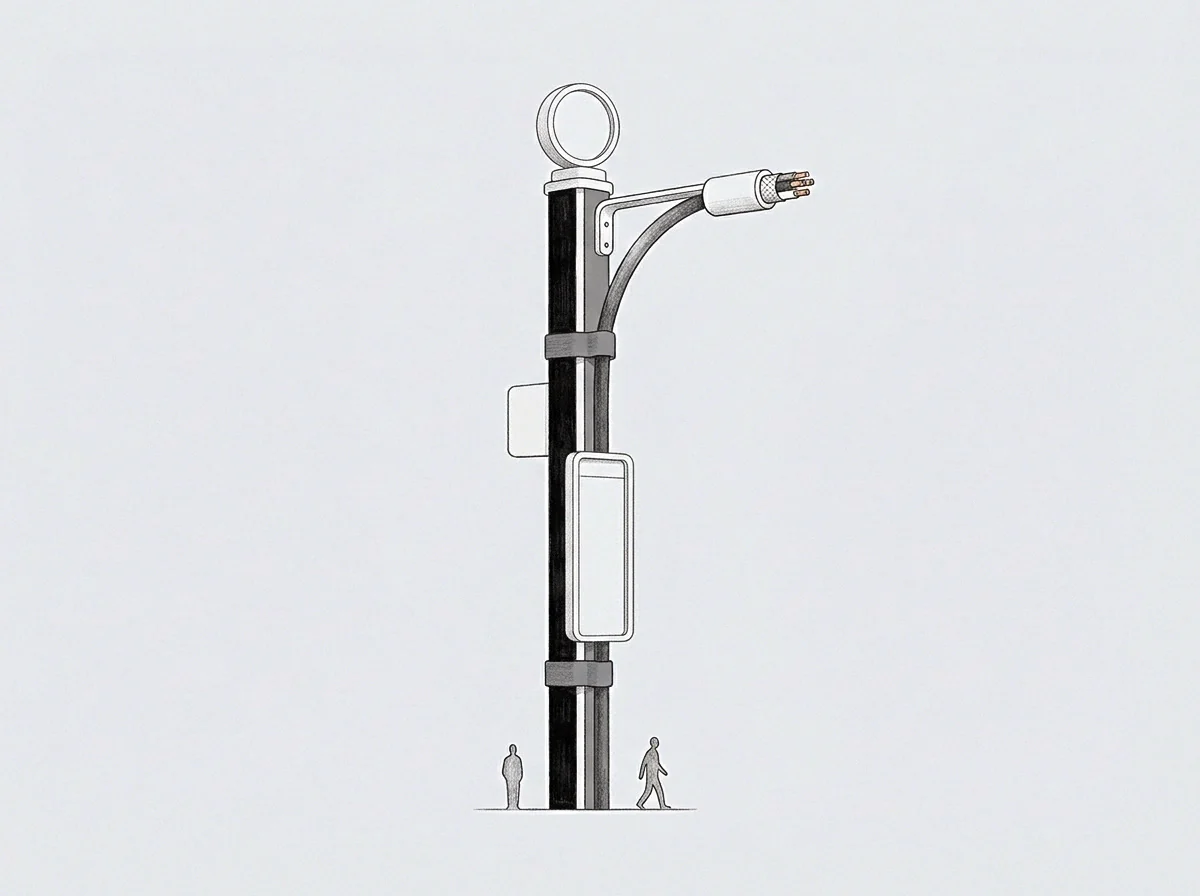
Hard operational limits establish physical bounds beyond which secondary authorities cannot execute actions without explicit upstream validation. The wall holds the bound. Stated limits act as rigid physical barriers rather than dynamic policy recommendations.
When autonomous nodes encounter pre-configured floor boundaries, execution halts automatically, prioritizing structural stability over continuous operational throughput.
How Do Hard Telemetry Limits Prevent Partition Cascade?
Establishing hard telemetry floors prevents secondary authorities from executing actions derived from stale environmental parameters. If an isolated system detects sensor data age exceeding pre-set safety thresholds, the execution engine drops into a passive hold state. Primary nodes evaluate state drift.
Passivity limits systemic exposure by restricting autonomous commits to safe operational envelopes.
| Reconciliation Model | Primary Execution Latency | Irreversibility Boundary | Reconciliation Overhead | Fault Isolation Scope |
|---|---|---|---|---|
| Dual-Write Isolation | Low | Restricted to Local Log | Minimal | Single Node |
| Compensating Ledger | Medium | Post-Execution Correction | High | Sub-Network |
| Local Quorum Verification | High | Multi-Node Consensus Bound | Medium | Regional Cluster |
| Forward State Forwarding | Low | Permanent Physical Mutation | Very High | Global Infrastructure |
The selection of a reconciliation strategy dictates how systems absorb execution divergence. Dual-Write Isolation minimizes system exposure by enforcing strict local logging boundaries until connectivity returns. Compensating Ledger strategies accept forward execution risks by calculating post-reconnection financial or operational balance corrections.
State bounds prevent system rupture. Forward State Forwarding accepts all validly signed edge commits as permanent structural updates, forcing the global state machine to absorb localized mutations as immutable historic facts.
Stated limits defined prior to signal loss eliminate post-reconnection operational ambiguity.
A rule of thumb dictates that systems prioritizing data integrity over execution continuity must enforce hard local transaction ceilings during partition states.

Arbitration
Reconnecting isolated edge infrastructure to central control networks initiates arbitration workflows designed to merge mutated state records. The central control plane cannot simply overwrite local execution logs without introducing severe data corruption or operational inconsistency. System reconciliation processes process historical event logs, evaluate conflicting state mutations, and calculate forward compensating actions.

Deterministic State Merging Sequence
Reconciling executed operational commits requires a structured, multi-phase resolution algorithm executed upon network link re-establishment:
- Primary control systems verify cryptographic signatures attached to edge operational logs to confirm secondary authority validity.
- Reconciliation engines map localized execution timelines against global state events recorded across non-partitioned infrastructure nodes.
- System state calculators identify direct operational collisions between central policy updates and localized edge actuations.
- Compensating transaction generators construct forward state updates to balance operational discrepancies without modifying immutable historical logs.
- Global state machines absorb reconciled parameters and issue updated execution policies to reconnected edge nodes.

Reconciling Mutated Edge Records
Forward-state mutation strategies resolve operational divergence by accepting executed edge commits while modifying subsequent operations to restore system balance. If an isolated node disbursed capital beyond global inventory allocations during a blackout window, traditional rollback operations fail due to third-party transaction completion. The system generates compensating balance entries in subsequent financial settlement cycles, absorbing the execution delta within future operating budgets.
Recovery begins at the boundary.
Research across distributed transactional models demonstrates that state merging performance depends directly on idempotency design within secondary authority execution engines. The precise mathematical bound for non-linear operational compensation remains under active debate within systems engineering literature. When exact mathematical limits cannot be proved for complex multi-variable interactions under partition states, resilient architectures enforce conservative execution bounds that restrict secondary authorities to single-step operations.
Consensus depends on active heartbeats. The channel stays silent.
The arbitration clause embedded in secondary authority deployment manifests when local commit timestamps precede central override records, granting priority to edge operations executed before link restoration telemetry reached the remote terminal.

Anchor
System stability relies on the permanent alignment of local operational limits with primary infrastructure governance. Stated limits prevent rogue secondary actions by defining hard execution boundaries prior to telemetry isolation events. When secondary authorities operate within pre-defined floor metrics, post-reconnection arbitration runs smoothly, protecting organizational capital and physical assets from uncoordinated state mutations.

Structural Guarantees for Autonomous Failure Modes
Secondary authority limits behave as physical walls rather than subjective operational guidelines. When an edge system reaches its execution ceiling during an extended partition window, execution logic stops further mutations without waiting for central command approval. System operators build safety margins into local state evaluation algorithms, ensuring that edge hardware enters safe passive states long before partition windows exceed operational safety parameters.
Deterministic state machines resolve execution divergence by advancing global parameters rather than reversing physical events.
Operational continuity across distributed infrastructure requires accepting the physical reality of network partitions while constraining autonomous execution authority within pre-calculated bounds. Secondary nodes executing irreversible commits during extended blackout windows maintain system integrity only when local execution choices adhere strictly to hard structural parameters defined prior to signal loss. The system state advances continuously, recording every local action, processing every compensation transaction, and holding firm against uncoordinated operational drift across every connected node.