
Measuring Real-Time Decision Degradation Without Relying on Subjective Inputs or Performance Tracking Intrusions
Passive system telemetry measures decision degradation by tracking queue latency, transaction batching, and approval entropy without monitoring individual behavior.

Signal
Tracking the operational capacity of key decision makers presents a persistent structural challenge within complex organizations. Self-reported assessments of exhaustion or mental sharpness produce unreliable data, as individuals routinely misjudge their own cognitive headroom under sustained load. Traditional performance monitoring, such as recording keystrokes or tracking active screen hours, creates severe observer distortion while failing to measure actual decision quality.
Evaluators require an objective, unobtrusive methodology that extracts state information from existing operational workflows.
Every operational node leaves a continuous digital footprint in the normal course of business. Timestamped approvals, repository commits, queue resolution rates, and message dispatch intervals generate rich operational datasets. When an operator processes information, the underlying state of their decision capacity leaves specific markers in the timing and structure of those transactions.
Measuring these structural markers allows an organization to detect cognitive degradation in real time without requesting subjective self-assessments or deploying intrusive monitoring software.
Queue dwell expansion marks capacity loss.
The distinction between individual monitoring and operational system evaluation remains central to clean data collection. Monitoring attempts to evaluate the person directly, introducing behavioral adjustments, strategic gaming, and dynamic distortion into the observed system. Evaluating operational workflow buffers measures the work item as it moves through transaction channels.
The work buffer acts as a natural transducer, converting internal processing friction into measurable temporal and structural variables.
System telemetry reads operational capacity through queue dynamics rather than personal monitoring.

Operational Telemetry Over Surveillance
System telemetries capture transaction timestamps at the boundary of operational systems. When a pull request sits pending, a expenditure authorization remains unread, or an architectural ticket awaits approval, the system logs the exact duration of that state. Baseline metrics establish expected processing windows during nominal operational periods.
Deviations from these baseline windows indicate changing system friction within the node responsible for processing.
Processing delay signals internal state shift.
Cognitive saturation alters temporal execution long before error rates increase. Under initial cognitive overload, individuals maintain output quality by expending additional effort, masking performance decline from standard quality checks. However, this compensatory effort consumes processing headroom, forcing the individual to delay lower-priority transactions, batch incoming items, or slow down approval cadences.
The structural changes in throughput timing surface in process logs while error counts remain zero.
When operational logs record a sustained double-digit variance in approval timestamps across sequential shifts, the system reassigns incoming approval authority to secondary execution nodes.

Latency
Temporal measurement provides the most sensitive, non-intrusive metric for evaluating real-time decision degradation. The duration between the arrival of an actionable work item and its formal resolution reveals the live throughput capacity of the operational node. In standard administrative channels, work items arrive with varying complexity, requiring normalized baseline calculations across specific transaction types.
Establishing normalized standard processing durations permits precise tracking of relative latency shifts over continuous operational windows.
System telemetry records latency without intrusion.
Research on cognitive fatigue and task-switching latency demonstrates that elevated mental load expands decision latency non-linearly. These laboratory findings rest on controlled task-switching experiments measuring millisecond delays across standardized inputs; they would be moved by real-world longitudinal operational trials demonstrating that latency shifts reflect external system dependencies rather than internal cognitive saturation. In practical organizational settings, an operator under heavy cognitive load takes longer to initiate, evaluate, and finalize complex authorizations, even when attempting to maintain high throughput velocity.

Transaction Processing Time As State Vector
The processing window of an authorization task splits into three distinct phases: arrival latency, evaluation duration, and execution timestamping. Arrival latency measures the gap between item delivery and initial view. Evaluation duration measures the interval between initial view and state commitment.
Execution timestamping logs the final entry into the operational system of record. Segmenting transactions into these phases isolates where processing friction accumulates.
Operational capacity fluctuates under continuous load.
Elevated cognitive load shifts processing friction primarily into the arrival latency and evaluation duration phases. An operator feeling cognitive depletion defers opening complex incoming items, expanding arrival latency. Once opened, evaluating complex multi-variable options under depleted headroom requires extended processing time, expanding evaluation duration.
The final execution timestamp remains crisp, creating the illusion of nominal performance if only completion events undergo audit.
| Evaluation Method | Signal Latency | Observer Distortion | Operational Intrusiveness | Data Reliability |
|---|---|---|---|---|
| Subjective Self-Reporting | High Delay | Severe Distortion | Low Intrusiveness | Low Reliability |
| Invasive Individual Tracking | Real-Time | High Distortion | Severe Intrusiveness | Moderate Reliability |
| Passive Operational System Telemetry | Real-Time | Zero Distortion | Zero Intrusiveness | High Reliability |
Work buffers reveal decision degradation passively.
Evaluating latency patterns across automated work buffers provides immediate visibility into operational capacity without burdening the operator with survey requests or intrusive background scripts. The underlying transaction systems generate clean, timestamped logs as an inherent byproduct of standard operation.
Elevated cognitive load surfaces as queue dwell expansion before error rates alter in output logs.

Queue Dwell Expansion Patterns
Queue depth measures live cognitive friction.
When incoming transaction velocity exceeds processing velocity, queue depth expands. Analyzing queue depth alongside transaction latency reveals whether delays stem from structural bottlenecks or individual processing limits. A sudden accumulation of unreviewed items in a single node’s queue, occurring alongside normal incoming message volume, flags localized cognitive saturation.
Relying on subjective self-reporting or invasive tracking introduces structural distortions that obscure cognitive saturation until execution failure occurs.

Drift
Decision degradation manifests structurally through changes in choice selection and output characteristics. Beyond simple temporal delays, an operator under cognitive strain shifts how choices are evaluated and executed. System logs capture these structural changes without requiring access to the substantive content of confidential decisions.
Analyzing output entropy, selection variance, and batching patterns provides deep operational insight into state degradation.
Transaction timestamps carry passive structural state.
Empirical evidence linking decision fatigue to default-choice selection rests on broad studies of judicial bail decisions and clinical prescribing behaviors; this body of work would be disproven if high-complexity environments show deliberate strategic deferral rather than passive cognitive resource preservation. When cognitive capacity drops below specific working thresholds, decision nodes systematically favor options that minimize immediate cognitive expenditure. This manifests as a statistical shift toward pre-approved templates, rejection of complex proposals, or deferral to standard operating defaults.

Structural Shifts In Choice Vectors
Choice vector analysis tracks the distribution of decision outcomes over time. Under nominal operating conditions, approvals, rejections, modifications, and deferrals follow a baseline statistical distribution unique to that operational seat. As cognitive saturation sets in, the distribution skews measurably toward low-friction outcomes.
Default choices conserve executive processing capacity.
An operator selecting a default option avoids the multi-variable synthesis required to craft custom authorizations or evaluate novel exceptions. System logs detect this shift by monitoring the ratio of standardized default outputs against custom modifications across rolling operational windows. A sustained increase in default selection indicates that the processing node is actively conserving cognitive resources.
When decision headroom drops, choice vectors compress toward non-action defaults to conserve processing capacity.
Batching Behaviors And Risk Defaulting
Batching patterns indicate pending queue saturation.
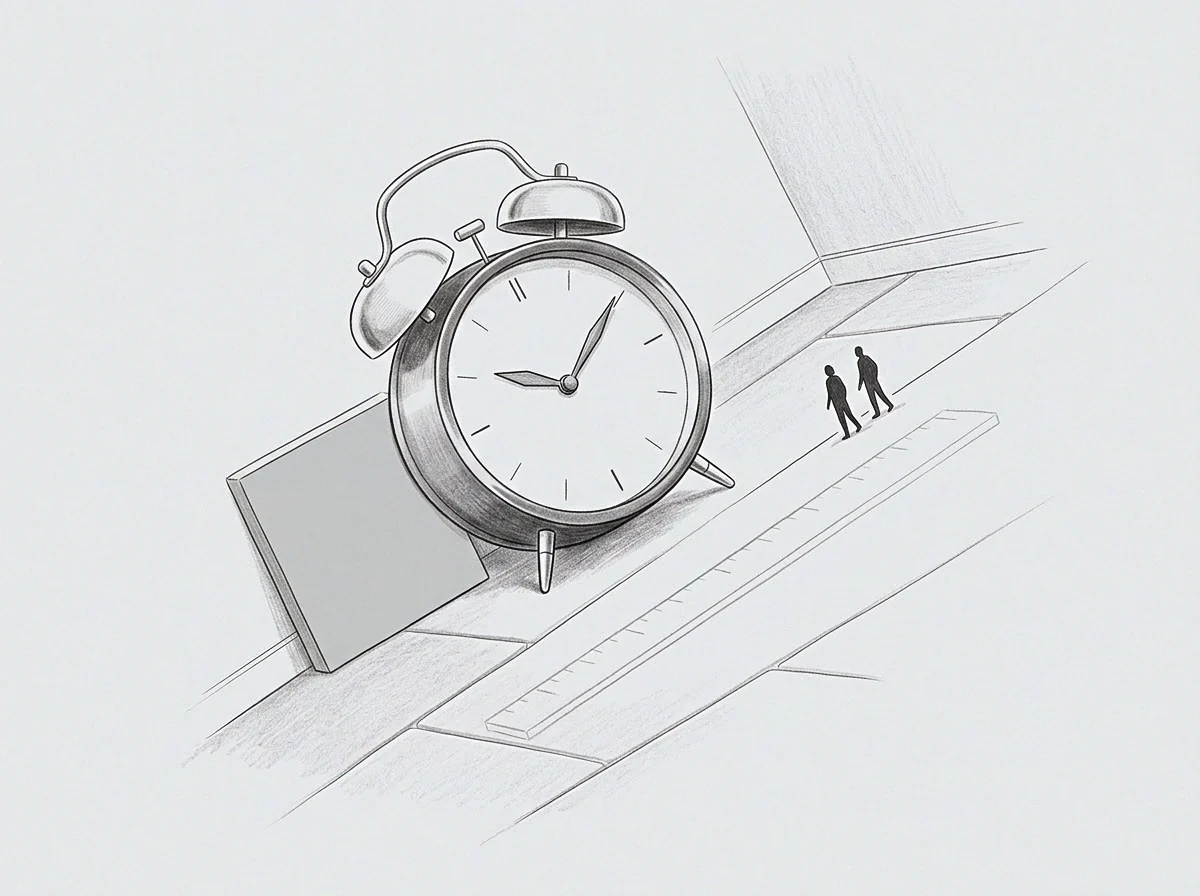
Under heavy operational pressure, operators frequently abandon continuous processing in favor of extreme transaction batching. Rather than evaluating work items as they arrive, the operator allows incoming items to accumulate, then executes a rapid sequence of decisions within a compressed time window. While batching reduces task-switching overhead, extreme batching compresses evaluation duration per item, sharply increasing decision error risk.
- Queue dwell expansion occurs when the time between item presentation and state commitment widens beyond established operating variance.
- Batching consolidation emerges as items accumulate in queue and receive rapid, clustered decisions within narrow timestamp windows.
- Default selection frequency rises when decision outputs shift disproportionately toward non-action options or pre-approved templates.
- Re-query velocity increases when downstream execution nodes request clarification on ambiguous or incomplete directives.

Does Queue Density Correlate With Reversion To Baseline Options?
High queue density forces processing nodes to accelerate decision throughput. When queue depth crosses operational limits, the processing node reduces the depth of analysis applied to each incoming item. Standard logs capture this transition as a simultaneous drop in evaluation duration and a spike in default selection frequency.
Passive measurement protects operational evaluation integrity.
Downstream execution nodes register the effects of this structural drift long before formal performance reviews occur. Clarification requests, amendment submissions, and re-query events from subordinate teams increase when primary decision nodes issue hasty, low-information outputs. Tracking re-query velocity across internal communications platforms provides an additional passive telemetry channel for detecting degraded output clarity.
Decisions take three days longer while every proposed change gets pushed into default deferral.

Room
Maintaining decision integrity requires establishing clear boundaries around operational capacity within work systems. Systems that rely on continuous human intervention to manage overload inevitably experience systemic failure when incoming transaction volumes spike. Structural protections must be embedded directly into work routing rules, treating cognitive capacity as a strict finite resource rather than an elastic variable.
Load transfer requires clear capacity bounds.
The precise quantitative threshold at which queue latency transitions from benign pacing to acute processing failure remains unstandardized across industries. Under this uncertainty, an operator establishes relative individual baselines by mapping ninety days of historic transaction telemetry rather than enforcing fixed universal time limits. Mapping historical variance accounts for seasonal workload fluctuations while highlighting genuine structural degradation.
A system that routes work based on live queue latency protects decision integrity without measuring the individual.
Headroom Boundaries Within System Queues
System queue metrics reveal degradation early.
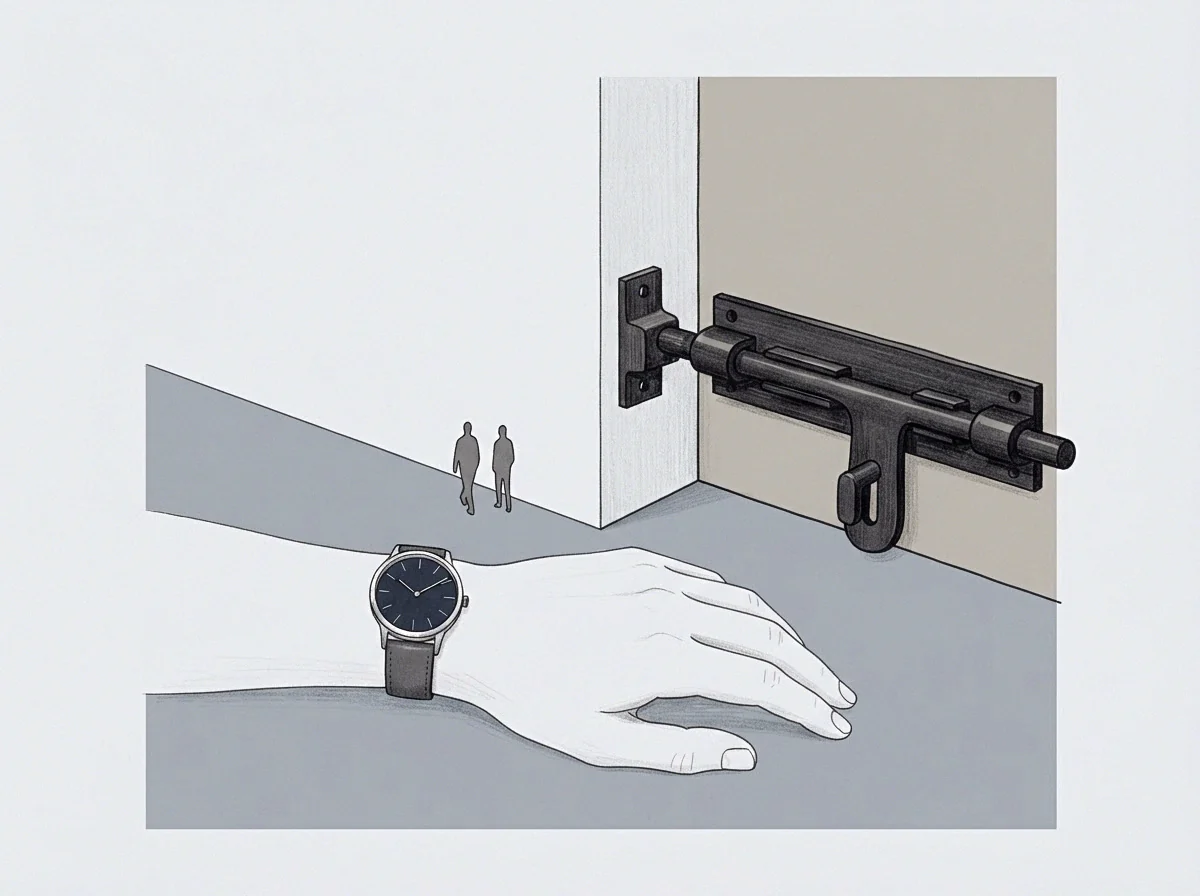
Managing operational headroom involves setting automated rules that trigger when passive telemetries cross baseline thresholds. When queue dwell time or batching indicators signal capacity depletion, the system adjusts transaction routing rules automatically. Incoming items of high complexity are diverted to secondary execution paths or held in holding queues until baseline latency metrics recover.
- Latency variance threshold triggers system re-routing when decision dwell time exceeds baseline limits for three consecutive processing cycles.
- Transaction accumulation ceiling restricts incoming high-complexity items when open queue depth reaches operational capacity limits.
- Entropy shift indicator flags execution nodes showing high variance in message length or approval cadence across concurrent threads.
Latency shifts precede direct execution error.
Automated throttling mechanisms protect both the organization and the individual operator. By converting passive system data into active routing decisions, the organization prevents decision failures before they cascade into core operational functions. This approach eliminates the need for uncomfortable personal disclosures or intrusive surveillance regimes, maintaining operational continuity through structural system design.
System queues that measure transaction delay rather than personal effort protect operational integrity while preserving individual autonomy.

Reserve
Preserving long-term organizational capacity depends on building operational systems that respect physical limits without relying on constant self-policing. When an organization measures state degradation through clean operational telemetries, it transforms decision capacity management from an emotional negotiation into an automated engineering control. Work buffers, latency tracking, and structural output analysis provide the objective telemetry needed to maintain systemic balance across high-stakes environments.
Transaction variance measures real-time processing friction.
Automated load transfer mechanisms ensure that operational nodes operate within sustainable headroom limits continuously. When passive indicators signal sustained saturation, automated systems adjust transaction flow rates, reallocate approval paths, and preserve executive capacity for high-leverage strategic choices. System health becomes an observable property of the operational network itself.
Passive queue tracking avoids observer distortion.
Organizations that implement non-intrusive passive telemetry establish robust operational foundations capable of navigating prolonged high-load events. The data remains clean, the measurement remains objective, and the operational integrity of the system holds firm under extreme external conditions.