
Managing Executive Allostatic Load During Distributed Operational Crises
Executive allostatic load accelerates in distributed crises because asynchronous channels eliminate social baseline co-regulation while continuous pings demand uninterrupted threat budgeting.

Surge
Operational crises in distributed organisations trigger a rapid elevation in executive metabolic expenditure long before structural metrics show performance decay. When an incident unfolds across geographic boundaries, the central operator enters a state of persistent physiological mobilization. Threat demands metabolic energy.
The human nervous system evaluates operational threats through incoming sensory information, translating ambiguity, delayed operational feedback, and high financial stakes into immediate autonomic arousal.
In co-located environments, physical proximity provides subtle sensory feedback that mitigates this arousal response. Vocal cadence, shared ocular focus, and postural shifts supply real-time updates regarding counterparty stability. Distributed crises strip these continuous co-regulatory signals from the operational loop, replacing them with asynchronous text snippets, fragmented incident management threads, and intermittent status calls.
The executive brain, deprived of continuous proximity inputs, interprets the absence of real-time sensory confirmation as persistent uncertainty, maintaining high allostatic load to preserve operational readiness.
Metabolic resources shift away from high-level strategic reasoning toward continuous autonomic threat tracking whenever sensory feedback loops grow fragmented.
Threat budgeting operates continuously inside the executive brain. During distributed disruptions, the volume of inbound notifications creates an artificial state of persistent alarm. Each incoming message forces an immediate micro-evaluation: the operator reads text notifications, evaluates operational risk, and calculates resource allocations without the biological baseline of a shared physical environment.
Continuous vigilance drains executive headroom. The biological cost of maintaining continuous operational readiness across multiple communication streams accumulates rapidly, creating a compounding metabolic deficit that narrows cognitive focus and impairs long-term strategic evaluation.
Operational leaders under sustained distributed stress often experience a progressive narrowing of cognitive flexibility. As allostatic load approaches capacity limits, the prefrontal cortex reduces working memory allocation for speculative problem solving, prioritizing immediate risk mitigation. The organization observes steady tactical execution, yet the executive incurs an uncounted metabolic debt that degrades future operational decision quality.

Metabolic Economics of Threat Budgeting
The neural architecture governing stress response allocates metabolic resources based on perceived environmental demand. When operational infrastructure degrades, the brain treats the business disruption as an immediate survival challenge, elevating cortisol and catecholamine secretion to sustain heightened vigilance. In a physically unified command post, shared physiological states across a team distribute this burden.
Distributed arrangements force the executive to maintain individual autonomic regulation while simultaneously attempting to project calm across digital channels.
Asynchronous communication protocols introduce structural friction into this biological budget. Every unread alert, delayed pull request, or ambiguous incident report remains an unclosed loop within working memory. The executive brain consumes glucose and glycogen reserves to hold these unclosed loops in active awareness, treating every open thread as an active operational exposure.
Latency compounds threat perception. The longer an incident thread remains unresolved without physical confirmation, the higher the metabolic tax required to sustain baseline executive composure.
Asynchronous Signal Density and Vigilance Costs
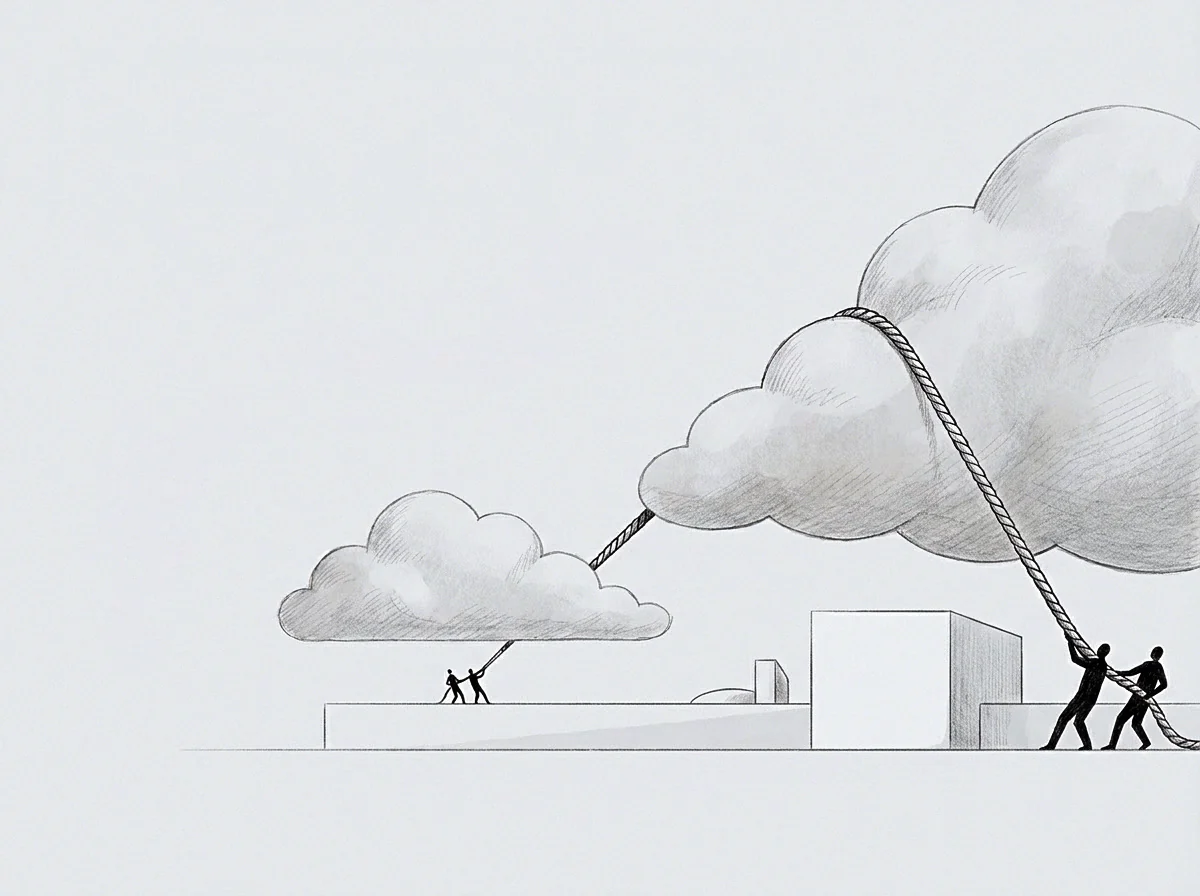
Digital incident response channels compress complex operational realities into rapid text streams. This compression forces executives to spend substantial cognitive energy decoding tone, intent, and operational reality from stripped text metrics. The lack of organic physical pacing in chat channels creates an artificial urgency where quiet periods are misinterpreted as hidden operational failures rather than operational stability.
Sustained exposure to high signal density without physiological recovery periods induces a state of chronic operational mobilization. The executive remains biologically engaged even during nominal operational lulls, anticipating the next notification ping. Over weeks of distributed crisis management, this chronic mobilization alters systemic allostatic baselines, leaving the executive with minimal reserves for unforeseen operational shocks.
Failing to separate routine operational monitoring from acute crisis oversight ensures that executive autonomic reserves deplete to zero before the operational crisis reaches structural resolution.

Distance
Physical distance alters how human brains budget energy during high-stakes operational events. Social baseline theory establishes that the human nervous system defaults to expecting shared load management through physical proximity to reliable conspecifics. When an executive operates in physical isolation during a distributed emergency, the brain perceives an environment of higher risk, scaling up baseline energy output for self-regulation.
Static artifacts supply no presence. Dashboards, automated alerts, and written status updates inform cognitive understanding, but fail to trigger the physiological baseline adjustments that physical human presence provides.
In distributed operational models, executives frequently serve as the central emotional and operational anchor for dozens of remote employees while receiving zero co-regulatory inputs themselves. The remote team reads the executive’s calm communications to stabilize their own operational vigilance, drawing down the executive’s internal stability reserves. Distance alters signal clarity.
The executive absorbs incoming operational panic from multiple distributed threads while transmitting steady instructions outward, functioning as an uncompensated operational sponge.
| Operational Dimension | Co-Located Crisis Command | Distributed Asynchronous Crisis Command |
|---|---|---|
| Primary Regulation Substrate | Direct physiological proximity, vocal cadence, shared physical space | Text alerts, video feeds, asynchronous documentation threads |
| Neural Budgeting Mode | Distributed social baseline load sharing | Isolated self-regulation with continuous threat tracking |
| Vigilance Overhead | Intermittent, bounded by physical room presence and visual cues | Continuous, driven by perpetual incoming digital notifications |
| Downstream Executive Capacity | Sustained strategic headroom via automatic biological baseline offloading | Accelerated allostatic accumulation and working memory exhaustion |
Isolation inflates regulation expenditure. Managing a distributed operational failure while sitting alone in a room requires the brain to expend continuous metabolic energy suppressing its own isolation signals. The executive must actively simulate the stability of the organization without the immediate sensory validation of a functioning team working alongside them.
This additional self-regulation overhead consumes the exact prefrontal reserves required for complex root-cause analysis and strategic resource reallocation.

The Social Baseline in Remote Operations
The human brain conserves energy by offloading vigilance tasks to the immediate social environment. In physical headquarters, seeing colleagues actively working on resolution paths signals safety to the autonomic nervous system. Distributed crisis environments break this automatic offloading mechanism.
Because the executive cannot visually observe the ongoing work of remote engineers or operators, the brain continues to track the threat as if no corrective action were underway.
This biological discrepancy explains why remote operational crises feel significantly more exhausting than identical crises managed in a single war room. The actual operational workload may be identical, but the biological cost of self-directed threat tracking in isolation is vastly higher. The executive pays a continuous internal tax for every geographic mile separating them from active resolution teams.

Signal Delay and the Vigilance Loop
Asynchronous operations rely on delayed response cycles. When an executive posts a critical decision query to a distributed channel, the resulting period of silence forces the nervous system into an active waiting state. During this latency window, the executive prefrontal cortex runs predictive simulations of potential failure modes, maintaining high heart-rate variability suppression and elevated blood pressure.
Uncertainty latency forces the executive brain into continuous predictive threat simulation, rapidly depleting working memory reserves.
The cumulative effect of dozens of daily response latencies creates an uninterrupted state of internal urgency. Even when remote teams are executing effectively, the executive experiences the silence between updates as operational vulnerability. This misunderstanding of asynchronous latency as operational risk drives executives to check channels constantly, eliminating any potential window for physiological recovery.
“We need the founder on every channel continuously until this incident resolves, because their absence signals a lack of operational focus.”
Debt
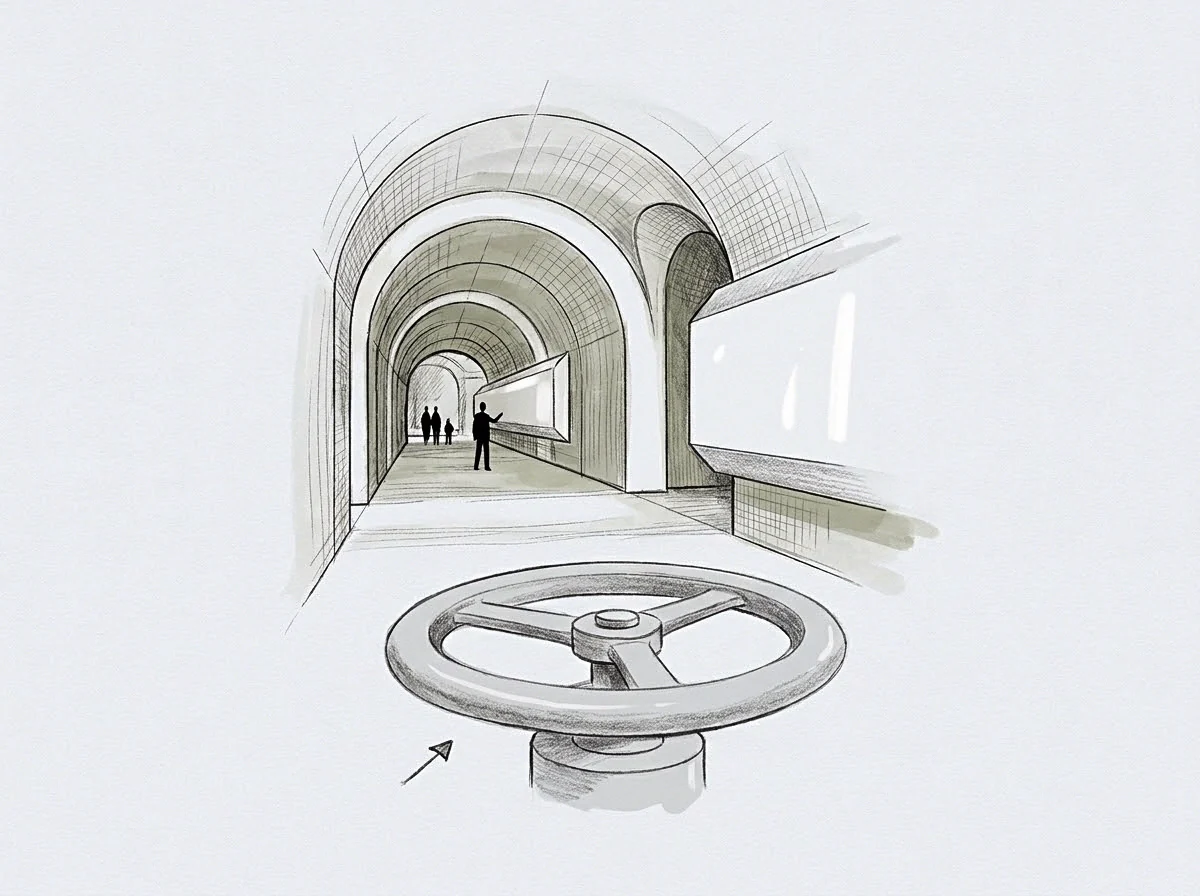
Sustained high allostatic load produces an unacknowledged regulatory debt within executive leadership layers. Operators who built organizations by absorbing operational friction often internalize a working template that equates personal regulation with sole responsibility. The internal template governs response.
When distributed crises strike, these individuals activate a deeply ingrained pattern: they treat every incoming operational threat as something they must personally digest and resolve. This internal model contains no functional slot for receiving support, borrowing calm, or distributing autonomic load to others.
This operational template functions adequately under localized stress, but fails under distributed operational crises. As incoming signals multiply across dozens of remote channels, the single-regulator model encounters a mathematical ceiling. The executive attempts to remain available to all operational nodes simultaneously, absorbing team panic while projecting absolute stability.
Because they lack a internal script for receiving regulation from their environment, they treat offers of assistance as administrative tasks to manage rather than regulatory burdens to share.
Is Borrowed Regulation Possible Across Asynchronous Channels?
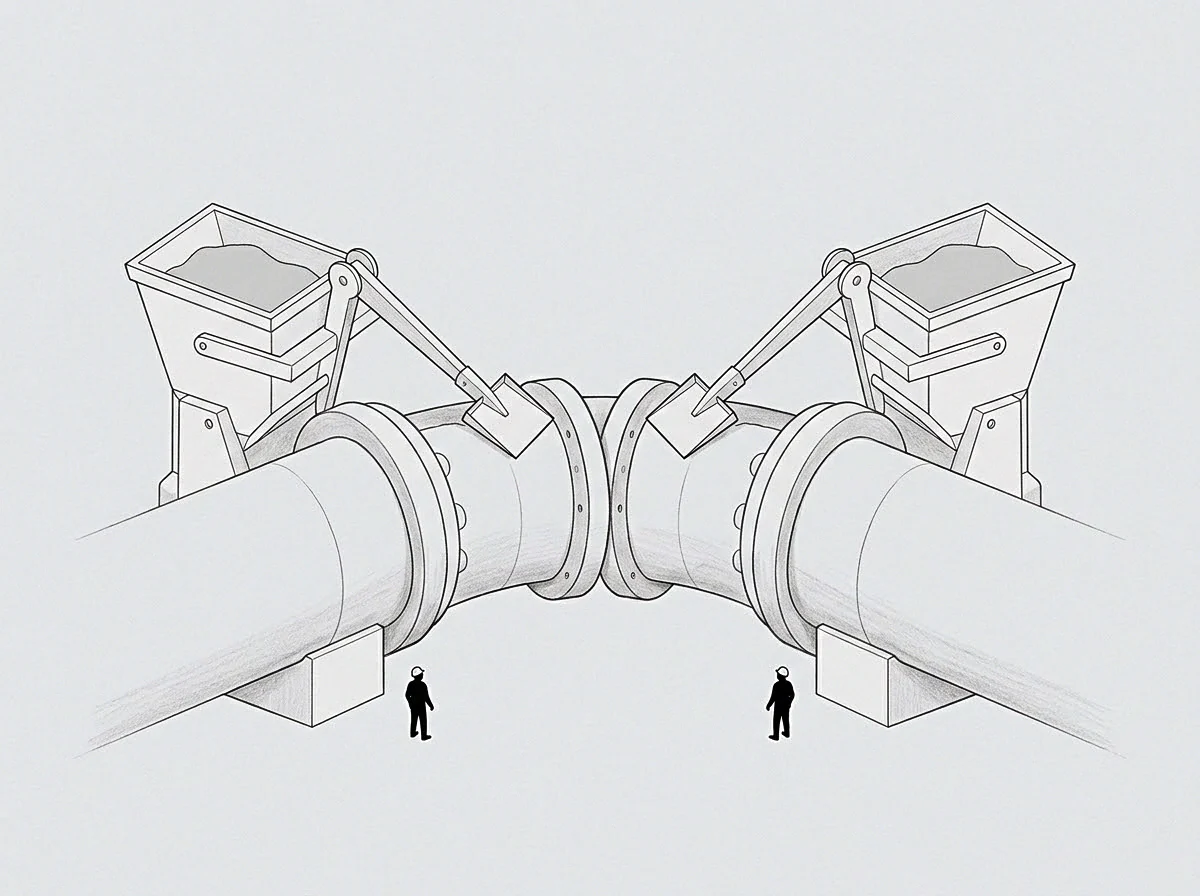
Borrowing regulation requires a recipient to register another person’s presence as a stabilizing force. Across asynchronous digital networks, this transfer becomes structurally difficult. Text messages convey logical information but lack the autonomic signals necessary to alter a recipient’s underlying physiological state.
A written assurance of support from a board member or operating partner operates purely at the cognitive level, leaving the executive’s autonomic nervous system in an elevated threat state.
Effective remote regulation requires intentional, real-time voice or video touchpoints structured around human presence rather than status updates. When two operators engage in a brief, unhurried voice conversion focused on shared assessment rather than rapid-fire task assignment, the autonomic system registers the presence of a competent counterparty. This registration drops the metabolic cost of threat budgeting, freeing prefrontal capacity for complex operational choices.

The Receptor Deficit Under Chronic Load
Executives who have sustained high operational debt over extended periods develop an operational receptor deficit. Their nervous system becomes so accustomed to holding continuous vigilance that genuine offers of support or structural relief are processed as operational noise or security risks. Unstated capacity limits default to max.
The executive cannot delegate regulation because their underlying internal model views delegation as expanding the threat surface.
- Receptor slot occlusion occurs when an operator processes incoming operational support as an additional supervisory burden rather than a baseline cost reduction.
- Artifact substitution happens when an executive attempts to replace interpersonal regulatory feedback with increasingly complex dashboard monitoring metrics.
- Asymmetric vigilance strain emerges when the founder maintains continuous crisis readiness while distributed operational teams operate on standard business-hour schedules.
When an executive operates without a functional receptor slot for shared regulation, the organization slowly adapts to route all unstructured operational friction directly into the central seat. The team stops attempting to provide stabilizing presence, recognizing that the executive will convert every relational input into a tactical task assignment. The central operator becomes an isolated island of continuous regulation, bearing the full metabolic tax of the distributed enterprise alone.
An internal working model that views self-reliance as the sole safety mechanism transforms every distributed operational crisis into an isolated metabolic emergency.
When an executive operates under a template that rejects external load sharing, any increase in distributed operational complexity produces a proportional rise in internal physiological strain.
Brake
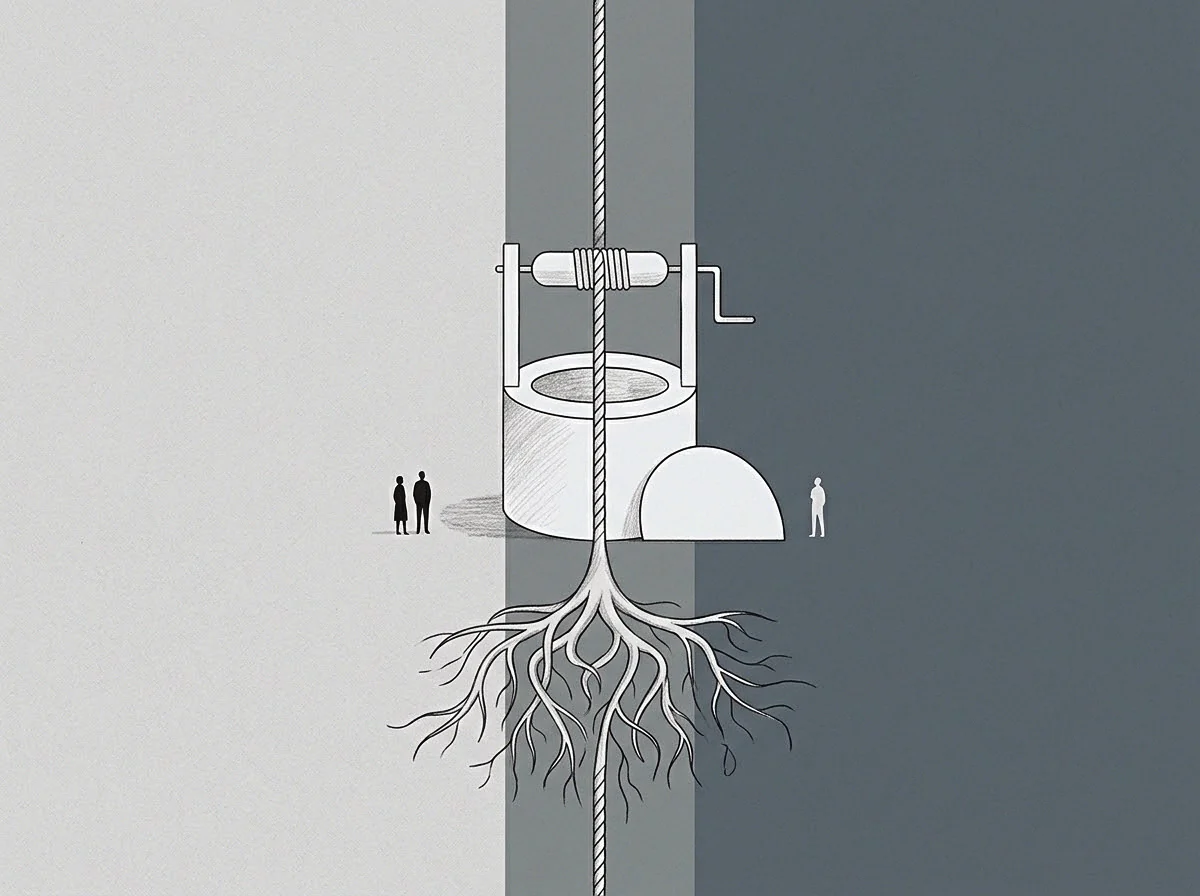
Preventing executive allostatic breakdown during distributed crises requires structural operational brakes rather than appeals to personal resilience. Structural throttles protect focus. The executive seat requires clear operational boundaries that limit continuous threat exposure, forcing the organization to digest friction at the perimeter rather than routing it continuously to the center.
Operational brakes function by enforcing explicit concurrency limits on executive involvement. In a distributed crisis, an unthrottled executive attempts to monitor every incident channel, join every technical bridge, and approve every customer communication simultaneously. Implementing structural brakes means defining clear thresholds for executive escalation, enforcing strict communication latency windows, and creating mandatory off-line periods where secondary operators assume full command authority.

Concurrency Limits and Operational Throttling
The human brain cannot execute high-level strategic reasoning while maintaining real-time vigilance over multiple active crisis channels. Concurrency limits restrict the number of operational threads an executive may actively track to a manageable threshold, typically no more than two concurrent high-severity incidents. Additional incoming operational issues must be automatically held by secondary operational leads or queued for batch review.
- Response window gating establishes explicit asynchronous time blocks for executive review, eliminating the continuous ping-driven vigilance loop across incident channels.
- Concurrency ceiling enforcement caps the number of active crisis threads routed directly to the executive seat, diverting secondary operational issues to regional leads.
- Asynchronous handover protocol mandates a formal transfer of operational command authority during designated rest windows, transferring all threat tracking responsibilities.
Throttling inbound operational volume creates the necessary cognitive headroom for executives to make sound strategic adjustments. Response latency becomes an indicator. When an organization observes an executive taking deliberate time before responding to non-critical crisis updates, it signals that structural operational brakes are functioning correctly, preserving executive capacity for high-severity decisions.

Structural Decoupling of Presence from Availability
A major driver of executive allostatic load in remote crises is the false equivalence between leadership presence and continuous digital availability. Distributed teams often interpret an executive’s immediate response to messages as a sign of operational control. Decoupling presence from availability requires establishing explicit operational protocols that define when and how an executive will engage with crisis threads.
Executives can maintain strong operational presence by publishing clear strategic parameters, holding scheduled high-impact alignment calls, and writing clear incident post-mortems while remaining entirely absent from minute-by-minute chat logs. This structural distance protects the executive from continuous autonomic arousal while training the distributed team to resolve operational friction independently within established operational guardrails.
Establishing explicit operational throttles preserves executive capacity by converting continuous threat tracking into structured, periodic operational evaluations.
An operator who establishes clear structural throttles before an operational crisis occurs retains strategic flexibility while unthrottled peers exhaust their reserves on routine incident management.

Ground
Updating an executive’s regulatory template requires repeated structural experience under real operational conditions. Insight changes no physiological baseline. Understanding social baseline theory or recognizing one’s own tendency toward isolated self-reliance does not automatically lower allostatic expenditure during an active crisis.
The nervous system updates its threat evaluation protocols exclusively through direct, lived experiences of successful operational load sharing.
Building earned security within an executive team involves repeatedly placing executives in situations where they deliberately step back from crisis management, transfer authority to competent operators, and observe the successful resolution of the incident without their direct intervention. Repeated experience rewires the response. Over time, these repeated operational successes create a secondary regulatory template, teaching the executive’s autonomic nervous system that distribution of threat tracking is biologically safe and operationally effective.

Repeated Experience Over Cognitive Insight
Cognitive insight allows an executive to analyze their strain post-incident, but it fails to alter automatic autonomic responses during the onset of a new operational failure. When notifications spike, the brain relies on its oldest, most practiced operational scripts. Rewriting those scripts requires structured, non-crisis operational drills where executives intentionally practice offloading command authority and receiving regulatory stability from key team leads.
These exercises must be repeated across multiple operational cycles to establish durable neural pathways. As the executive experiences consistent, reliable execution from secondary leads, the physiological need for continuous vigilance drops. The central operator gradually develops an functional receptor slot for shared operational load, shifting their baseline state from isolated self-reliance to networked operational stability.

Relational Anchors in Executive Networks
Long-term executive sustainability in distributed organizations relies on cultivating trusted relational anchors, individuals who possess the operational competence and personal stability to provide genuine co-regulatory feedback to the executive seat. These anchors may be co-founders, chief operating officers, or experienced board members who understand the biological and operational realities of executive load.
Regular, unhurried interactions with these relational anchors provide a vital counterbalance to the continuous friction of distributed crisis management. During high-stakes incidents, brief strategic check-ins with an anchor allow the executive to process operational uncertainty, recalibrate threat assessments, and restore autonomic balance. This shared regulatory baseline protects executive strategic capacity, ensuring that the leadership layer retains the clarity, resilience, and operational focus required to navigate complex distributed crises over extended timeframes.
Sustained executive performance in distributed environments depends entirely on replacing isolated self-reliance with robust, structurally anchored networks of shared operational regulation.