
How Structural Damping Protects Central Executive Autonomic Capacity
Structural damping protects central executive autonomic capacity by introducing operational friction that dissipates environmental volatility before it reaches prefrontal neural networks.
Desk
Four communication channels remain active on a laptop screen at midnight while an operational crisis unfolds across two time zones. The person sitting at the workstation reads incoming notifications continuously, evaluating risk, drafting immediate responses, and attempting to stabilize team sentiment. Each incoming chime triggers a transient elevation in heart rate and a spike in sympathetic nervous system arousal.
The prefrontal cortex attempts to maintain top-down control over emotional reactivity while simultaneously processing complex operational trade-offs. Without explicit structural barriers between incoming demands and immediate executive response, the central executive network stays locked in continuous vigilance. The environment presents every incoming message as an urgent signal requiring immediate executive arbitration.
When an organization or relationship lacks structural buffers, the leader’s personal autonomic nervous system becomes the primary shock absorber for operational turbulence. Autonomic capacity refers to the physiological headroom available within the parasympathetic and sympathetic systems to regulate stress, maintain cognitive flexibility, and suppress panic. Central executive performance depends directly on this autonomic foundation.
Prolonged activation of threat-monitoring neural circuits depletes metabolic resources within the ventral medial prefrontal cortex. The physiological cost of maintaining composure in an unbuffered environment accumulates as allostatic load, forcing the brain to divert energy away from long-horizon planning and toward immediate threat mitigation.
The immediate absorption of environmental volatility consumes metabolic bandwidth that executive function requires for strategic evaluation.
Unbuffered operational environments rely on human availability to absorb system noise. Incoming disruptions land directly on the individual rather than striking a structural boundary or delayed queuing protocol. The absence of filtering mechanisms forces the central executive to process raw, unsorted inputs in real time.
Over hours of continuous monitoring, the capacity to inhibit impulsive reactions declines predictably. The physical workspace becomes a site of constant metabolic expenditure, where every ping demands autonomic micro-adjustments to sustain an appearance of steady command.
The team expects a rapid response because previous crises established a pattern of instant executive intervention.

Budget
The human brain manages energy allocation through a predictive social baseline economy. According to social baseline theory, the brain defaults to expecting proximity to reliable socio-structural support, which lowers the estimated metabolic cost of threat management. When structural support is absent or structural boundaries remain unarticulated, the neural architecture registers the environment as fundamentally baseline-deficient.
The individual must then supply all regulatory effort internally through self-regulation, the most metabolically expensive mode of neural operation. Self-regulation requires continuous prefrontal suppression of lower brainstem stress responses, rapidly exhausting glucose and autonomic reserves.
In high-stakes operational environments, the person in command frequently becomes the social baseline for everyone else in the system. Subordinates, partners, and investors regulate their own anxiety by attaching to the baseline stability of the leader. This dynamic creates an asymmetric borrowed regulation arrangement.
The team absorbs calm from the leader’s steady presence, while the leader receives no structural or relational counterweight to offset their own internal strain. The leader internalizes a default operational template that links personal stability directly to system survival, leaving zero physiological headroom for personal recovery.
Continuous unbuffered exposure to external volatility produces predictable operational failure states within the central executive architecture:
- Ventral Vagal Exhaustion occurs when prolonged sympathetic suppression depletes parasympathetic tone, resulting in sudden emotional detachment or flat affect during high-stakes decisions.
- Cognitive Friction Accumulation develops as continuous context-switching between micro-emergencies degrades working memory capacity and strategic synthesis.
- Hyper-Vigilant Signal Processing emerges when the neural threat-detection system recalibrates to treat routine operational noise as an existential risk.
- Receptor Slot Atrophy manifests as an inability to register or accept external support, reinforcing the habitual assumption that regulation must occur alone.
A central executive operating under continuous autonomic depletion suffers measurable performance degradation. Decision quality deteriorates as the prefrontal cortex loses the metabolic headroom required to simulate complex future outcomes. The brain shifts toward risk-averse or short-sighted choices aimed primarily at reducing immediate autonomic discomfort rather than maximizing long-term strategic value.
The systemic failure to construct structural damping transforms executive capacity from a durable institutional asset into a rapidly depleting consumable resource.
Unbuffered availability converts executive autonomic reserves into operational shock absorbers for the surrounding organization.
The long-term physiological cost of unbuffered regulation is chronic autonomic exhaustion paired with impaired executive judgment.

Valve
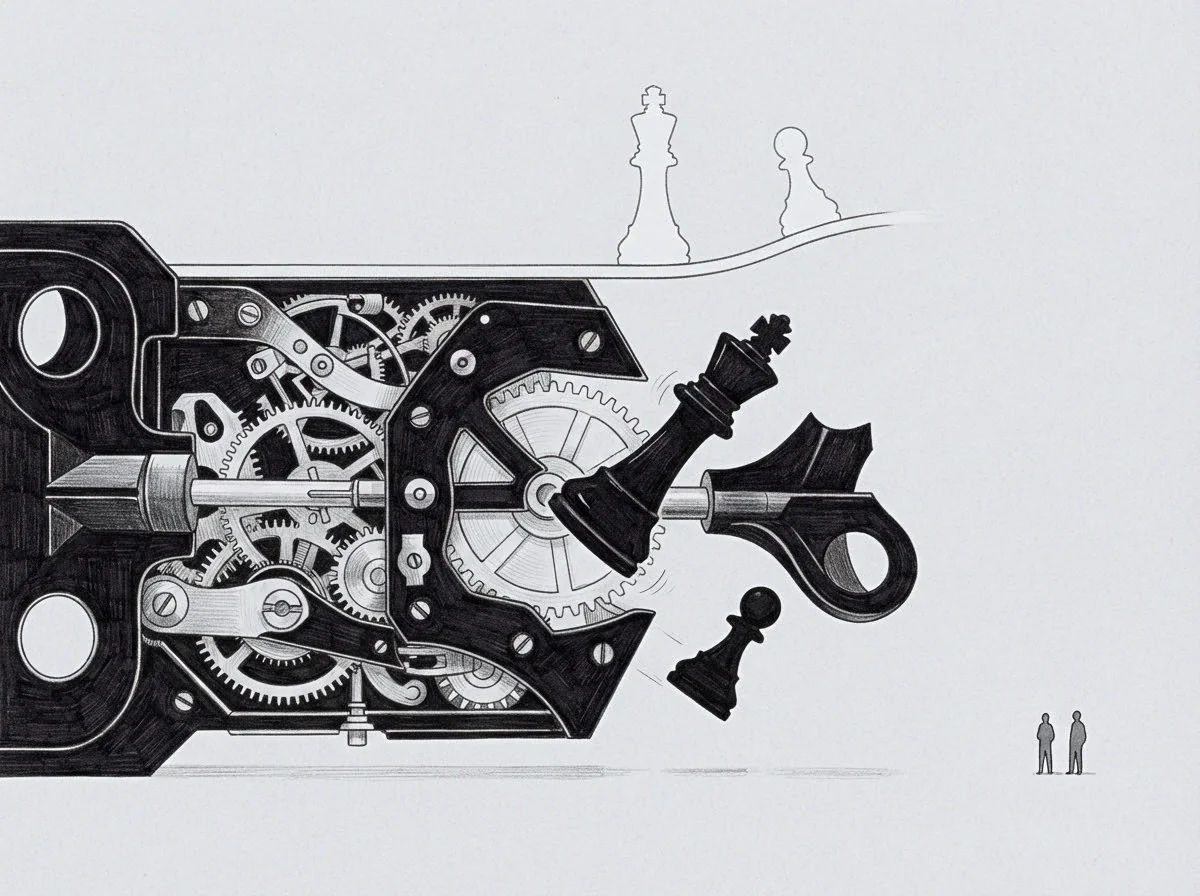
Structural damping introduces mechanical, temporal, and relational friction into incoming signal flows, insulating the central executive network from raw environmental volatility. Damping mechanisms function as environmental shock absorbers, dissipating operational noise before it strikes the leader’s autonomic system. By establishing hard boundary structures, explicit communication latency, and delegated authority filters, structural damping shifts the burden of baseline stabilization from human physiology to organizational design.

Why Does Direct Availability Escalate Autonomic Load?
Direct availability creates an open feedback loop where external demands instantly trigger prefrontal evaluation. Every unmediated request requires the central executive to perform triage, assess priority, and manage relational expectations simultaneously. Structural damping closes this open loop by inserting an intermediary operational valve.
Consider an executive team operating across three offices during a product launch crisis. In an unbuffered setup, every engineering lead messages the chief executive directly upon encountering a technical blocker, generating thirty uncoordinated notifications per hour. In a damped setup, incoming technical issues route through a designated triage operator who consolidates reports into a single hourly briefing.
The insertion of the triage valve alters the neural calculation entirely. The executive’s central executive network no longer monitors a continuous stream of potential threats. The brain shifts from continuous active monitoring to predictable, scheduled evaluation intervals, allowing parasympathetic tone to recover between briefings.
The physiological difference between thirty unpredicted interruptions and one structured report is the difference between chronic sympathetic elevation and sustained autonomic stability.
Explicit operational latency protects prefrontal metabolic reserves by converting continuous vigilance into discrete evaluation windows.
Consider a founder managing a twenty-person organization during a funding shortfall. Assume the founder handles all investor inquiries, employee anxieties, and operational logistics through a single unbuffered inbox. Within four weeks, the founder experiences severe sleep disruption, cognitive fatigue, and emotional numbness.
Now introduce structural damping: the founder appoints an operations partner to handle all initial employee queries, establishes a fixed two-hour daily window for investor communications, and completely disconnects from messaging channels outside business hours. The incoming signal volume remains identical, yet the temporal concentration and structural filtering reduce the founder’s allostatic load significantly, preserving cognitive function for critical negotiations.
A hard limit on daily signal exposure shifts the organizational baseline from reactive availability to deliberate executive execution.
Anchor
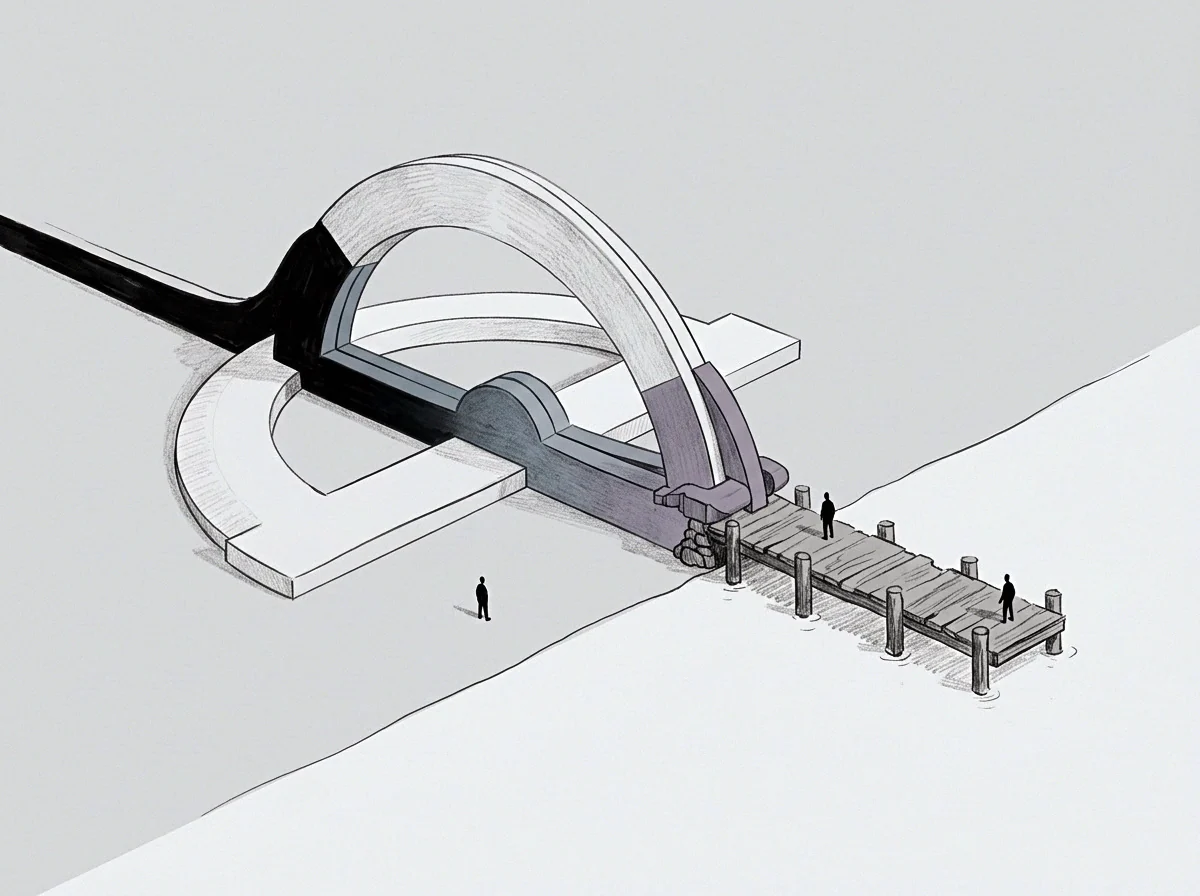
Organizations and relationships operate along a spectrum between unbuffered reactivity and structurally damped stability. Assessing where an operational design falls on this spectrum requires examining the physical, temporal, and relational mechanisms governing signal ingestion. The table below outlines the structural differences between unbuffered arrangements and damped environments across four core operational dimensions.
| Dimension | Unbuffered Architecture | Structurally Damped Architecture | Autonomic Consequence |
|---|---|---|---|
| Signal Access | Direct, synchronous messaging to executive personal devices without triage or filtering. | Asynchronous signal routing through delegated operators or structured batch queues. | Continuous threat monitoring shifts to predictable parasympathetic recovery intervals. |
| Boundary Protocols | Implicit availability expectations where silence is interpreted as operational neglect. | Explicitly stated limits defining response SLAs, quiet hours, and escalation thresholds. | Prefrontal stress response decreases as relational uncertainty is eliminated. |
| Conflict Mitigation | Immediate executive arbitration of low-level interpersonal or operational friction. | Tiered escalation protocols requiring local resolution before executive involvement. | Preserves working memory capacity for strategic system-level problem solving. |
| Relational Baseline | Leader acts as sole autonomic anchor, absorbing team volatility without structural support. | Shared regulatory responsibility supported by clear procedural guidelines and team autonomy. | Prevents individual allostatic overload and avoids single-point-of-failure dynamics. |
Unbuffered architectures continuously convert institutional noise into personal physiological stress. By contrast, structurally damped architectures treat central executive autonomic capacity as a finite, high-value resource requiring explicit system-level protection. The implementation of structural boundaries allows the executive to maintain cognitive headroom even during periods of extreme organizational turbulence.
Structural friction inserted into communication channels preserves long-term executive decision quality.
Protecting central executive capacity requires designing systems that absorb shock automatically rather than relying on human endurance.

Rest
Sustained protection of executive capacity eventually requires an internal update to the individual’s regulatory template. Many leaders possess an internal working model formed in early operational environments where personal vigilance was the only defense against failure. This historical template equates safety with total control and constant availability.
Introducing structural damping into an organization often triggers internal resistance, as the leader’s neurobiology initially interprets reduced signal ingestion as a dangerous loss of awareness.
Updating this internal template requires repeated practical experience with structural safety, a process known in developmental literature as earned security. Earned security occurs when an individual consistently experiences that operational systems remain stable even when direct personal oversight is paused. Over time, the brain updates its predictive model, recognizing that structural boundaries enhance overall stability rather than inviting disaster.
This neurobiological shift frees up significant autonomic headroom previously locked in defensive monitoring.
The transition from an unbuffered, highly vigilant baseline to a damped, earned-security baseline unfolds across distinct operational stages:
- The individual recognizes the severe physiological and cognitive costs of continuous unbuffered availability.
- The organization implements explicit structural damping mechanisms, including asynchronous communication rules and delegated triage.
- The leader actively inhibits the impulse to bypass structural filters, allowing delegated mechanisms to process operational noise.
- The central executive experiences sustained operational stability without direct intervention, updating the internal predictive model.
- The individual consolidates a new relational baseline where central executive capacity remains protected by systemic design.
As the new baseline takes hold, the leader moves away from using personal autonomic endurance as the primary organizational support. Autonomic capacity recovers, restoring emotional stability, strategic vision, and cognitive flexibility. The seat of command transforms from a locus of relentless physiological exhaustion into an anchored platform for sustainable leadership.
The ultimate test of structural damping lies in whether the system preserves executive capacity during an unpredicted crisis, leaving open the question of how quickly an organization can reconfigure its structural valves when operational demands scale dramatically overnight.