
Baseline Regulation Costs During Corporate Capital Retraction
Corporate capital retraction forces leaders to absorb structural volatility directly, spiking baseline regulation costs as external shock absorbers vanish.

Exposure
Capital retraction arrives without immediate operational shutdown. Term sheets stall, institutional investors extend diligence timelines, and payroll obligations remain fixed. The external buffer of committed funding recedes, leaving the operational core exposed to immediate market volatility.
Threat monitoring accelerates inside executive ranks. The brain budgets threat and stabilization under the assumption that environmental risk is absorbed by collective capital reserves.
When financial backing shrinks, the biological cost of maintaining organizational stability shifts directly onto leadership. Self-regulation consumes energy rapidly. In ordinary operating environments, capital reserves function as an external regulation mechanism, absorbing shocks and allowing leaders to maintain baseline calm without continuous physiological expenditure.
Retraction removes this external shock absorber.
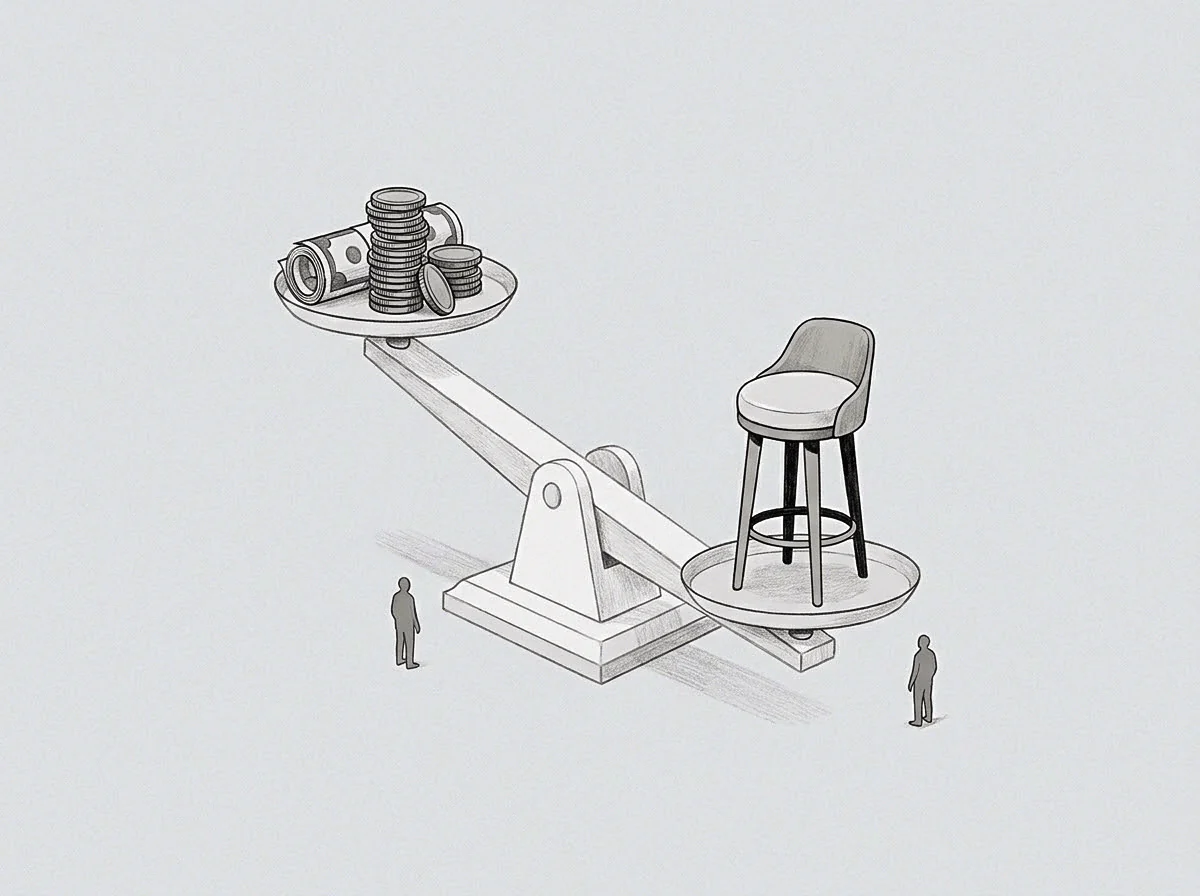
Baseline regulation costs spike when external financial buffers retreat and leave internal executive systems to absorb structural volatility directly.
The executive nervous system experiences financial retrenchment as an acute social isolation signal. Operational load expands precisely when structural support contracts. The leader maintains a steady demeanor for staff, board members, and external counterparties, yet this presentation requires deliberate, continuous effort.
Volatility shifts inward. The biological surcharge of remaining calm while carrying unhedged downside risk drains cognitive bandwidth that would otherwise serve strategy.
Failure to recognize this physiological shift leads to executive exhaustion long before bank balances reach zero.

Rail

Why Does Capital Withdrawal Trigger Internal Throttling?
Financial contraction alters how executive teams process operational friction. During growth phases, prospective capital covers minor errors and dilutes relational tension. Capital retrenchment eliminates that buffer, transforming routine coordination problems into existential threats.
Pressure shifts to leaders. The executive team begins internal throttling, reducing risk exposure by delaying decisions and narrowing operational focus.
Social baseline theory demonstrates that proximity to reliable external support lowers individual metabolic expenditure. When capital commitments dissolve, the brain registers the environment as hostile and expensive. To preserve remaining capacity, executive cognitive systems throttle outgoing signals, limit availability, and restrict strategic experimentation.
| Operational Condition | Primary Threat Absorber | Co-Regulation Availability | Cognitive Allocation | Systemic Allostatic Load |
|---|---|---|---|---|
| Liquidity Expansion | External Capital Reserves | High Institutional Support | Growth and Innovation | Baseline Minimal |
| Capital Retraction | Executive Nervous System | Low External Buffer | Threat Mitigation | Elevated Surcharge |
Proximity alters threat perception across all organizational tiers. When funding commitments disappear, internal communication channels overload quickly. Silence carries heavy costs.
The executive attempts to absorb workforce anxiety while simultaneously negotiating debt covenants or down-round terms. Capacity degrades over time. Without peer support structures capable of sharing the emotional load, executive decision-making defaults to immediate risk avoidance.
Uncertainty in institutional backing forces leadership systems to divert energy from operational expansion to internal stabilization.
Institutional backers expect leaders to maintain high operational output while quietly absorbing systemic volatility without additional structural support.

Friction

Internal Working Models Under Resource Scarcity
Leaders frequently operate on internal working models formed through early independence. When an executive internalizes a template that equates safety with absolute self-reliance, the capacity to receive external support remains undeveloped. The organization constructs no structural receptor slot for executive vulnerability.
The leader functions as the sole stabilizing presence for subordinates, yet possesses no internal mechanism to accept co-regulation from peers or advisors.
Resource scarcity intensifies this relational asymmetry. The team relies on the executive for emotional grounding, while the executive operates without a reciprocal anchor. Energy depletes without support.
The leader carries operational accountability while denying personal exhaustion, creating friction between visible authority and internal drain.
- Allostatic Surcharge The cumulative physiological strain resulting from prolonged exposure to unbuffered financial threat and continuous public calm.
- Signal Degradation The reduction in operational clarity when an executive throttles communication to conceal systemic anxiety from staff.
- Receptor Closure The structural inability of a self-reliant leader to accept operational or emotional assistance during crises.
- Concurrency Collapse The breakdown in executive oversight occurring when internal stabilization consumes all available working memory.
Strategic errors multiply when internal bandwidth declines. The leader reads routine inquiries as demands for reassurance, exhausting patience and distorting operational priorities. Signal clarity drops fast.
The combination of high operational responsibility and zero structural support creates severe cognitive drag.
A leadership template built exclusively on self-reliance converts every financial setback into a personal metabolic debt.
Whether an executive team can construct a functional peer baseline while operating under active downside negotiations remains undetermined in current practice.

Buffer
Structural Limits and Operational Concurrency
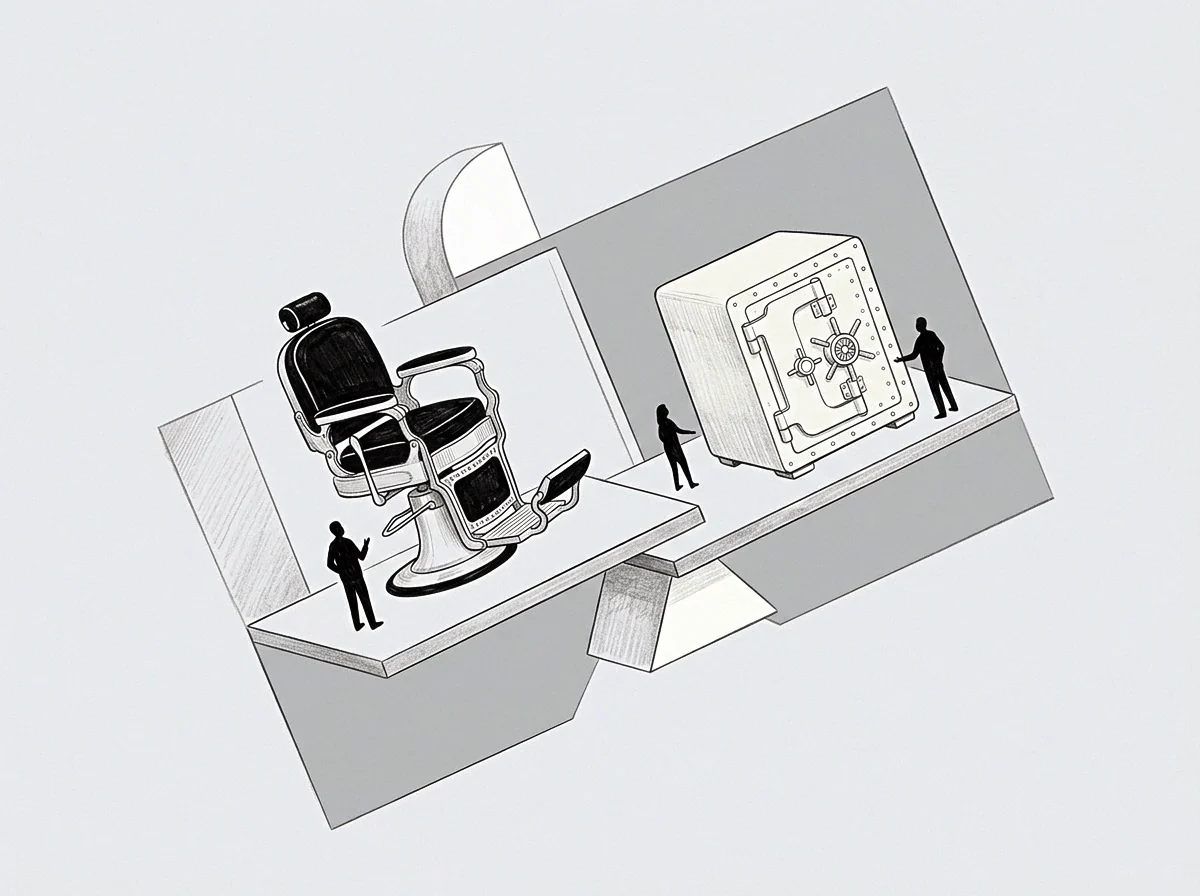
Managing capital retraction requires explicit operational boundaries rather than unstated executive endurance. Reliance on personal stamina fails when financial distress extends over multiple quarters. Endurance is not strategy.
Establishing clear limits on executive availability and operational scope creates a functional buffer against continuous allostatic load.
The concurrency limit defines how many high-stakes operational threads an executive holds simultaneously before strategic oversight fails. Capital contraction increases the intensity of every thread. To maintain control, leadership sets explicit terms around communication cadences, capital deployment decisions, and restructuring timelines.
- The executive identifies explicit operational boundaries and communicates spending limits directly to key stakeholders.
- Communication schedules shift from continuous availability to defined windows, preserving strategic focus.
- Resource allocation targets core operational survival metrics while non-essential projects pause immediately.
Setting limits protects operational focus. By bounding availability, the executive prevents continuous interruption and maintains sufficient bandwidth to process strategic trade-offs. Structural boundaries replace infinite endurance with defined operational parameters.
Explicit governance terms specifying capital call timelines and debt restructuring parameters alter executive load calculations and immediately reduce baseline regulation costs.
Recourse

Updating Internal Templates Through Earned Security
Long-term resilience emerges through earned security, a process where leaders update internal templates through repeated real-world experience. Understanding social baseline theory does not lower regulation expenditure by itself. Structural change occurs when an executive experiences successful co-regulation within professional networks, proving that sharing systemic load does not compromise authority.
Rebuilding operational capacity requires establishing reliable peer channels outside the corporate governance chain. Non-investor advisors, experienced peers, and explicit operational partners provide an external baseline. Proximity to steady counterparties reduces metabolic expenditure, freeing cognitive resources for long-term recovery.
Earned security develops when leaders experience functional co-regulation during active organizational strain.
Capital recedes rapidly, but long-term executive capacity stabilizes when shared operational limits replace individual endurance as the primary structural defense.